


Plasma levels of monokine induced by interferon-gamma/chemokine (C-X-X motif) ligand 9, thymus and activation-regulated chemokine/chemokine (C-C motif) ligand 17 in children with Kawasaki disease
- PMID: 26337791
- PMCID: PMC4560122
- DOI: 10.1186/s12887-015-0424-6
Plasma levels of monokine induced by interferon-gamma/chemokine (C-X-X motif) ligand 9, thymus and activation-regulated chemokine/chemokine (C-C motif) ligand 17 in children with Kawasaki disease
Abstract
Background: Monokines induced by interferon-gamma/Chemokine (C-X-C motif) ligand 9 (MIG/CXCL9), thymus and activation-regulated chemokine/Chemokine (C-C motif) ligand 17 (TARC/CCL17) are chemotactic factors that specifically collect and activate leukocytes, which are considered as chemoattractants of T helper cells. In the present study, we have investigated the effects of T helper type-1 (Th1) cells and T helper type-2 (Th2) cells in Kawasaki disease (KD) by determining plasma levels of MIG/CXCL9 and TARC/CCL17 and exploring the relationship between MIG/CXCL9, TARC/CCL17 levels and coronary artery lesions (CAL).
Methods: Forty-three children patients with KD and 19 healthy controls were included in this study. General characteristics were obtained from all subjects. Plasma concentrations of chemotactic factors of MIG/CXCL9 and TARC/CCL17 were measured by enzyme-linked immunosorbent assay (ELISA) for all subjects.
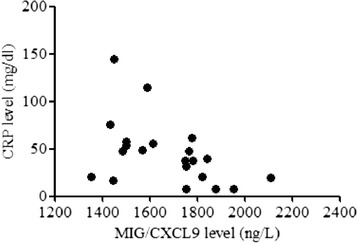
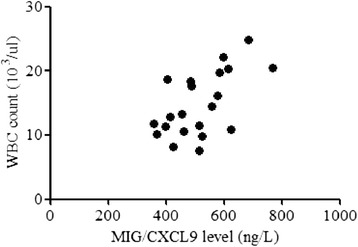
Results: Plasma levels of MIG/CXCL9, TARC/CCL17, and the ratios of MIG/TARC were significantly elevated in pediatric patients with KD compared to those in the control group. There were also significantly higher levels of MIG/CXCL9, TARC/CCL17, MIG/TARC ratios and prominently lower hemoglobin (Hb) levels in KD with CAL compared to KD without coronary artery lesions (NCAL). Hb was significantly decreased and plasma MIG/CXCL9 levels had a significantly negative correlation with CRP in KD with CAL patients (KD-CAL), whereas a positive correlation of plasma MIG/CXCL 9 with WBC was observed in KD without CAL patients (KD-NCAL).
Conclusion: Th1 and Th2 cells may be involved in an imbalanced activation in pediatric KD patients during an acute period of the disease. Furthermore, immune lesions of vessels in KD patients may be mediated by the imbalanced activation of Th1 and Th2 cells.
Figures
References
-
- Kawasaki T. Acute febrile mucocutaneous syndrome with lymphiod involvement with specific desquamation of the fingers and toes in children. Arerugi. 1967;16:178–222. - PubMed
MeSH terms
Substances
LinkOut - more resources
Full Text Sources
Other Literature Sources
Medical
Research Materials
Miscellaneous
