


The health and health behaviours of Australian metropolitan nurses: an exploratory study
- PMID: 26339200
- PMCID: PMC4558723
- DOI: 10.1186/s12912-015-0091-9
The health and health behaviours of Australian metropolitan nurses: an exploratory study
Abstract
Background: Nurses make up the largest component of the health workforce and provide the majority of patient care. Most health education is delivered by nurses, who also serve as healthy living and behavioural role models. Anything that diminishes their health status can impact their credibility as role models, their availability and ability to deliver quality care, and is potentially disadvantageous for the health of the population. Study aims were to investigate nurses' overall health and the presence of chronic disease; to describe nurses' health-related behaviours and to compare them to those of the general population, with both groups matched by age and gender.
Methods: Cross-sectional descriptive paper-based survey of nurses from two Sydney metropolitan hospitals using established instruments and questions and measurements taken with standardised methods.
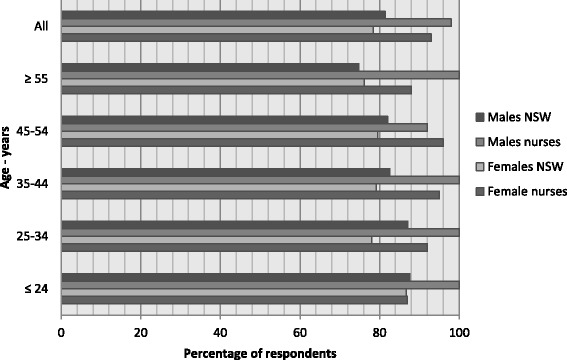
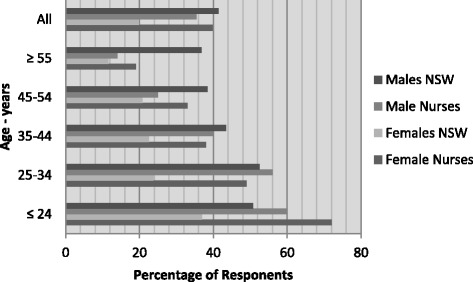
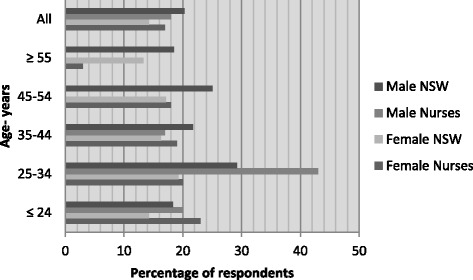
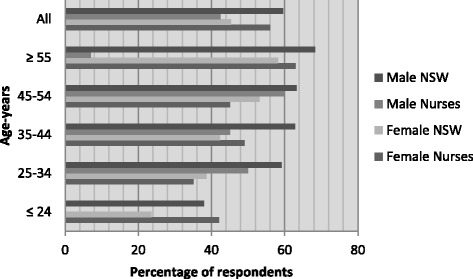
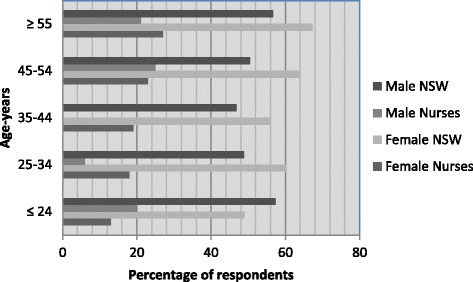
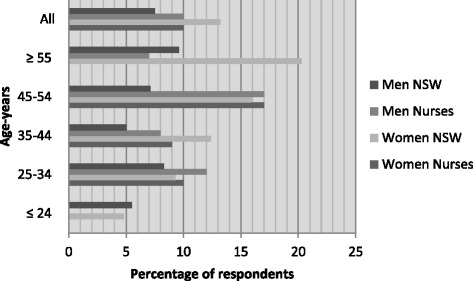
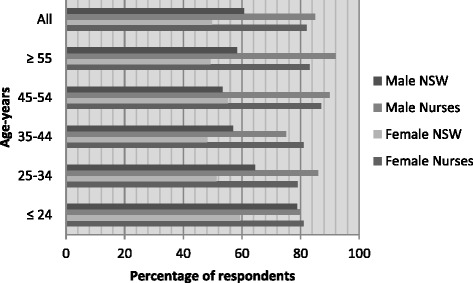
Results: This nursing sample (n = 381) had a mean age of 39.9 (SD 11.7, range 20-67) years, Most (n = 315; 82.7 %) were female, worked full-time (80.0 %), and were shift workers (93.0 %). The majority (94.0 %) indicated good, very good or excellent health, despite 42.8 % indicating they had chronic disease. The most common risk factors for chronic disease were inadequate vegetable (92.6 %) and fruit intake (80.1 %), overweight and obesity (44.0 %) and risky alcohol intake (34.7 %); health screening behaviours were not ideal. Aside from overweight and obesity, these risk factors were more prevalent in nurses than the equivalent group of the New South Wales population, particularly for risky alcohol intake which was much more common in female nurses and most marked in those aged under 35 years. However, 80 % met the guidelines for physical activity, more than the equivalent group of the New South Wales population.
Conclusion: There are early 'warning signs' concerning the health status of nurses. Despite perceiving current good health, support is required for nurses to prevent future chronic disease, particularly in the areas of nutrition and alcohol intake. With these concerns, the nursing workforce ageing and demands for care increasing, it is now time to implement health enhancing strategies for nurses.
Keywords: Chronic disease; Health; Health promotion; Lifestyle; Nurses; Risk factors; Sickness absence; Wellbeing; Workforce; Workplace.
Figures
References
-
- Burden of Disease: DALYs in Global Burden of Disease. Update 2004. [http://www.who.int/healthinfo/global_burden_disease/GBD_report_2004updat...].
-
- Health Workforce 2025 – Doctors, Nurses and Midwives - Volume 2. [https://www.hwa.gov.au/sites/default/files/HW2025Volume2_FINAL-20120424_...].
-
- Global Status Report on Noncommunicable Diseases. [http://www.who.int/nmh/publications/ncd_report2010/en/].
-
- Chronic diseases and their common risk factors. [http://www.who.int/chp/chronic_disease_report/media/Factsheet1.pdf].
LinkOut - more resources
Full Text Sources
Other Literature Sources
Miscellaneous
