


Effects of Combined Spinal-Epidural Analgesia during Labor on Postpartum Electrophysiological Function of Maternal Pelvic Floor Muscle: A Randomized Controlled Trial
- PMID: 26340002
- PMCID: PMC4560435
- DOI: 10.1371/journal.pone.0137267
Effects of Combined Spinal-Epidural Analgesia during Labor on Postpartum Electrophysiological Function of Maternal Pelvic Floor Muscle: A Randomized Controlled Trial
Abstract
Objective: Combined spinal-epidural analgesia (CSEA) is sometimes used for difficult births, but whether it contributes to postpartum pelvic muscle disorder is unclear. This randomized controlled trial examined whether CSEA given during labor affects the electrophysiological index of postpartum pelvic floor muscle function.
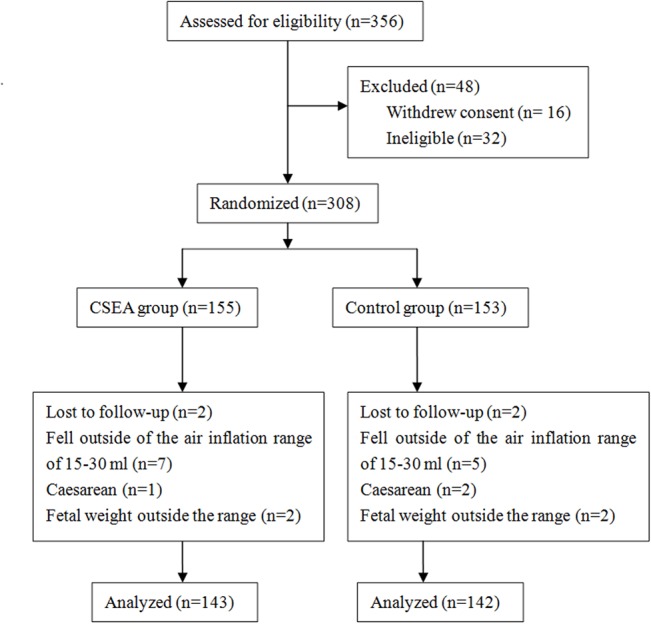
Methods: A consecutive sample of primiparous women who delivered vaginally at term were randomly assigned to a CSEA group (n = 143) and control group (n = 142) between June 2013 and June 2014. All were assessed 6-8 weeks later for electrophysiological function of pelvic floor muscle.
Results: The two groups were similar in the degree of muscle strength, muscle fatigue, and pelvic dynamic pressure of pelvic floor muscle. The CSEA and control groups showed similar proportions of women with normal muscle strength (score ≥4) in type I pelvic fibers (23.1% vs. 14.1%, P = 0.051) and type II pelvic fibers (28.0% vs. 24.6%, P = 0.524). The groups also contained similar proportions of women who showed no fatigue in type I fibers (54.5% vs. 48.6%, P = 0.315) or type II fibers (88.8% vs. 87.3%, P = 0.699). Similarly low proportions of women in the CSEA group and control group showed normal pelvic dynamic pressure (11.2% vs. 7.7%, P = 0.321). However, women in the CSEA group spent significantly less time in labor than those in the control group (7.25 vs. 9.52 h, P <0.001).
Conclusions: CSEA did not affect the risk of postpartum pelvic muscle disorder in this cohort of primiparous women who gave birth vaginally. A significant shorter duration of labour was observed in the CSEA-group.
Trial registration: ClinicalTrials.gov NCT02334150.
Conflict of interest statement
Figures
References
-
- Tsen LC, Thue B, Datta S, Segal S (1999) Is combined spinal-epidural analgesia associated with more rapid cervical dilation in nulliparous patients when compared with conventional epidural analgesia? Anesthesiology 91: 920–925. - PubMed
Publication types
MeSH terms
Substances
Associated data
LinkOut - more resources
Full Text Sources
Other Literature Sources
Medical
