


Microglia in the TBI brain: The good, the bad, and the dysregulated
- PMID: 26342753
- PMCID: PMC4689601
- DOI: 10.1016/j.expneurol.2015.08.018
Microglia in the TBI brain: The good, the bad, and the dysregulated
Abstract
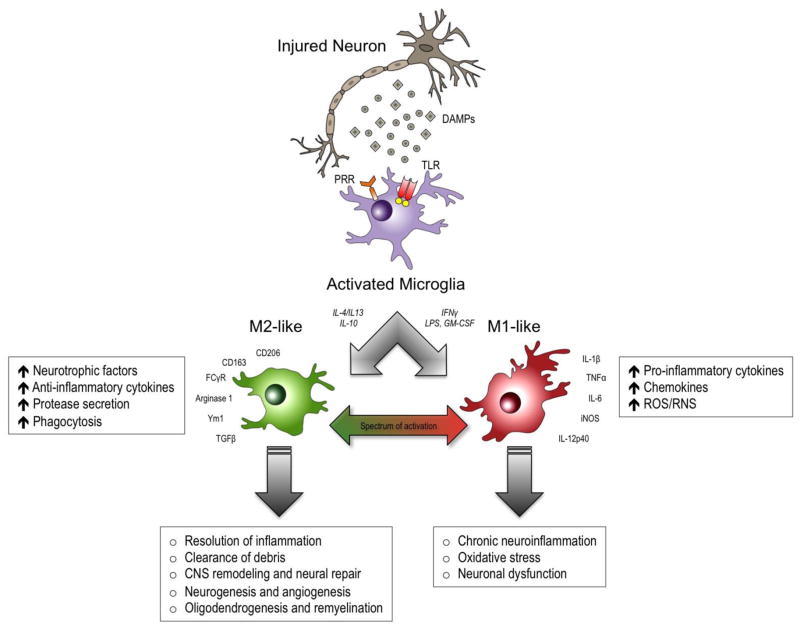
As the major cellular component of the innate immune system in the central nervous system (CNS) and the first line of defense whenever injury or disease occurs, microglia play a critical role in neuroinflammation following a traumatic brain injury (TBI). In the injured brain microglia can produce neuroprotective factors, clear cellular debris and orchestrate neurorestorative processes that are beneficial for neurological recovery after TBI. However, microglia can also become dysregulated and can produce high levels of pro-inflammatory and cytotoxic mediators that hinder CNS repair and contribute to neuronal dysfunction and cell death. The dual role of microglial activation in promoting beneficial and detrimental effects on neurons may be accounted for by their polarization state and functional responses after injury. In this review article we discuss emerging research on microglial activation phenotypes in the context of acute brain injury, and the potential role of microglia in phenotype-specific neurorestorative processes such as neurogenesis, angiogenesis, oligodendrogenesis and regeneration. We also describe some of the known molecular mechanisms that regulate phenotype switching, and highlight new therapeutic approaches that alter microglial activation state balance to enhance long-term functional recovery after TBI. An improved understanding of the regulatory mechanisms that control microglial phenotypic shifts may advance our knowledge of post-injury recovery and repair, and provide opportunities for the development of novel therapeutic strategies for TBI.
Keywords: M1-like; M2-like; Macrophage; Microglia; Neurodegeneration; Neuroinflammation; Phenotype; Polarization; Repair; Traumatic brain injury.
Copyright © 2015 Elsevier Inc. All rights reserved.
Figures
References
-
- Aberg MA, Aberg ND, Palmer TD, Alborn AM, Carlsson-Skwirut C, Bang P, Rosengren LE, Olsson T, Gage FH, Eriksson PS. IGF-I has a direct proliferative effect in adult hippocampal progenitor cells. Mol Cell Neurosci. 2003;24:23–40. - PubMed
-
- Acosta SA, Tajiri N, Shinozuka K, Ishikawa H, Grimmig B, Diamond D, Sanberg PR, Bickford PC, Kaneko Y, Borlongan CV. Long-term upregulation of inflammation and suppression of cell proliferation in the brain of adult rats exposed to traumatic brain injury using the controlled cortical impact model. PLoS One. 2013a;8:e53376. - PMC - PubMed
-
- Acosta SA, Tajiri N, Shinozuka K, Ishikawa H, Grimmig B, Diamond DM, Sanberg PR, Bickford PC, Kaneko Y, Borlongan CV. Long-term upregulation of inflammation and suppression of cell proliferation in the brain of adult rats exposed to traumatic brain injury using the controlled cortical impact model. PLoS One. 2013b;8:e53376. - PMC - PubMed
-
- Ajami B, Bennett JL, Krieger C, Tetzlaff W, Rossi FM. Local self-renewal can sustain CNS microglia maintenance and function throughout adult life. Nature neuroscience. 2007;10:1538–1543. - PubMed
Publication types
MeSH terms
Substances
Grants and funding
LinkOut - more resources
Full Text Sources
Other Literature Sources
Molecular Biology Databases
Research Materials
