


Effects of population density on corticosterone levels of prairie voles in the field
- PMID: 26342968
- PMCID: PMC4684476
- DOI: 10.1016/j.ygcen.2015.09.002
Effects of population density on corticosterone levels of prairie voles in the field
Abstract
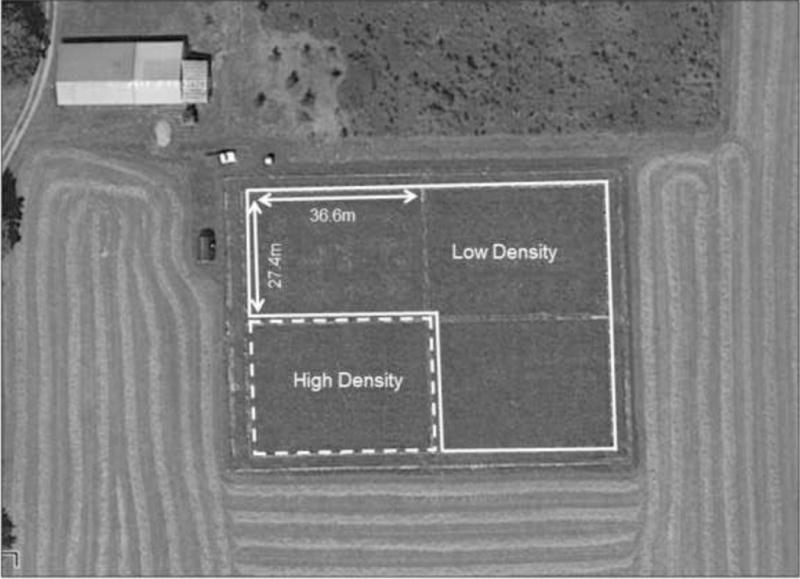
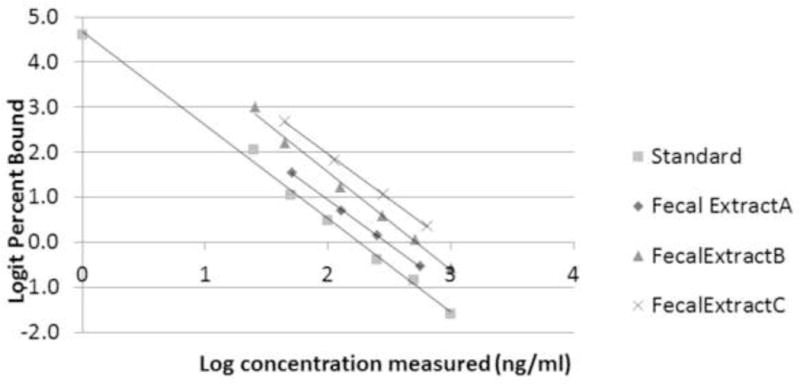
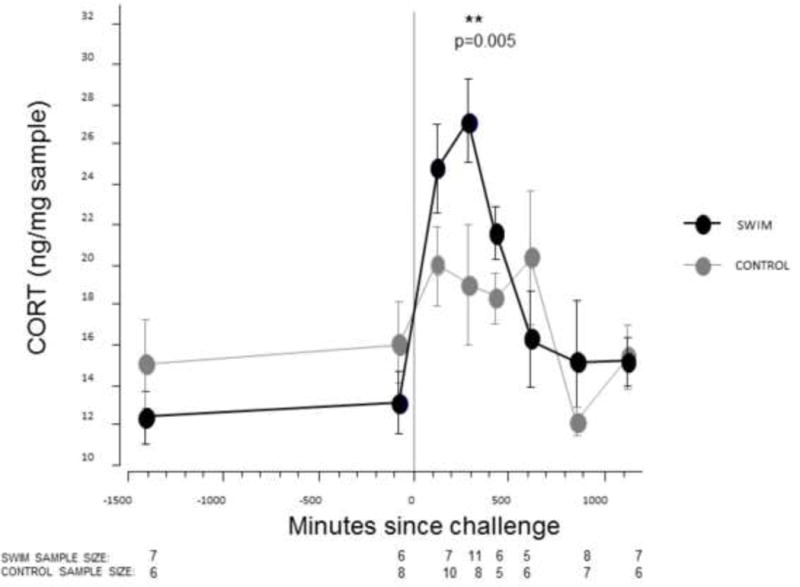
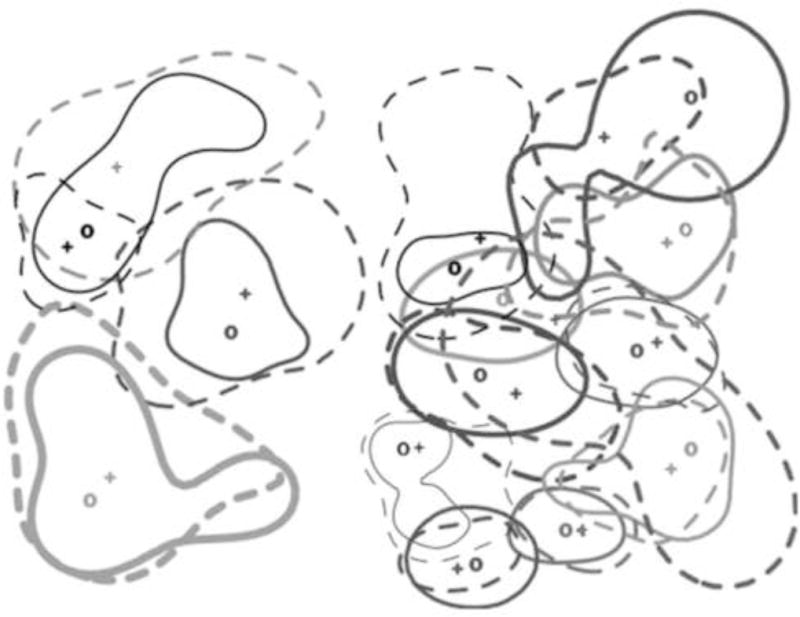
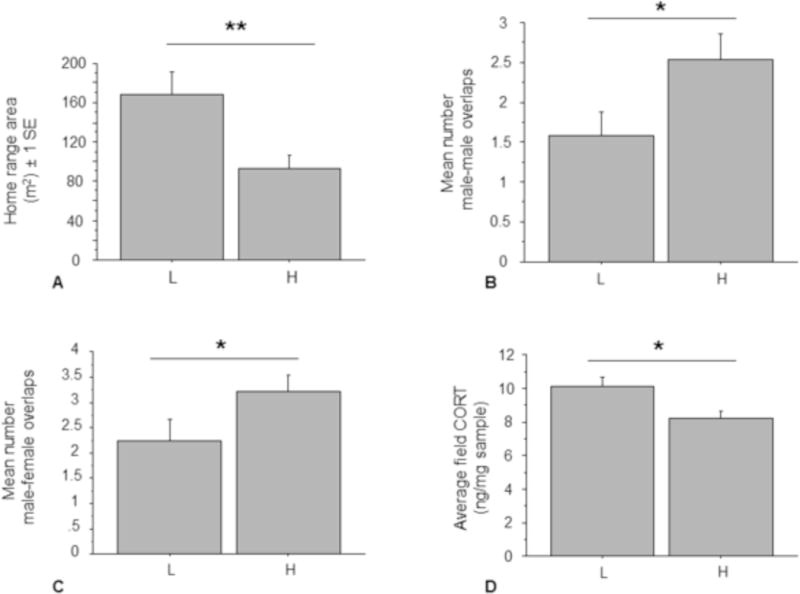
High population density is often associated with increased levels of stress-related hormones, such as corticosterone (CORT). Prairie voles (Microtus ochrogaster) are a socially monogamous species known for their large population density fluctuations in the wild. Although CORT influences the social behavior of prairie voles in the lab, the effect of population density on CORT has not previously been quantified in this species in the field. We validated a non-invasive hormone assay for measuring CORT metabolites in prairie vole feces. We then used semi-natural enclosures to experimentally manipulate population density, and measured density effects on male space use and fecal CORT levels. Our enclosures generated patterns of space use and social interaction that were consistent with previous prairie vole field studies. Contrary to the positive relationship between CORT and density typical of other taxa, we found that lower population densities (80 animals/ha) produced higher fecal CORT than higher densities (240/ha). Combined with prior work in the lab and field, the data suggest that high prairie vole population densities indicate favorable environments, perhaps through reduced predation risk. Lastly, we found that field animals had lower fecal CORT levels than laboratory-living animals. The data emphasize the usefulness of prairie voles as models for integrating ecological, evolutionary, and mechanistic questions in social behavior.
Keywords: Corticosterone; Fecal hormone assay; Microtus ochrogaster; Population density; Prairie vole; Stress.
Copyright © 2015 Elsevier Inc. All rights reserved.
Figures
References
-
- Adkins-Regan E. Hormones and Animal Social Behavior. Princeton University Press; Princeton: 2005.
-
- Allee WC. Animal aggregations, a study in general sociology. The University of Chicago Press; Chicago: 1931.
-
- Bales KL, Kramer KM, Lewis-Reese AD, Carter CS. Effects of stress on parental care are sexually dimorphic in prairie voles. Physiology & Behavior. 2006;87:424–429. - PubMed
-
- Batzli GO. Nutrition. In: Tamarin RH, editor. Biology of New World Microtus. American Society of Mammalogists; Stillwater, Oklahoma: 1985. pp. 779–811.
-
- Becker JB, Breedlove SM, Crews D, McCarthy MM. Behavioral endocrinology. Second. The MIT Press; Cambridge Massachusetts: 2002.
Publication types
MeSH terms
Substances
Grants and funding
LinkOut - more resources
Full Text Sources
Other Literature Sources
Miscellaneous
