


PATHOLOGICAL PERSONALITY TRAITS AND THE NATURALISTIC COURSE OF INTERNALIZING DISORDERS AMONG HIGH-RISK YOUNG ADULTS
- PMID: 26344411
- PMCID: PMC4701643
- DOI: 10.1002/da.22404
PATHOLOGICAL PERSONALITY TRAITS AND THE NATURALISTIC COURSE OF INTERNALIZING DISORDERS AMONG HIGH-RISK YOUNG ADULTS
Abstract
Background: A personality disorder diagnosis signals a negative prognosis for depressive and anxiety disorders, but the precise abnormal personality traits that determine the temporal course of internalizing psychopathology are unknown. In the present study, we examined prospective associations between abnormal personality traits and the onset and recurrence of internalizing disorders.
Methods: A sample of 371 young adults at high risk for internalizing problems completed the Schedule for Nonadaptive and Adaptive Personality-Second Edition--a measure of 12 abnormal personality traits and three temperament dimensions (i.e., Negative Temperament, Positive Temperament, Disinhibition vs. Control)--and underwent annual diagnostic interviews over 4 years of follow-up.
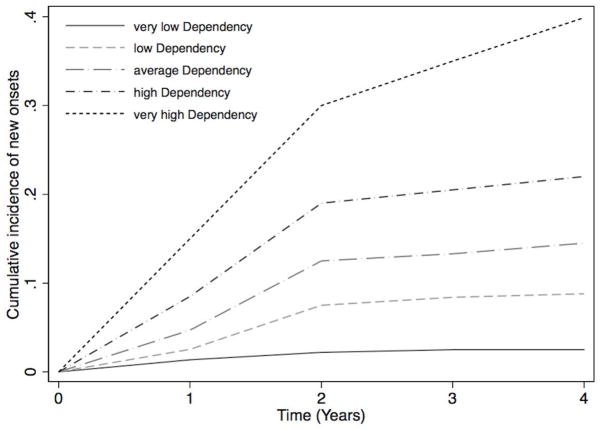
Results: In multivariate survival analyses, Negative Temperament was a robust predictor of both new onsets and recurrences of internalizing disorder. Further, the Dependency and Self-Harm abnormal personality dimensions emerged as independent predictors of new onsets and recurrences, respectively, of internalizing disorders after statistically adjusting for variation in temperament.
Conclusions: Our findings suggest that abnormal personality traits and temperament dimensions have complementary effects on the trajectory of internalizing pathology during young adulthood. In assessment and treatment settings, targeting the abnormal personality and temperament dimensions with the greatest prognostic value stands to improve the early detection of enduring internalizing psychopathology.
Keywords: anxiety; depression; internalizing disorders; naturalistic course; personality pathology; prognosis; temperament.
© 2015 Wiley Periodicals, Inc.
Conflict of interest statement
Conflict of Interest Disclosure: Drs. Craske, Mineka, and Zinbarg report grant funding from the National Institute of Mental Health during the conduct of the study.
Figures

References
-
- Lewinsohn PM, Rohde P, Seeley JR, Klein DN, Gotlib IH. Natural course of adolescent major depressive disorder in a community sample: predictors of recurrence in young adults. Am J Psychiatry. 2000;157:1584–1591. - PubMed
-
- Tyrer P, Seivewright H, Johnson T. The Nottingham Study of Neurotic Disorder: Predictors of 12-year outcome of dysthymic, panic and generalized anxiety disorder. Psychol Med. 2004;34:1385–1394. - PubMed
-
- American Psychiatric Association. Diagnostic and statistical manual of mental disorders. 3. Washington, DC: American Psychiatric Association; 1980.
-
- Massion AO, Dyck IR, Shea MT, Phillips KA, Warshaw MG, Keller MB. Personality disorders and time to remission in generalized anxiety disorder, social phobia, and panic disorder. Arch Gen Psychiatry. 2002;59:434–440. - PubMed
Publication types
MeSH terms
Grants and funding
LinkOut - more resources
Full Text Sources
Other Literature Sources
Medical
