


Physiological, Tumor, and Metastatic Niches: Opportunities and Challenges for Targeting the Tumor Microenvironment
- PMID: 26349421
- PMCID: PMC5562358
- DOI: 10.1615/critrevoncog.2015013668
Physiological, Tumor, and Metastatic Niches: Opportunities and Challenges for Targeting the Tumor Microenvironment
Abstract
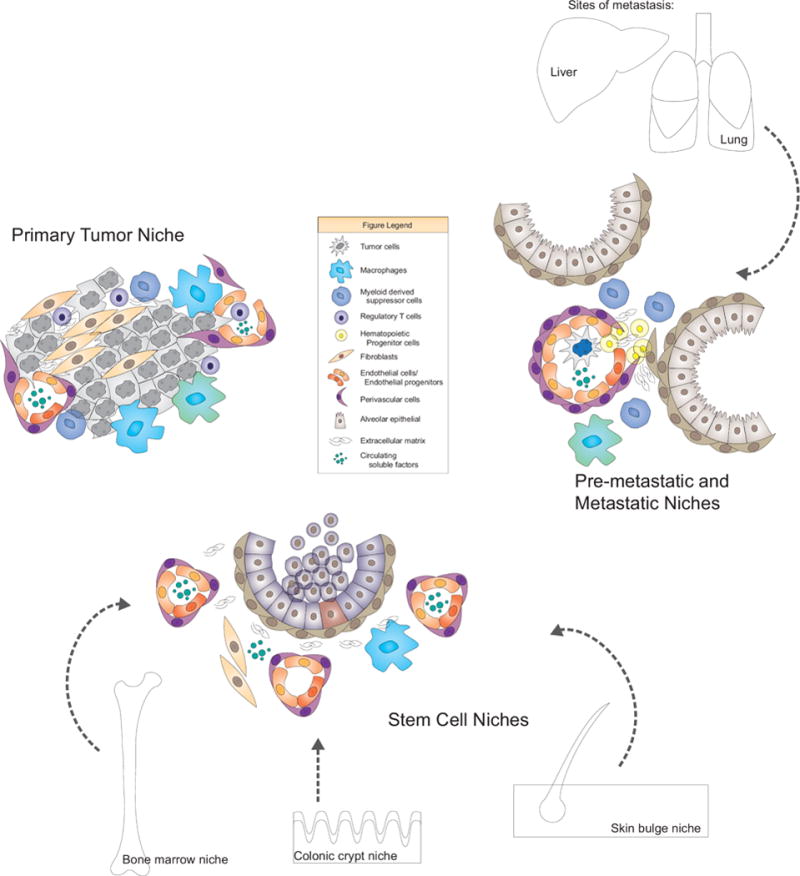
The primary tumor niche and the related but distinct premetastatic/metastatic niche comprise a number of essential players, including immune cells, stromal cells, and extracellular matrix. The cross-talk between these components is key to tumor progression. Many of these cell types and signaling pathways in the tumor microenvironment also are found in physiological and stem cell niches, such as the bone marrow, colonic crypt, and skin bulge. Here they play tightly regulated roles in wound healing and tissue homeostasis. Understanding the similarities and differences between these distinct niches may better inform our ability to therapeutically target the tumor microenvironment. In this review we discuss a number of tumor and metastatic niche components as they relate to stem cell niches and highlight potential therapeutic strategies in pediatric cancers.
Figures
References
-
- Hendrix MJC, Seftor EA, Seftor REB, Kasemeier-Kulesa J, Kulesa PM, Postovit L-M. Reprogramming metastatic tumour cells with embryonic microenvironments. Nat Rev Cancer. 2007;7:246–55. - PubMed
-
- Kaplan RN, Riba RD, Zacharoulis S, Bramley AH, Vincent L, Costa C, MacDonald DD, Jin DK, Shido K, Kerns SA, Zhu Z, Hicklin D, Wu Y, Port JL, Altorki N, Port ER, Ruggero D, Shmelkov SV, Jensen KK, Rafii S, Lyden D. VEGFR1-positive haematopoietic bone marrow progenitors initiate the premetastatic niche. Nature. 2005;438:820–827. - PMC - PubMed
Publication types
MeSH terms
Grants and funding
LinkOut - more resources
Full Text Sources
