


Stone Composition Among First-Time Symptomatic Kidney Stone Formers in the Community
- PMID: 26349951
- PMCID: PMC4593754
- DOI: 10.1016/j.mayocp.2015.07.016
Stone Composition Among First-Time Symptomatic Kidney Stone Formers in the Community
Abstract
Objective: To determine the variation in kidney stone composition and its association with risk factors and recurrence among first-time stone formers in the general population.
Patients and methods: Medical records were manually reviewed and validated for symptomatic kidney stone episodes among Olmsted County, Minnesota, residents from January 1, 1984, through December 31, 2012. Clinical and laboratory characteristics and the risk of symptomatic recurrence were compared between stone compositions.
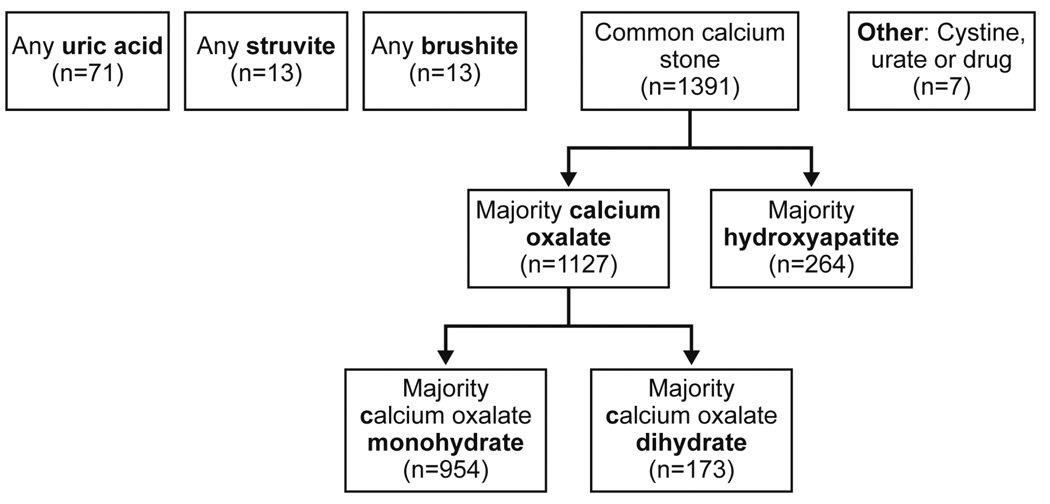
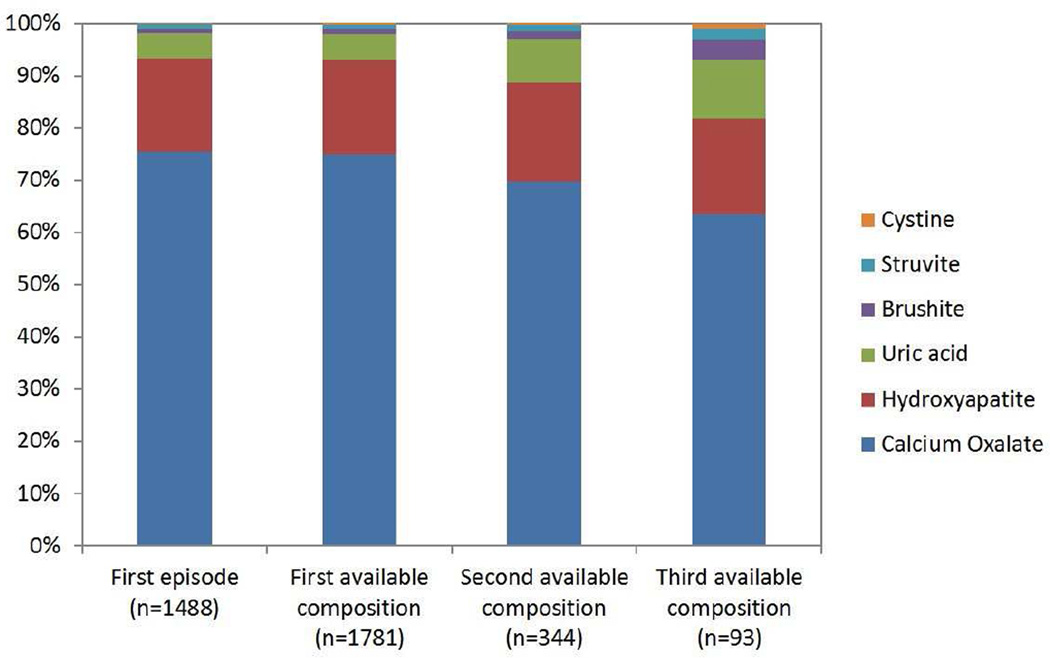
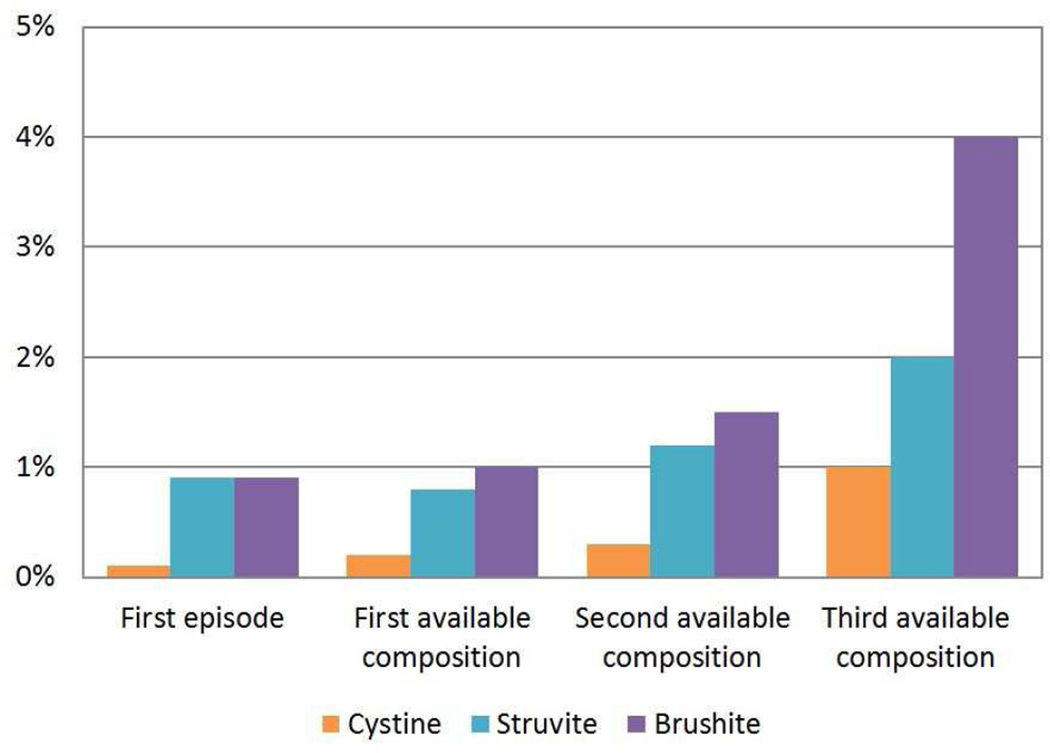
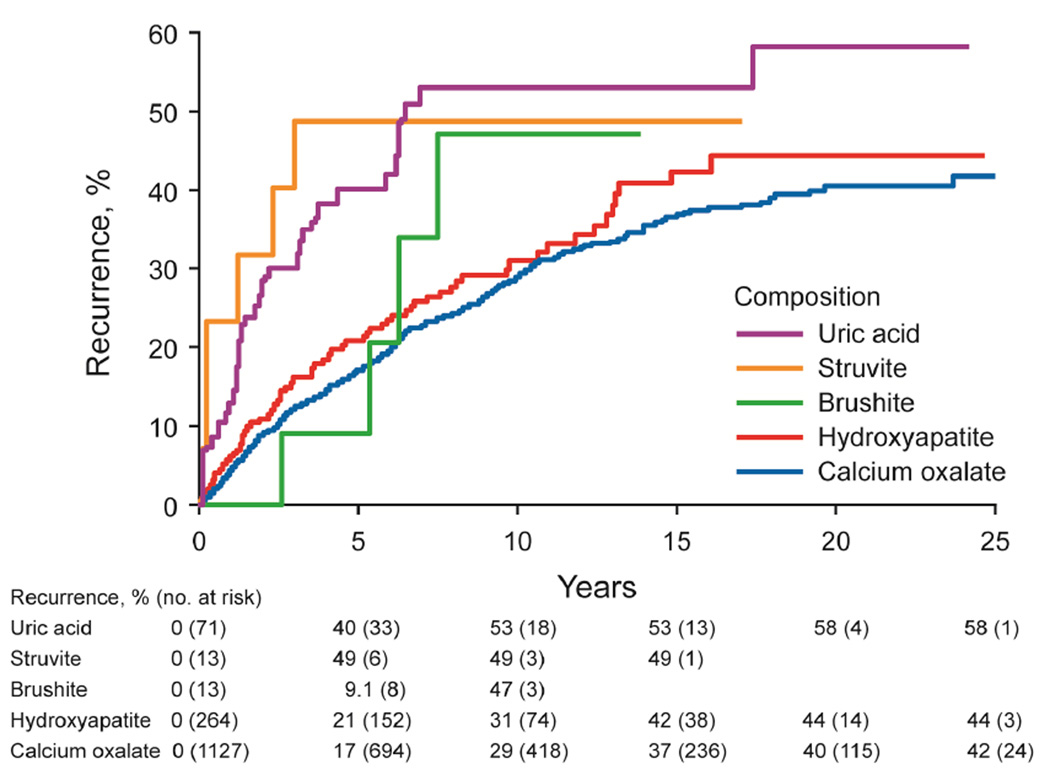
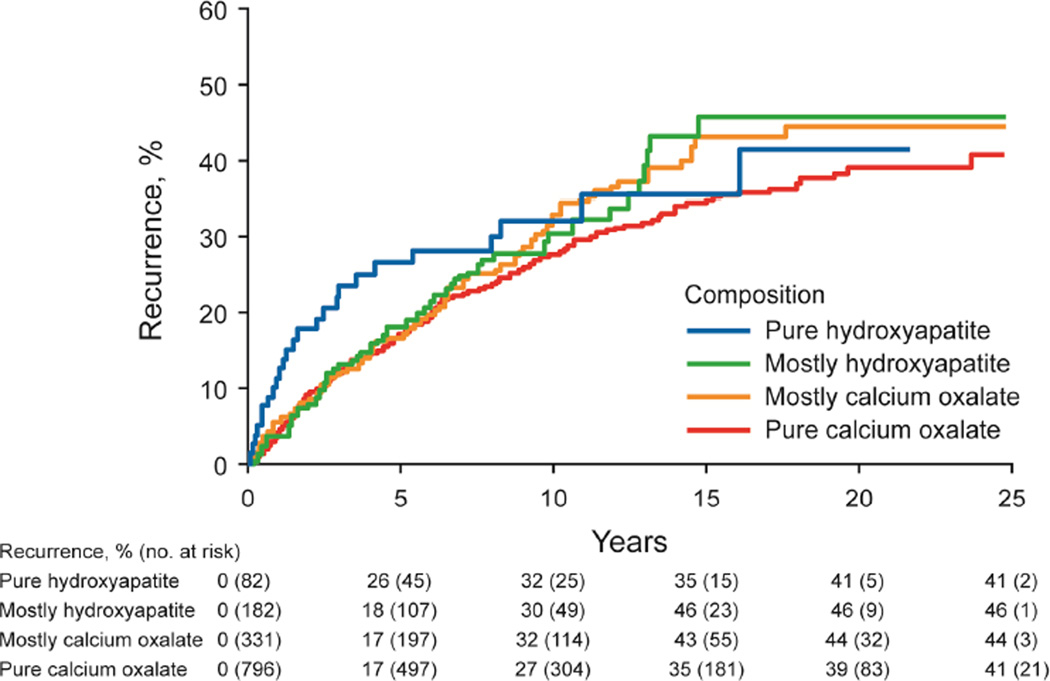
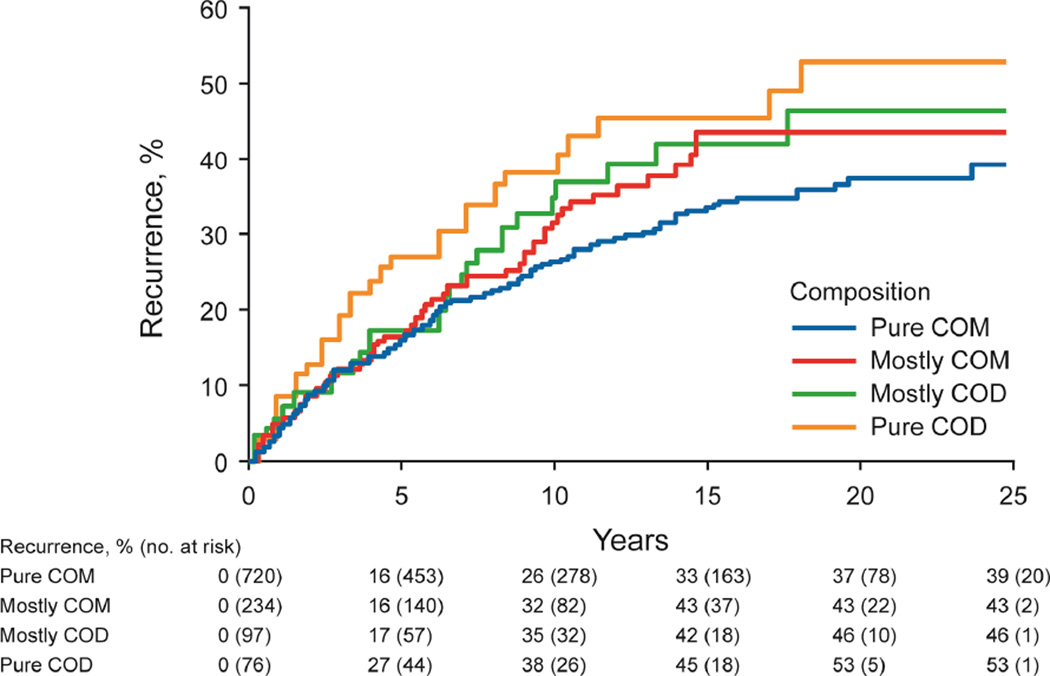
Results: There were 2961 validated first-time symptomatic kidney stone formers. Stone composition analysis was obtained in 1508 (51%) at the first episode. Stone formers were divided into the following mutually exclusive groups: any brushite (0.9%), any struvite (0.9%), any uric acid (4.8%), and majority calcium oxalate (76%) or majority hydroxyapatite (18%). Stone composition varied with clinical characteristics. A multivariable model had a 69% probability of correctly estimating stone composition but assuming calcium oxalate monohydrate stone was correct 65% of the time. Symptomatic recurrence at 10 years was approximately 50% for brushite, struvite, and uric acid but approximately 30% for calcium oxalate and hydroxyapatite stones (P<.001). Recurrence was similar across different proportions of calcium oxalate and hydroxyapatite (P for trend=.10). However, among calcium oxalate stones, 10-year recurrence rate ranged from 38% for 100% calcium oxalate dihydrate to 26% for 100% calcium oxalate monohydrate (P for trend=.007).
Conclusion: Calcium stones are more common (93.5% of stone formers) than has been previously reported. Although clinical and laboratory factors associate with the stone composition, they are of limited utility for estimating stone composition. Rarer stone compositions are more likely to recur.
Copyright © 2015 Mayo Foundation for Medical Education and Research. Published by Elsevier Inc. All rights reserved.
Figures
major stone composition groups (n=1488, P < .001)
common calcium stone subgroups (n=1391, P-trend = .10)
calcium oxalate stone subgroups (n=1127, P-trend = .007)
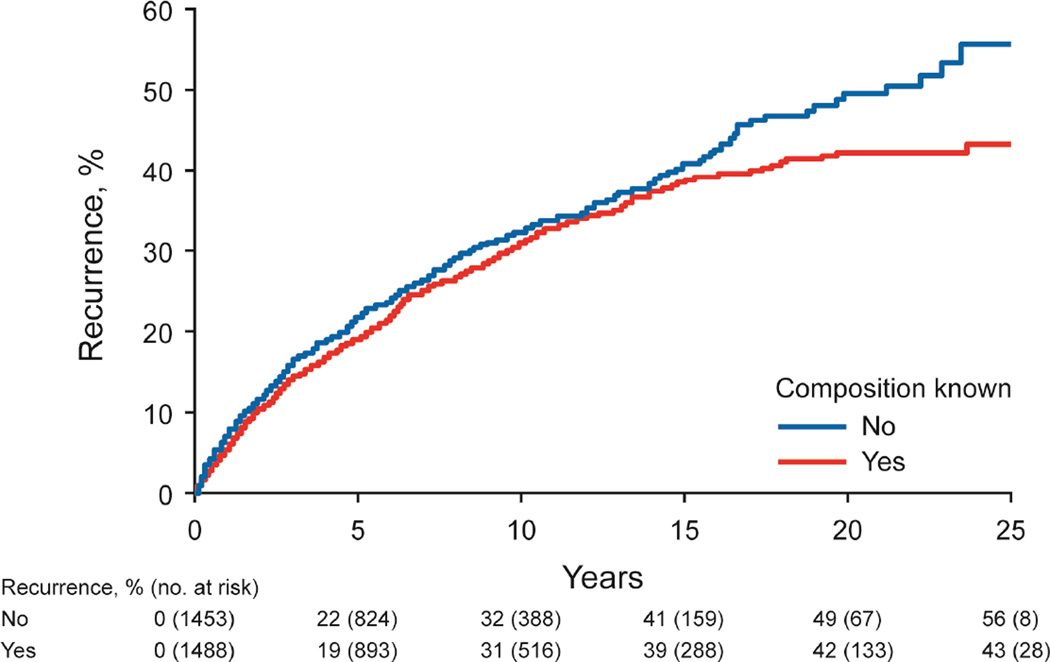
known vs unknown composition (n=2961, P = .06)
major stone composition groups (n=1488, P < .001)
common calcium stone subgroups (n=1391, P-trend = .10)
calcium oxalate stone subgroups (n=1127, P-trend = .007)
known vs unknown composition (n=2961, P = .06)
major stone composition groups (n=1488, P < .001)
common calcium stone subgroups (n=1391, P-trend = .10)
calcium oxalate stone subgroups (n=1127, P-trend = .007)
known vs unknown composition (n=2961, P = .06)
major stone composition groups (n=1488, P < .001)
common calcium stone subgroups (n=1391, P-trend = .10)
calcium oxalate stone subgroups (n=1127, P-trend = .007)
known vs unknown composition (n=2961, P = .06)
Comment in
-
Re: Stone Composition among First-Time Symptomatic Kidney Stone Formers in the Community.J Urol. 2016 Feb;195(2):383. doi: 10.1016/j.juro.2015.10.092. Epub 2015 Oct 26. J Urol. 2016. PMID: 26852986 No abstract available.
References
-
- Pak CY, Poindexter JR, Adams-Huet B, Pearle MS. Predictive value of kidney stone composition in the detection of metabolic abnormalities. Am J Med. 2003;115:26–32. - PubMed
-
- Kourambas J, Aslan P, Teh CL, Mathias BJ, Preminger G. Role of stone analysis in metabolic evaluation and medical treatment of nephrolithiasis. J.Endourol. 2001;15:181–186. - PubMed
-
- Kasidas GP, Samuell CT, Weir TB. Renal stone analysis: why and how? Ann Clin Biochem. 2004;41:91–97. - PubMed
Publication types
MeSH terms
Substances
Grants and funding
LinkOut - more resources
Full Text Sources
Other Literature Sources
