The Association between Sleep Disturbances and Depression among Firefighters: Emotion Dysregulation as an Explanatory Factor
- PMID: 26350604
- PMCID: PMC4751428
- DOI: 10.5664/jcsm.5492
The Association between Sleep Disturbances and Depression among Firefighters: Emotion Dysregulation as an Explanatory Factor
Abstract
Study objectives: To investigate emotion regulation difficulties in association with self-reported insomnia symptoms, nightmares, and depression symptoms in a sample of current and retired firefighters.
Methods: A total of 880 current and retired United States firefighters completed a web-based survey of firefighter behavioral health. Self-report measures included the Center for Epidemiologic Studies Depression Scale, Insomnia Severity Index, PTSD Checklist, and Difficulties in Emotion Regulation Scale.
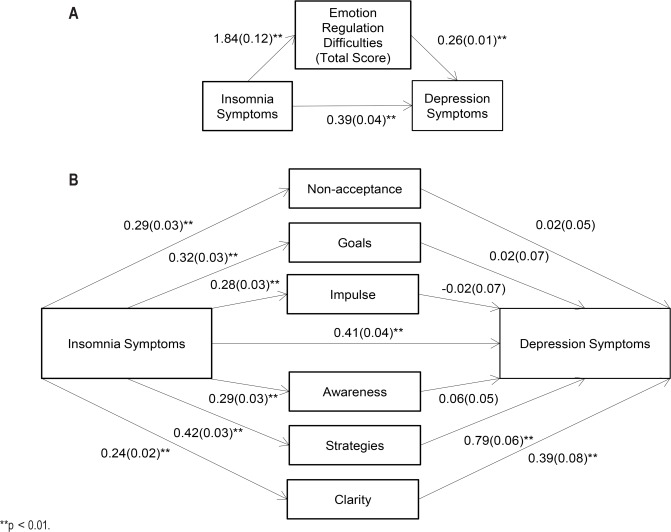
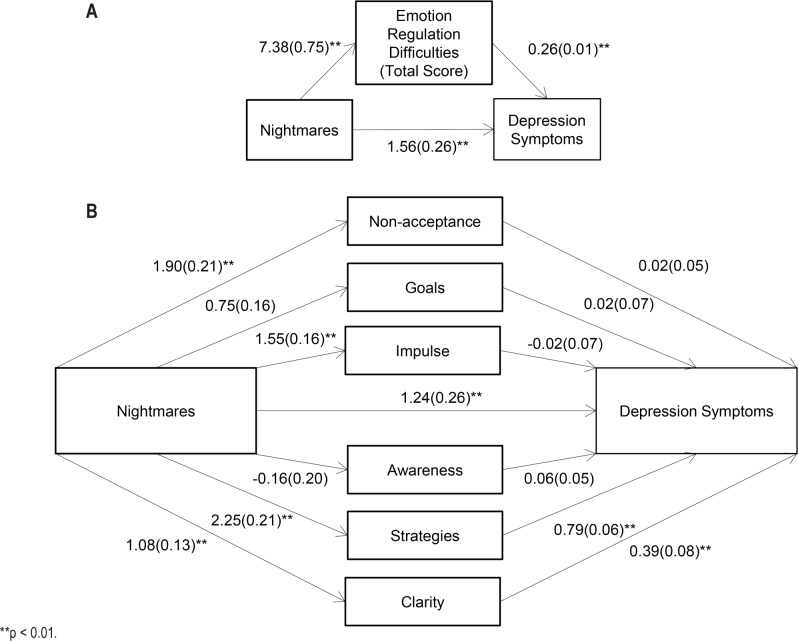
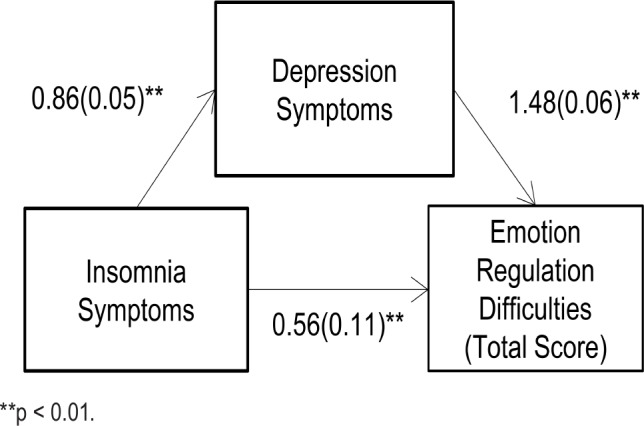
Results: A notable portion of participants reported clinically significant depression symptoms (39.6%) and insomnia symptoms (52.7%), as well as nightmare problems (19.2%), each of which demonstrated a strong association with emotion regulation difficulties (rs = 0.56-0.80). Bootstrapped mediation analyses revealed that the indirect effects of overall emotion regulation difficulties were significant both for the relationship between insomnia and depression (95% CI: 0.385-0.566) and nightmares and depression (95% CI: 1.445-2.365). Limited access to emotion regulation strategies emerged as the strongest, significant indirect effect for both relationships (insomnia 95% CI: 0.136-0.335; nightmares 95% CI: 0.887-1.931).
Conclusions: Findings extend previous affective neuroscience research by providing evidence that insomnia and nightmares may influence depression symptoms specifically through the pathway of explicit emotion regulation difficulties. Sleep disturbances may impair the ability to access and leverage emotion regulation strategies effectively, thus conferring risk for negative affect and depression.
Keywords: depression; emotion regulation; insomnia; nightmares; sleep.
© 2015 American Academy of Sleep Medicine.
Figures
References
-
- Carpenter GSJ, Carpenter TP, Kimbrel NA, et al. Social support, stress, and suicidal ideation in professional firefighters. Am J Health Behav. 2015;39:191–6. - PubMed
-
- De Barros VV, Martins LF, Saitz R, Bastos RR, Ronzani TM. Mental health conditions, individual and job characteristics and sleep disturbances among firefighters. J Health Psychol. 2012;18:350–8. - PubMed
-
- Staner L. Comorbidity of insomnia and depression. Sleep Med Rev. 2010;14:35–46. - PubMed
-
- Baglioni C, Battagliese G, Feige B, et al. Insomnia as a predictor of depression: a meta-analytic evaluation of longitudinal epidemiological studies. J Affect Disord. 2011;135:10–9. - PubMed
Publication types
MeSH terms
Grants and funding
LinkOut - more resources
Full Text Sources
Other Literature Sources
Medical