


Review
doi: 10.1155/2015/263987.
Epub 2015 Aug 16.
Changing Trends in the Management of Epistaxis
Affiliations
- PMID: 26351457
- PMCID: PMC4553192
- DOI: 10.1155/2015/263987
Item in Clipboard
Review
Changing Trends in the Management of Epistaxis
Int J Otolaryngol.
2015.
Abstract
Epistaxis is a very common complaint seen by many types of physicians including otolaryngologists, family physicians, and others. Management of epistaxis is often challenging and requires many types of intervention. The following review describes the different types of past and current treatment modalities including cautery, nasal packing, maxillary artery ligation, anterior artery ligation, and sphenopalatine artery ligation. The paper also proposes an algorithm for managing such cases.
Figures
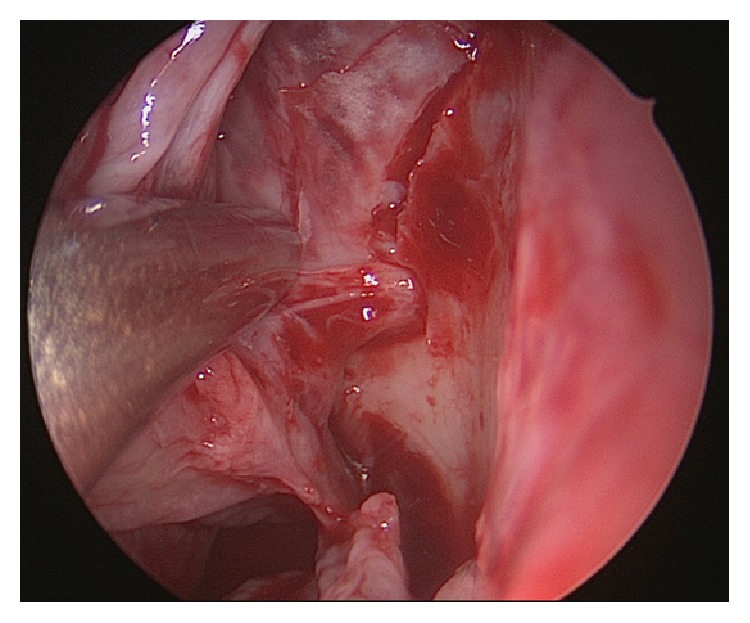
Endoscopic exposure of the left sphenopalatine artery.
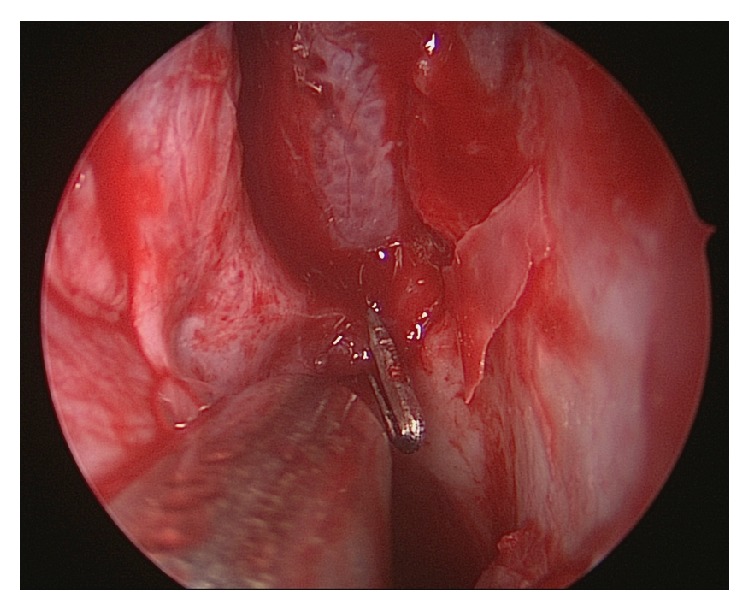
Endoscopic clipping of the left sphenopalatine artery.
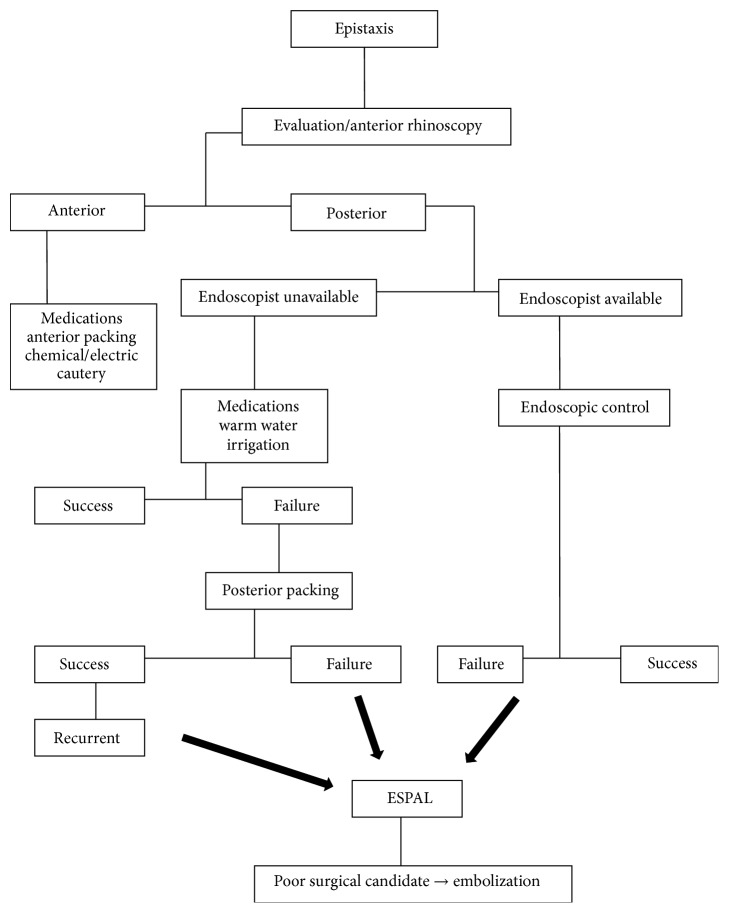
Algorithm for the management of epistaxis.
References
-
- Rockey J. G., Anand R. A critical audit of the surgical management of intractable epistaxis using sphenopalatine artery ligation/diathermy. Rhinology. 2002;40(3):147–149. - PubMed
-
- Krempl G. A., Noorily A. D. Use of oxymetazoline in the management of epistaxis. Annals of Otology, Rhinology & Laryngology. 1995;9, part 1:704–706. - PubMed
-
- Doo G., Johnson D. S. Oxymetazoline in the treatment of posterior epistaxis. Hawaii Medical Journal. 1999;58(8):210–212. - PubMed
-
- Zahed R., Moharamzadeh P., AlizadehArasi S., Ghasemi A., Saeedi M. A new and rapid method for epistaxis treatment using injectable form of tranexamic acid topically: a randomized controlled trial. The American Journal of Emergency Medicine. 2013;31(9):1389–1392. doi: 10.1016/j.ajem.2013.06.043. - DOI - PubMed
-
- Hilton L. Best evidence topic reports. BET 3: topical intranasal tranexamic acid for spontaneous epistaxis. Emergency Medicine Journal. 2014;(5):436–437. - PubMed
Publication types
LinkOut - more resources
Full Text Sources
Other Literature Sources
Medical
Miscellaneous
