


How consistent are associations between stunting and child development? Evidence from a meta-analysis of associations between stunting and multidimensional child development in fifteen low- and middle-income countries
- PMID: 26355426
- PMCID: PMC10270805
- DOI: 10.1017/S136898001500227X
How consistent are associations between stunting and child development? Evidence from a meta-analysis of associations between stunting and multidimensional child development in fifteen low- and middle-income countries
Abstract
Objective: Despite documented associations between stunting and cognitive development, few population-level studies have measured both indicators in individual children or assessed stunting's associations with other developmental domains.
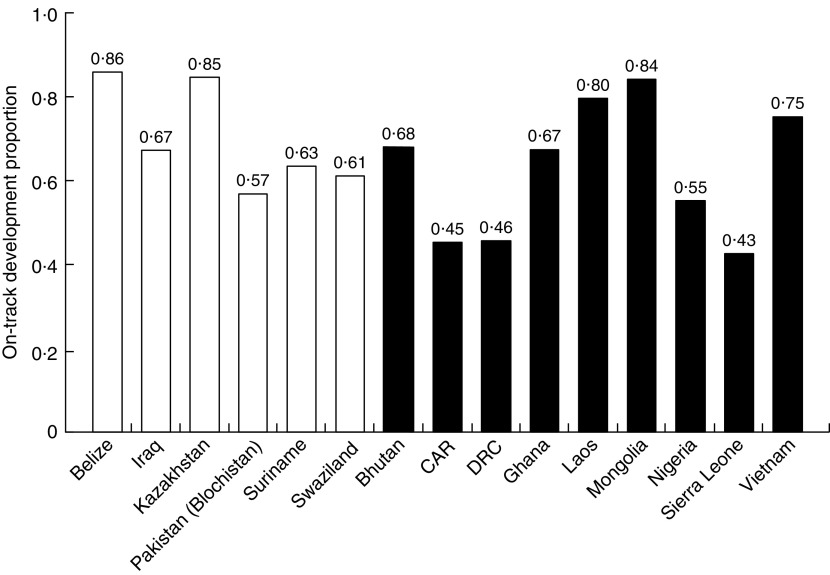
Design: Meta-analysis using publicly available data from fifteen Multiple Indicator Cluster Surveys (MICS-4) to assess the association between stunting and development, controlling for maternal education, family wealth, books in the home, developmentally supportive parenting and sex of the child, stratified by country prevalence of breast-feeding ('low BF'<90 %, 'high BF' ≥90 %). Ten-item Early Childhood Development Index (ECDI) scores assessed physical, learning, literacy/numeracy and socio-emotional developmental domains. Children on track in three or four domains were considered 'on-track' overall.
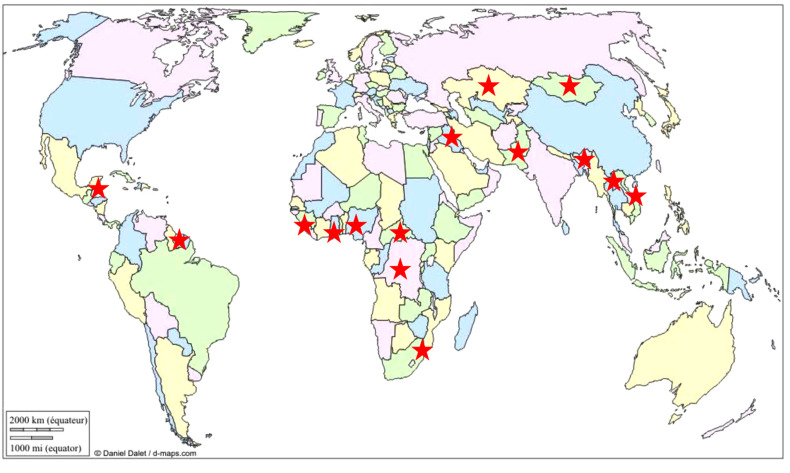
Setting: Fifteen low- and middle-income countries.
Subjects: Publically available data from 58 513 children aged 36-59 months.
Results: Severe stunting (height-for-age Z-score <-3) was negatively associated with on-track development (OR=0·75; 95 % CI 0·67, 0·83). Any stunting (Z-score <-2) was negatively associated with on-track development in countries with high BF prevalence (OR=0·82; 95 % CI 0·75, 0·89). Severe and any stunting were negatively associated with physical development (OR=0·77; 95 % CI 0·66, 0·89 and OR=0·82; 95 % CI 0·74, 0·91, respectively) and literacy/numeracy development in high BF countries (OR=0·45; 95 % CI 0·38, 0·53 and OR=0·59, 95 % CI 0·51, 0·68, respectively), but not low BF countries (OR=0·93; 95 % CI 0·70, 1·23 and OR=0·95, 95 % CI 0·79, 1·12, respectively). Any stunting was negatively associated with learning (OR=0·79; 95 % CI 0·72, 0·88). There was no clear association between stunting and socio-emotional development.
Conclusions: Stunting is associated with many but not all developmental domains across a diversity of countries and cultures. However, associations varied by country breast-feeding prevalence and developmental domain.
Keywords: Child development; Developmental delay; Global health; Malnutrition; Meta-analysis; Multiple indicator cluster study; Stunting.
Figures
References
-
- Powell CA, Walker SP, Himes JH et al. (1995) Relationships between physical growth, mental development and nutritional supplementation in stunted children: the Jamaican study. Acta Paediatr 84, 22–29. - PubMed
-
- Mendez MA & Adair LS (1999) Severity and timing of stunting in the first two years of life affect performance on cognitive tests in late childhood. J Nutr 129, 1555–1562. - PubMed
-
- Johnson FE, Low SM, DeBaessa Y et al. (1987) Interaction of nutritional and socioeconomic status as determinants of cognitive development in disadvantaged urban Guatemalan children. Am J Physiol Anthropol 73, 501–506. - PubMed
-
- Shonkoff JP (2003) From neurons to neighborhoods: old and new challenges for developmental and behavioral pediatrics. J Dev Behav Pediatr 24, 70–76. - PubMed
Publication types
MeSH terms
LinkOut - more resources
Full Text Sources
Medical
Miscellaneous
