


Hearing in young adults. Part II: The effects of recreational noise exposure
- PMID: 26356366
- PMCID: PMC4900507
- DOI: 10.4103/1463-1741.165026
Hearing in young adults. Part II: The effects of recreational noise exposure
Abstract
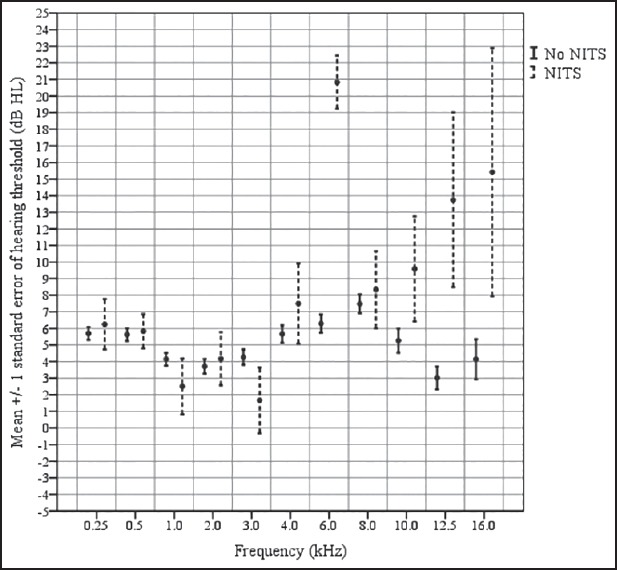
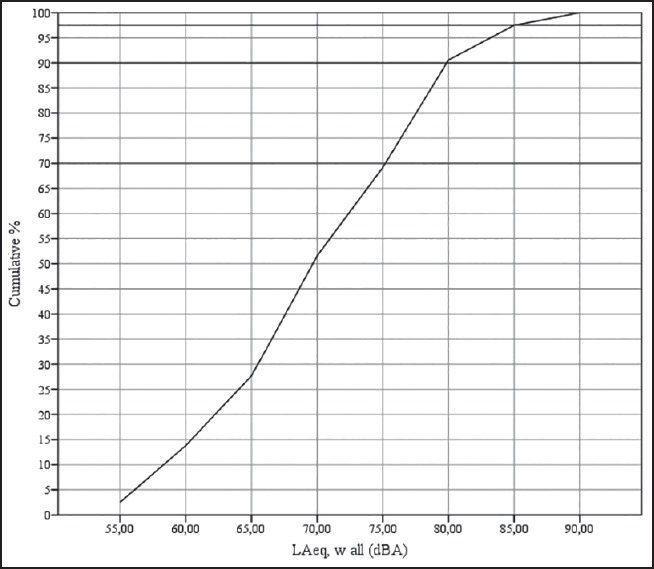
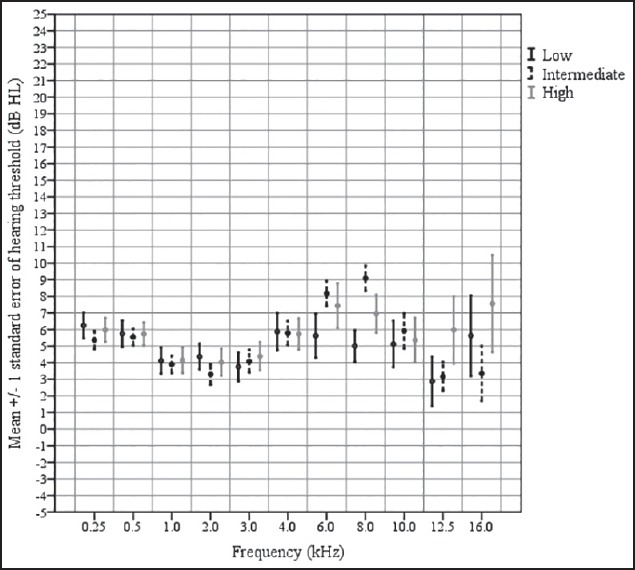
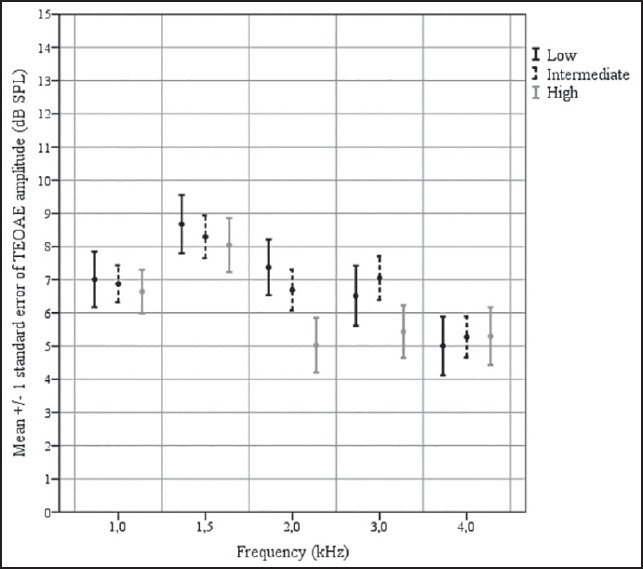
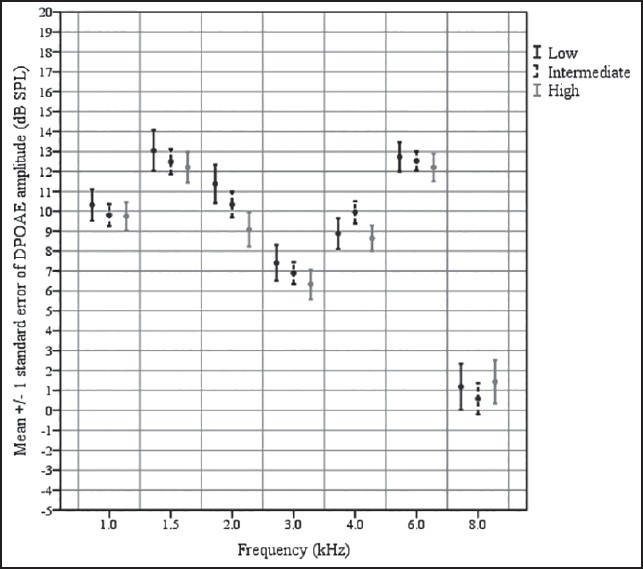
Great concern arises from recreational noise exposure, which might lead to noise-induced hearing loss in young adults. The objective of the current study was to evaluate the effects of recreational noise exposure on hearing function in young adults. A questionnaire concerning recreational noise exposures and an audiological test battery were completed by 163 subjects (aged 18-30 years). Based on the duration of exposure and self-estimated loudness of various leisure-time activities, the weekly and lifetime equivalent noise exposure were calculated. Subjects were categorized in groups with low, intermediate, and high recreational noise exposure based on these values. Hearing was evaluated using audiometry, transient-evoked otoacoustic emissions (TEOAEs), and distortion-product otoacoustic emissions (DPOAEs). Mean differences in hearing between groups with low, intermediate, and high recreational noise exposure were evaluated using one-way analysis of variance (ANOVA). There were no significant differences in hearing thresholds, TEOAE amplitudes, and DPOAE amplitudes between groups with low, intermediate, or high recreational noise exposure. Nevertheless, one-third of our subjects exceeded the weekly equivalent noise exposure for all activities of 75 dBA. Further, the highest equivalent sound pressure levels (SPLs) were calculated for the activities visiting nightclubs or pubs, attending concerts or festivals, and playing in a band or orchestra. Moreover, temporary tinnitus after recreational noise exposure was found in 86% of our subjects. There were no significant differences in hearing between groups with low, intermediate, and high recreational noise exposure. Nevertheless, a long-term assessment of young adults' hearing in relation to recreational noise exposure is needed.
Conflict of interest statement
Figures
References
-
- Sliwinska-Kowalska M, Jedlinska U. Prolonged exposure to industrial noise: Cochlear pathology does not correlate with the degree of permanent threshold shift, but is related to duration of exposure. J Occup Health. 1998;40:123–31.
-
- Talaska AE, Schacht J. Mechanisms of noise damage to the cochlea. Audiol Med. 2007;5:3–9.
-
- Vol. 5. Michigan, USA: Amercian College of Occupational and Environmental Medicine; 2002. American College of Occupational and Environmental Medicine. Position Statement: Noise-Induced Hearing Loss; pp. 1–4.
-
- Smith PA, Davis A, Ferguson M, Lutman ME. The prevalence and type of social noise exposure in young adults in England. Noise Health. 2000;2:41–56. - PubMed
-
- Keppler H, Dhooge I, Maes L, D’haenens W, Bockstael A, Philips B, et al. Short-term auditory effects of listening to an MP3 player. Arch Otolaryngol Head Neck Surg. 2010;136:538–48. - PubMed
Publication types
MeSH terms
LinkOut - more resources
Full Text Sources
Other Literature Sources
Medical