Inflammation: depression fans the flames and feasts on the heat
- PMID: 26357876
- PMCID: PMC6511978
- DOI: 10.1176/appi.ajp.2015.15020152
Inflammation: depression fans the flames and feasts on the heat
Abstract
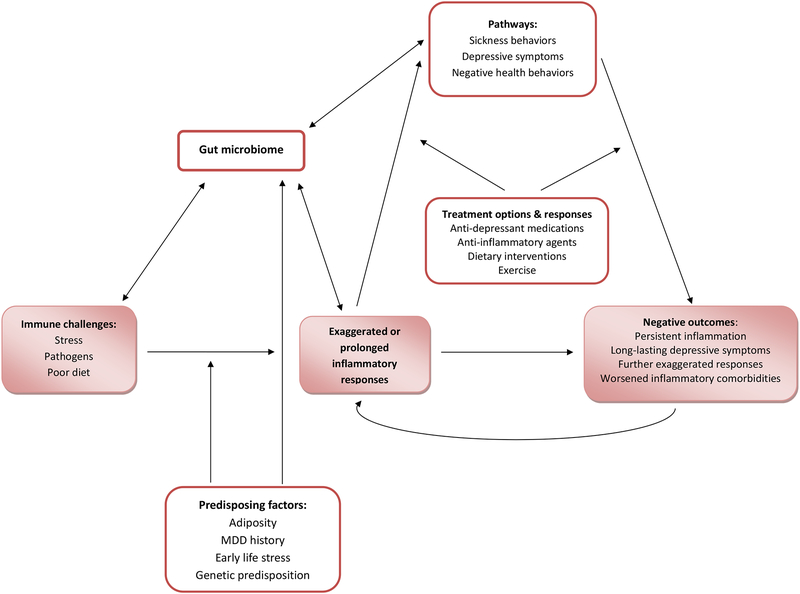
Depression and inflammation fuel one another. Inflammation plays a key role in depression's pathogenesis for a subset of depressed individuals; depression also primes larger cytokine responses to stressors and pathogens that do not appear to habituate. Accordingly, treatment decisions may be informed by attention to questions of how (pathways) and for whom (predispositions) these links exist, which are the focus of this article. When combined with predisposing factors (moderators such as childhood adversity and obesity), stressors and pathogens can lead to exaggerated or prolonged inflammatory responses. The resulting sickness behaviors (e.g., pain, disturbed sleep), depressive symptoms, and negative health behaviors (e.g., poor diet, a sedentary lifestyle) may act as mediating pathways that lead to further, unrestrained inflammation and depression. Depression, childhood adversity, stressors, and diet can all influence the gut microbiome and promote intestinal permeability, another pathway to enhanced inflammatory responses. Larger, more frequent, or more prolonged inflammatory responses could have negative mental and physical health consequences. In clinical practice, inflammation provides a guide to potential targets for symptom management by signaling responsiveness to certain therapeutic strategies. For example, a theme across research with cytokine antagonists, omega-3 fatty acids, celecoxib, and exercise is that anti-inflammatory interventions have a substantially greater impact on mood in individuals with heightened inflammation. Thus, when inflammation and depression co-occur, treating them in tandem may enhance recovery and reduce the risk of recurrence. The bidirectional links between depression, inflammation, and disease suggest that effective depression treatments could have a far-reaching impact on mood, inflammation, and health.
Figures
Comment in
-
Molecules and psychiatry.Am J Psychiatry. 2015 Nov 1;172(11):1051. doi: 10.1176/appi.ajp.2015.15091219. Am J Psychiatry. 2015. PMID: 26575442 No abstract available.
References
-
- Howren MB, Lamkin DM, Suls J. Associations of depression with C-reactive protein, IL-1, and IL-6: A meta-analysis. Psychosom Med. 2009;71:171–186. - PubMed
-
- Dowlati Y, Herrmann N, Swardfager W, Liu H, Sham L, Reim EK, Lanctot KL. A meta-analysis of cytokines in major depression. Biol Psychiatry. 2010;67:446–457. - PubMed
-
- Liu Y, Ho RC, Mak A. Interleukin (il)-6, tumour necrosis factor alpha (TNF-alpha) and soluble interleukin-2 receptors (sIL-2R) are elevated in patients with major depressive disorder: A meta-analysis and meta-regression. J Affect Disord. 2012;139:230–239. - PubMed
Publication types
MeSH terms
Substances
Grants and funding
LinkOut - more resources
Full Text Sources
Other Literature Sources
Medical