


On the interfacial fracture resistance of resin-bonded zirconia and glass-infiltrated graded zirconia
- PMID: 26365987
- PMCID: PMC4615549
- DOI: 10.1016/j.dental.2015.08.161
On the interfacial fracture resistance of resin-bonded zirconia and glass-infiltrated graded zirconia
Abstract
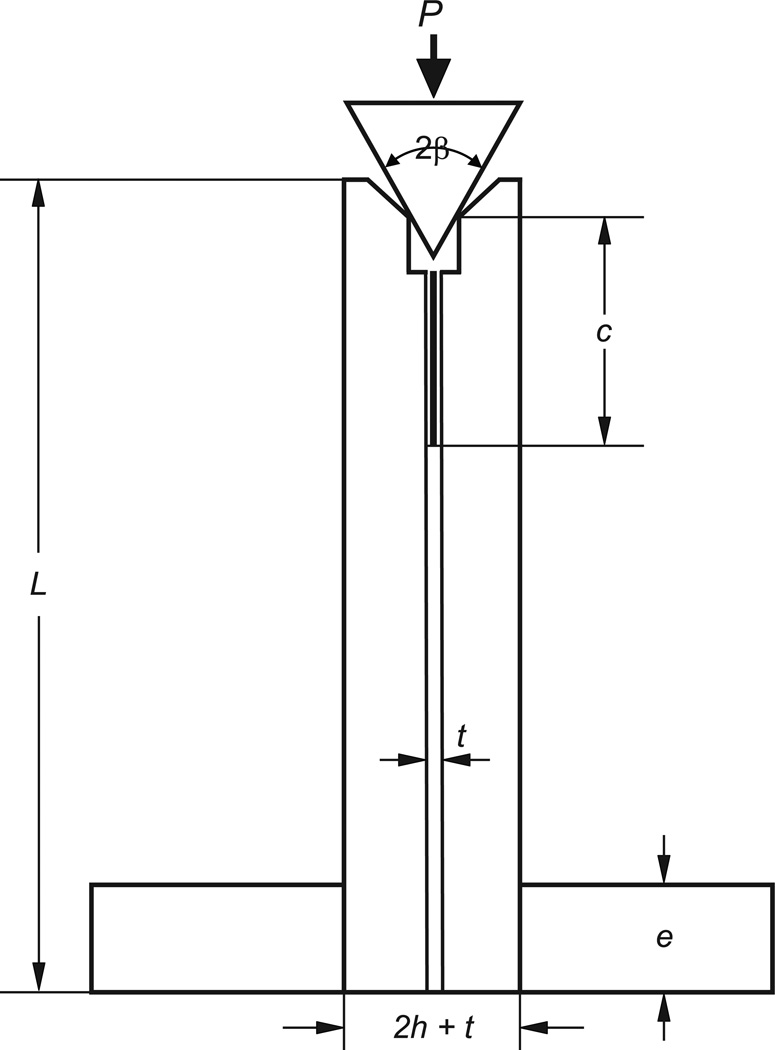
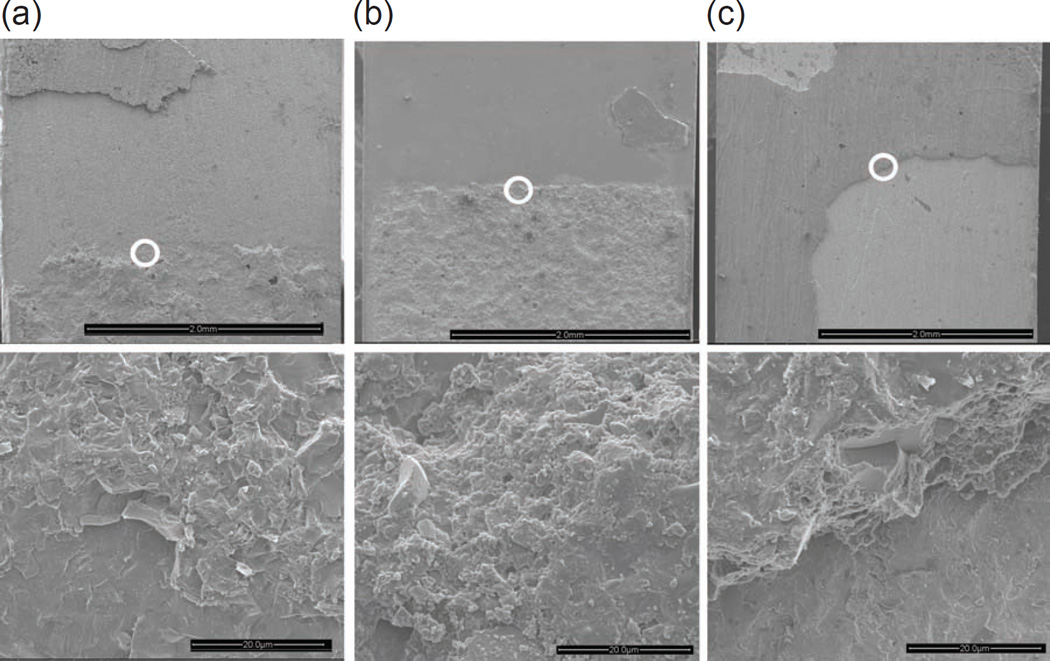
Objective: A major limiting factor for the widespread use of zirconia in prosthetic dentistry is its poor resin-cement bonding capabilities. We show that this deficiency can be overcome by infiltrating the zirconia cementation surface with glass. Current methods for assessing the fracture resistance of resin-ceramic bonds are marred by uneven stress distribution at the interface, which may result in erroneous interfacial fracture resistance values. We have applied a wedge-loaded double-cantilever-beam testing approach to accurately measure the interfacial fracture resistance of adhesively bonded zirconia-based restorative materials.
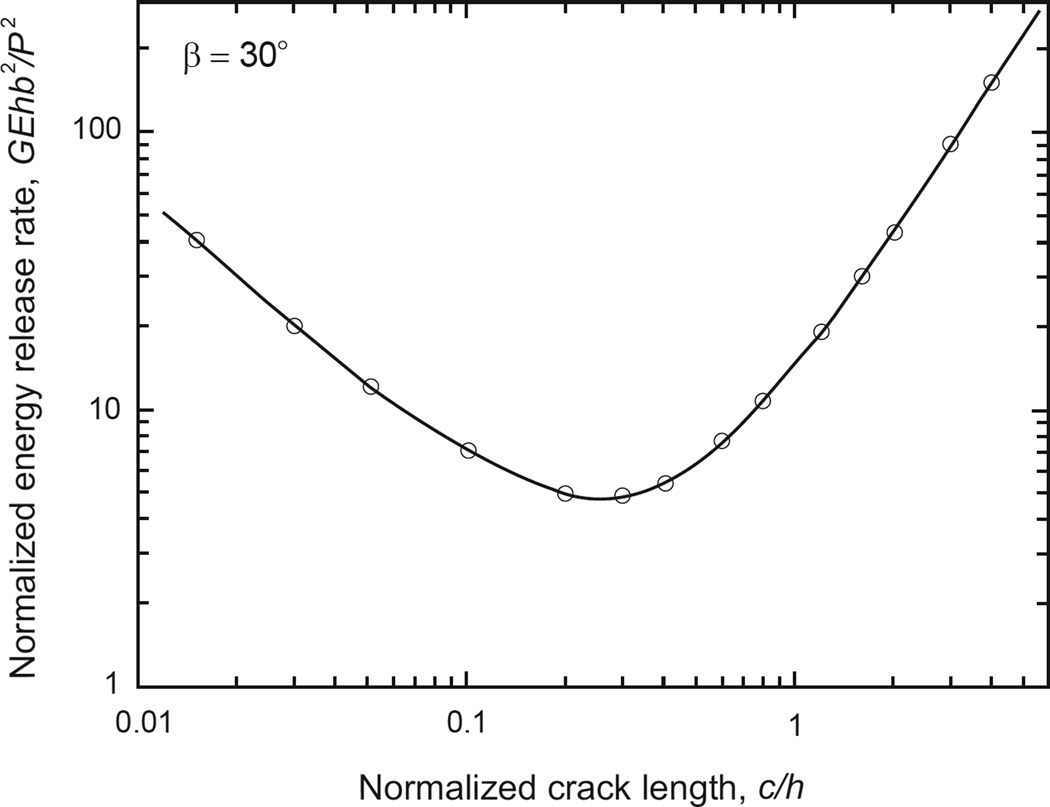
Methods: The interfacial fracture energy GC was determined for adhesively bonded zirconia, graded zirconia and feldspathic ceramic bars. The bonding surfaces were subjected to sandblasting or acid etching treatments. Baseline GC was measured for bonded specimens subjected to 7 days hydration at 37°C. Long-term GC was determined for specimens exposed to 20,000 thermal cycles between 5 and 55°C followed by 2-month aging at 37°C in water. The test data were interpreted with the aid of a 2D finite element fracture analysis.
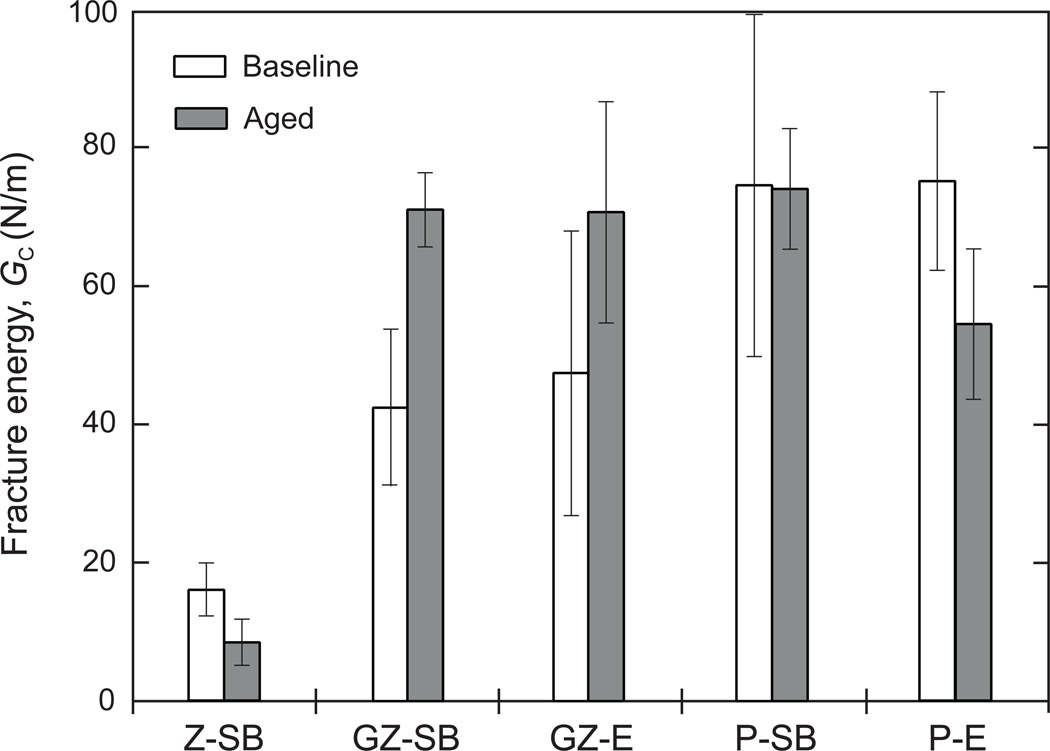
Results: The baseline and long-term GC for graded zirconia was 2-3 and 8 times greater than that for zirconia, respectively. More significantly, both the baseline and long-term GC of graded zirconia were similar to those for feldspathic ceramic.
Significance: The interfacial fracture energy of feldspathic ceramic and graded zirconia was controlled by the fracture energy of the resin cement while that of zirconia by the interface. GC for the graded zirconia was as large as for feldspathic ceramic, making it an attractive material for use in dentistry.
Keywords: Cement bond; Feldspathic ceramic; Glass-infiltrated graded zirconia; Interfacial fracture energy; Wedge-loaded double-cantilever-beam; Zirconia.
Copyright © 2015 Academy of Dental Materials. Published by Elsevier Ltd. All rights reserved.
Figures
References
-
- Kosmac T, Oblak C, Jevnikar P, Funduk N, Marion L. The effect of surface grinding and sandblasting on flexural strength and reliability of y-tzp zirconia ceramic. Dent Mater. 1999;15:426–433. - PubMed
-
- Zhang Y, Lawn BR, Malament KA, Van Thompson P, Rekow ED. Damage accumulation and fatigue life of particle-abraded ceramics. Int J Prosthodont. 2006;19:442–448. - PubMed
-
- Zhang Y, Lawn BR, Rekow ED, Thompson VP. Effect of sandblasting on the long-term performance of dental ceramics. J Biomed Mater Res B Appl Biomater. 2004;71:381–386. - PubMed
-
- Jevnikar P, Krnel K, Kocjan A, Funduk N, Kosmac T. The effect of nano-structured alumina coating on resin-bond strength to zirconia ceramics. Dent Mater. 2010;26:688–696. - PubMed
-
- Kocjan A, Dakskobler A, Kosmac T. Superhydrophobic nanostructured boehmite coatings prepared by aln powder hydrolysis. Int J Appl Ceram Tec. 2011;8:848–853.
Publication types
MeSH terms
Substances
Grants and funding
LinkOut - more resources
Full Text Sources
Other Literature Sources
Miscellaneous
