


Plant protein and secondary metabolites influence diet selection in a mammalian specialist herbivore
- PMID: 26366011
- PMCID: PMC4563869
- DOI: 10.1644/14-MAMM-A-025
Plant protein and secondary metabolites influence diet selection in a mammalian specialist herbivore
Abstract
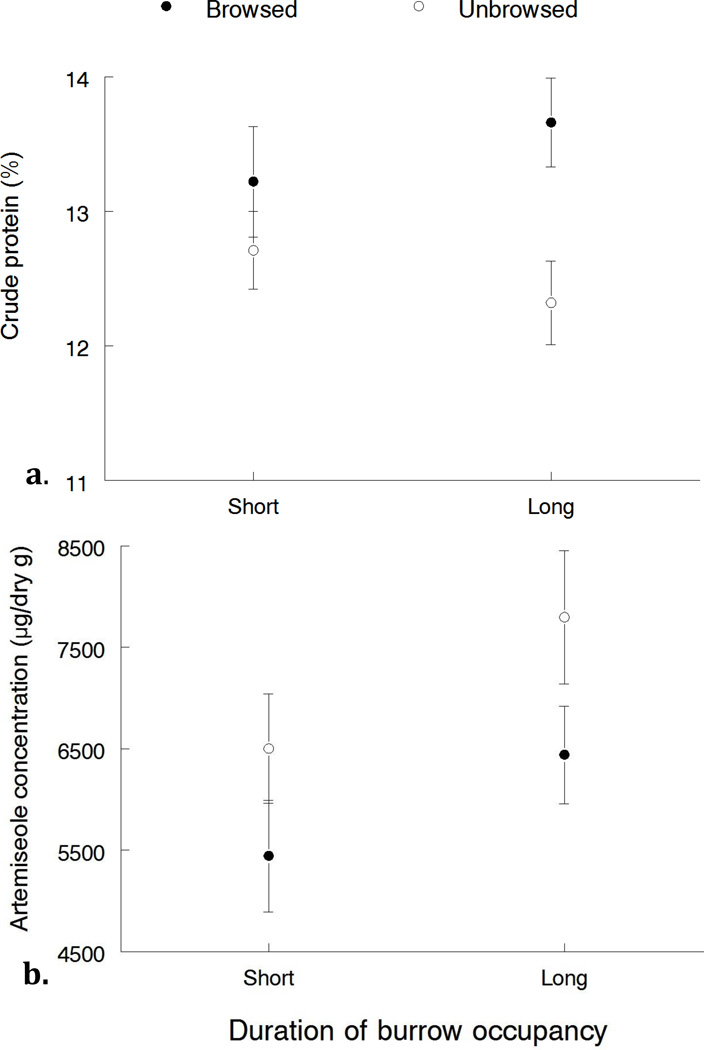
For herbivores, nutrient intake is limited by the relatively low nutritional quality of plants and high concentrations of potentially toxic defensive compounds (plant secondary metabolites, PSMs) produced by many plants. In response to phytochemical challenges, some herbivores selectively forage on plants with higher nutrient and lower PSM concentrations relative to other plants. Pygmy rabbits (Brachylagus idahoensis) are dietary specialists that feed on sagebrush (Artemisia spp.) and forage on specific plants more than others within a foraging patch. We predicted that the plants with evidence of heavy foraging (browsed plants) would be of higher dietary quality than plants that were not browsed (unbrowsed). We used model selection to determine which phytochemical variables best explained the difference between browsed and unbrowsed plants. Higher crude protein increased the odds that plants would be browsed by pygmy rabbits and the opposite was the case for certain PSMs. Additionally, because pygmy rabbits can occupy foraging patches (burrows) for consecutive years, their browsing may influence the nutritional and PSM constituents of plants at the burrows. In a post hoc analysis, we did not find a significant relationship between phytochemical concentrations, browse status and burrow occupancy length. We concluded that pygmy rabbits use nutritional and chemical cues while making foraging decisions.
Keywords: foraging; monoterpenes; nutrition; pygmy rabbit; sagebrush.
Figures
References
-
- Ainsworth EA, Gillespie KM. Estimation of total phenolic content and other oxidation substrates in plant tissues using Folin-Ciocalteu reagent. Nature Protocols. 2007;4:875–887. - PubMed
-
- Akaike H. Likelihood of a model and information criteria. Journal of Econometrics. 1981;16:3–14.
-
- Beckerton PR, Middleton ALA. Effects of dietary protein levels on ruffed grouse reproduction. Journal of Wildlife Management. 1982;46:569–579.
-
- Bruun HH, Österdahl S, Moen J, Angerbjörn A. Distinct patterns in alpine vegetation around dens of the Arctic fox. Ecography. 2005;28:81–87.
-
- Bryant JP, Reichardt PB, Clausen TP. Chemically mediated interactions between woody plants and browsing mammals. Journal of Range Management. 1992;45:18–24.
Grants and funding
LinkOut - more resources
Full Text Sources
Other Literature Sources
Miscellaneous
