


Acne inversa: difficulties in diagnostics and therapy
- PMID: 26366155
- PMCID: PMC4565831
- DOI: 10.5114/pdia.2014.44012
Acne inversa: difficulties in diagnostics and therapy
Abstract
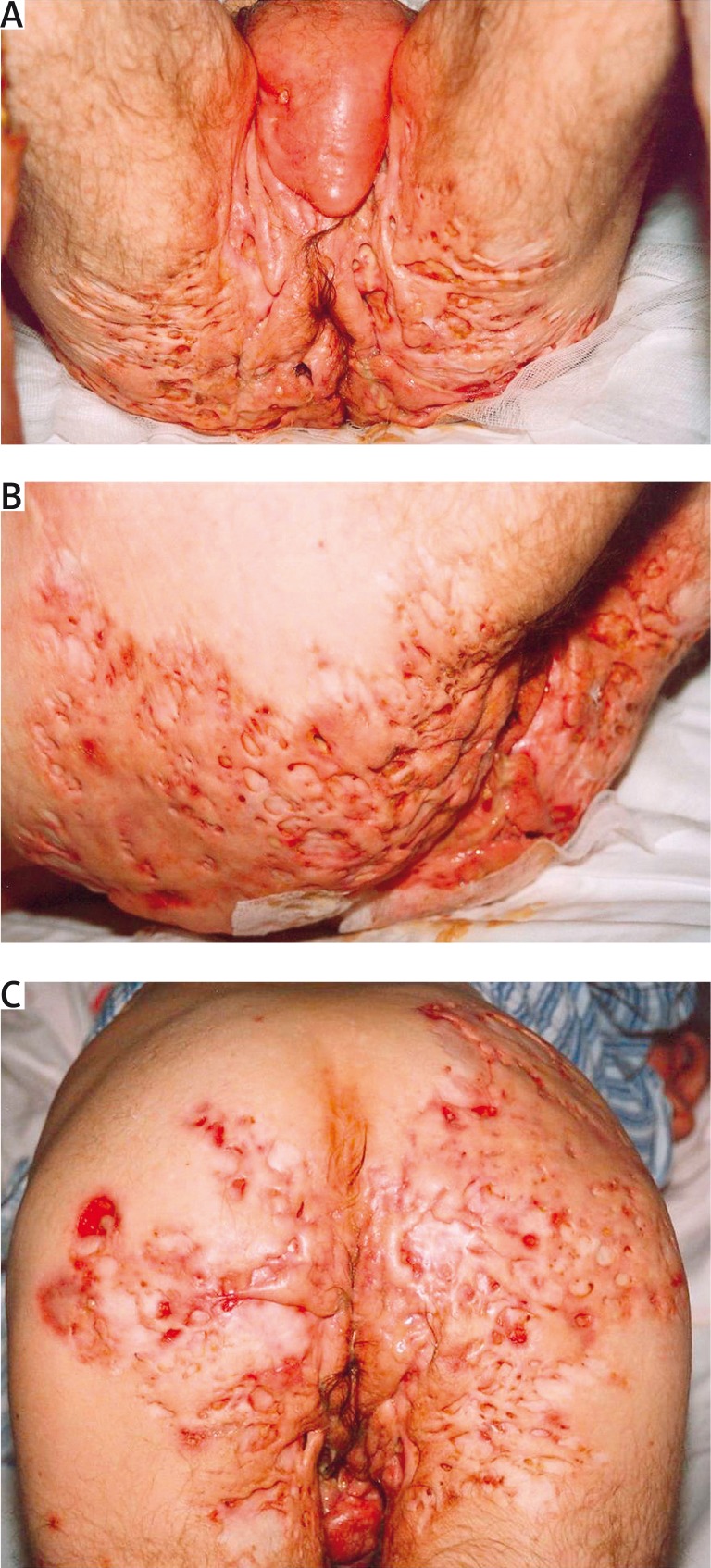
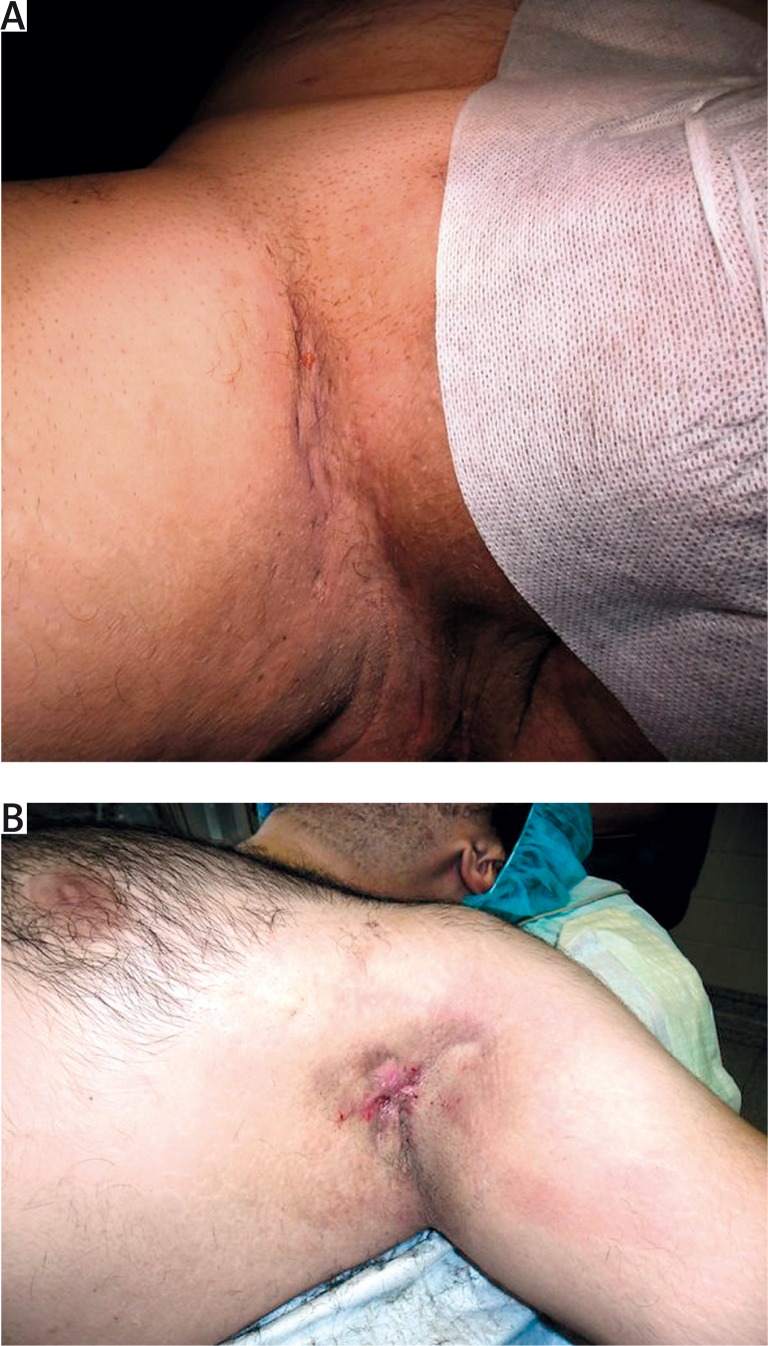
Acne inversa (hidradenitis suppurativa) is a potentially severe and chronic inflammatory disease with a significant negative influence on the quality of life. Usually, lesions are located in the areas of skin folds and it is characterized by the presence of painful nodules and fistulas with a tendency to tissue fibrosis. Currently, it is suggested that follicular occlusion by infundibular hyperkeratosis plays a crucial role in pathogenesis and an occupation of apocrine sweat glands is a secondary phenomenon. Most often, it refers to men after puberty. This article tries to present the latest theory concerning the etiology of inverted acne and methods of its treatment. It also describes the most common errors in diagnostic and therapeutic procedures, which are mainly connected with repeated and long antibiotic therapy and not radical surgical treatment.
Keywords: acne inversa; etiology; treatment.
Figures
References
-
- Scheinfeld N. Hidradenitis suppurativa: a practical review of possible medical treatments based on over 350 hidradenitis patients. Dermatol Online J. 2013;19:18169. - PubMed
-
- van der Zee HH, Prens EP. Failure of anti-interleukin-1 therapy in severe hidradenitis suppurativa: a case report. Dermatology. 2013;226:97–100. - PubMed
-
- Gisondi P, Girolomoni G. Impact of TNF-alpha antagonists on the quality of life in selected skin diseases. G Ital Dermatol Venereol. 2013;148:243–8. - PubMed
-
- Blanco R, González-López MA, González-Vela MC, et al. Disparate results in studies of adalimumab in the treatment of hidradenitis suppurativa: comment on the article by Amano et al. Int J Dermatol. 2013;52:380–1. - PubMed
Publication types
LinkOut - more resources
Full Text Sources
Other Literature Sources
