


Ongoing ecological speciation in Cotesia sesamiae, a biological control agent of cereal stem borers
- PMID: 26366198
- PMCID: PMC4561570
- DOI: 10.1111/eva.12260
Ongoing ecological speciation in Cotesia sesamiae, a biological control agent of cereal stem borers
Abstract
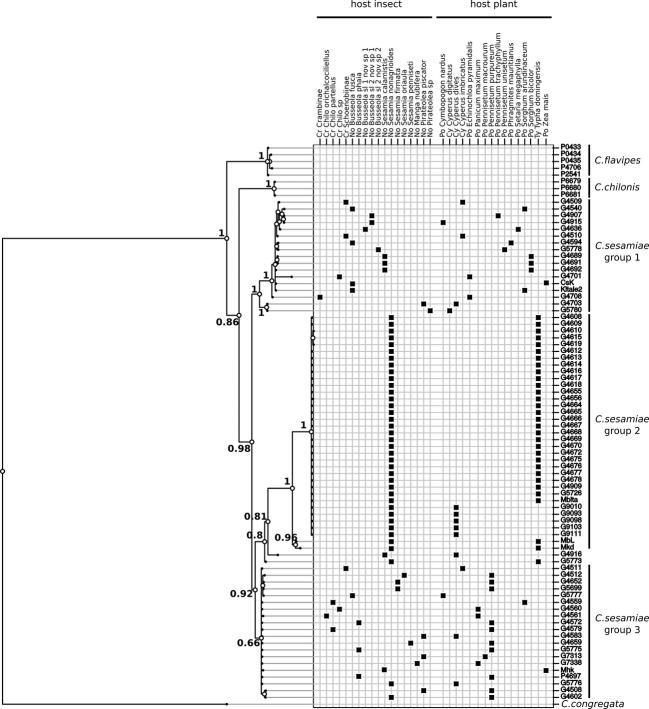
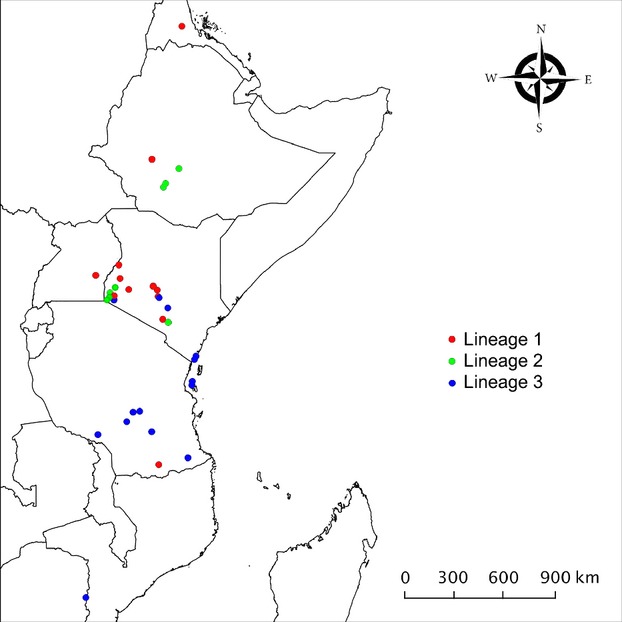
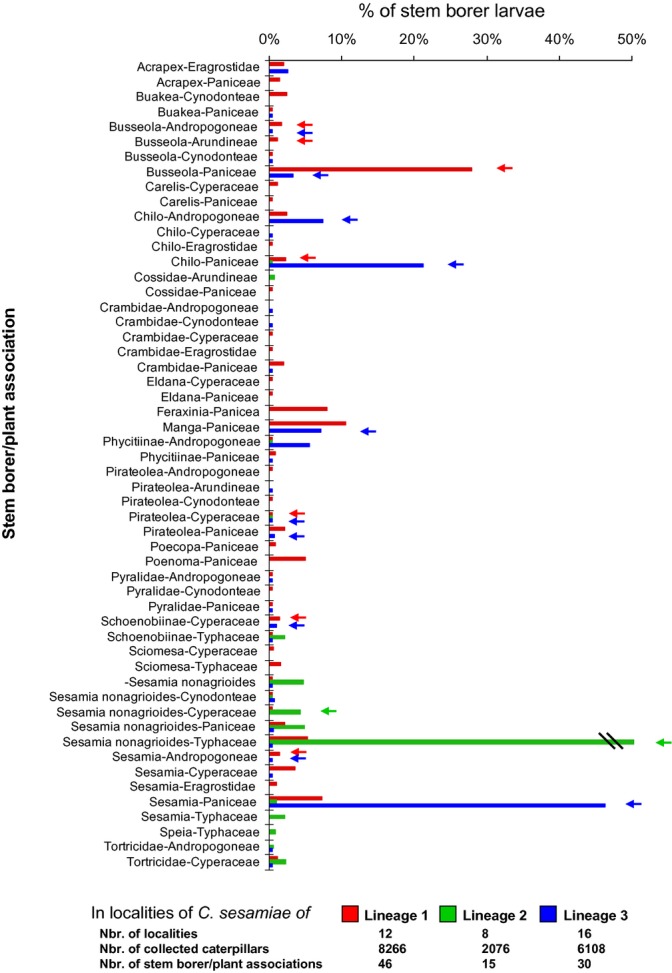
To develop efficient and safe biological control, we need to reliably identify natural enemy species, determine their host range, and understand the mechanisms that drive host range evolution. We investigated these points in Cotesia sesamiae, an African parasitic wasp of cereal stem borers. Phylogenetic analyses of 74 individual wasps, based on six mitochondrial and nuclear genes, revealed three lineages. We then investigated the ecological status (host plant and host insect ranges in the field, and host insect suitability tests) and the biological status (cross-mating tests) of the three lineages. We found that one highly supported lineage showed all the hallmarks of a cryptic species. It is associated with one host insect, Sesamia nonagrioides, and is reproductively isolated from the other two lineages by pre- and postmating barriers. The other two lineages had a more variable phylogenetic support, depending on the set of genes; they exhibited an overlapping and diversified range of host species and are not reproductively isolated from one another. We discuss the ecological conditions and mechanisms that likely generated this ongoing speciation and the relevance of this new specialist taxon in the genus Cotesia for biological control.
Keywords: Africa; Hymenoptera; adaptation; cryptic species; ecological niche; evolution; geographic distribution; host range; parasitic wasp; phylogeny; reproductive isolation; virulence.
Figures
References
-
- Asgari S. Schmidt O. A coiled-coil region of an insect immune suppressor protein is involved in binding and uptake by haemocytes. Insect Biochemistry and Molecular Biology. 2002;32:497–504. - PubMed
-
- Baer CF, Tripp DW, Bjorksten TA. Antolin MF. Phylogeography of a parasitoid wasp (Diaeretiella rapae): no evidence of host-associated lineages. Molecular Ecology. 2004;13:1859–1869. - PubMed
-
- Barratt BIP, Oberprieler RG, Barton DM, Mouna M, Stevens M, Alonso-Zarazaga MA, Vink CJ, et al. Could research in the native range, and non-target host range in Australia, have helped predict host range of the parasitoid Microctonus aethiopoides Loan (Hymenoptera: Braconidae), a biological control agent introduced for Sitona discoideus Gyllenhal (Coleoptera: Curculionidae) in New Zealand? BioControl. 2012;57:751–758.
-
- Bézier A, Louis F, Jancek S, Periquet G, Thézé J, Gyapay G, Musset K, et al. Functional endogenous viral elements in the genome of the parasitoid wasp Cotesia congregata: insights into the evolutionary dynamics of bracoviruses. Philosophical Transactions of the Royal Society B. 2013;368:20130047. - PMC - PubMed
LinkOut - more resources
Full Text Sources
Other Literature Sources
