Ex situ reimplantation technique, in central lung tumors
- PMID: 26366395
- PMCID: PMC4543329
- DOI: 10.3978/j.issn.2305-5839.2015.08.03
Ex situ reimplantation technique, in central lung tumors
Abstract
Background: The parenchyma-sparing resection is most often performed in patients with impaired preoperative lung or cardiovascular function who would not be able to tolerate a pneumonectomy.
Methods: Our experience on the ex situ reimplantation procedure and the outcome of patients with lung malignancies, who underwent upper or upper-middle lobectomy, with reimplantation of the lower lobe was reported.
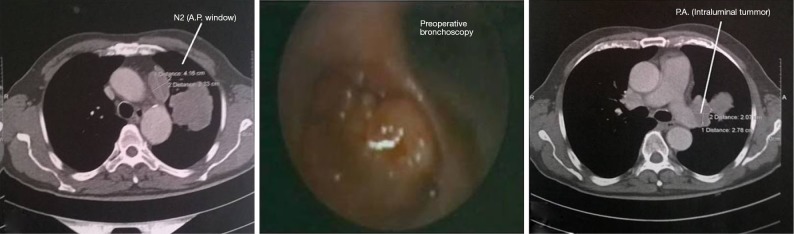
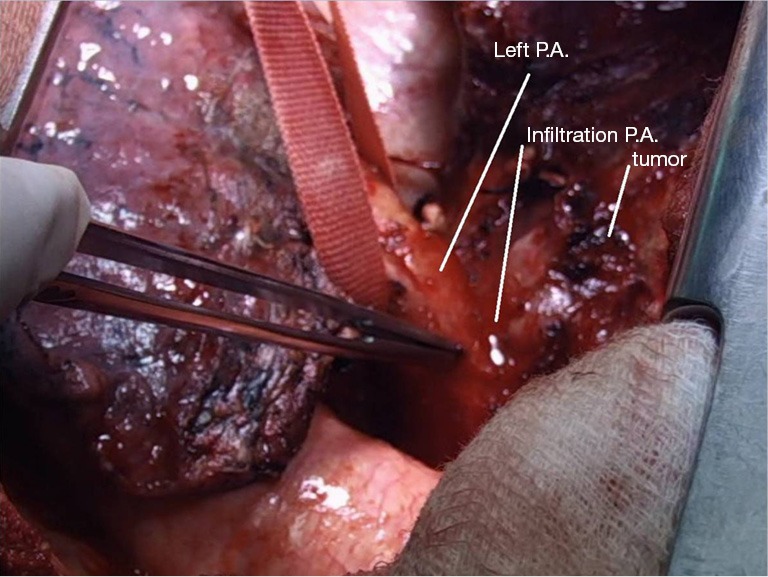
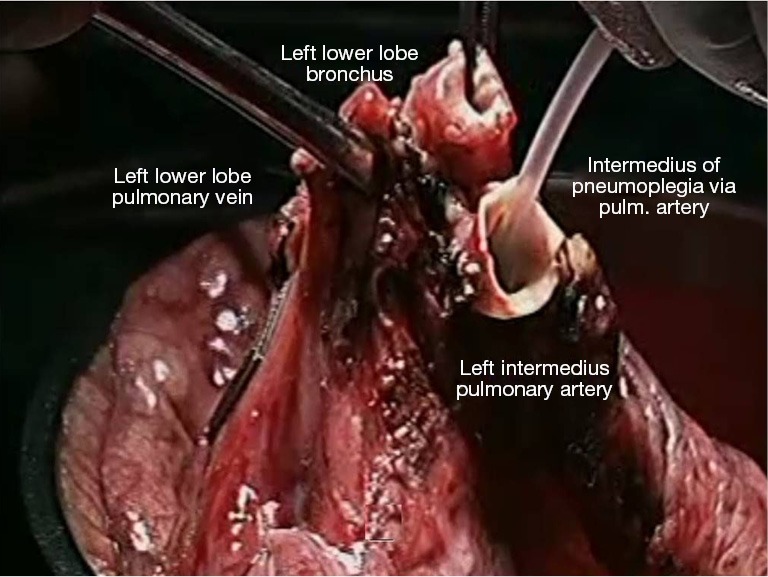
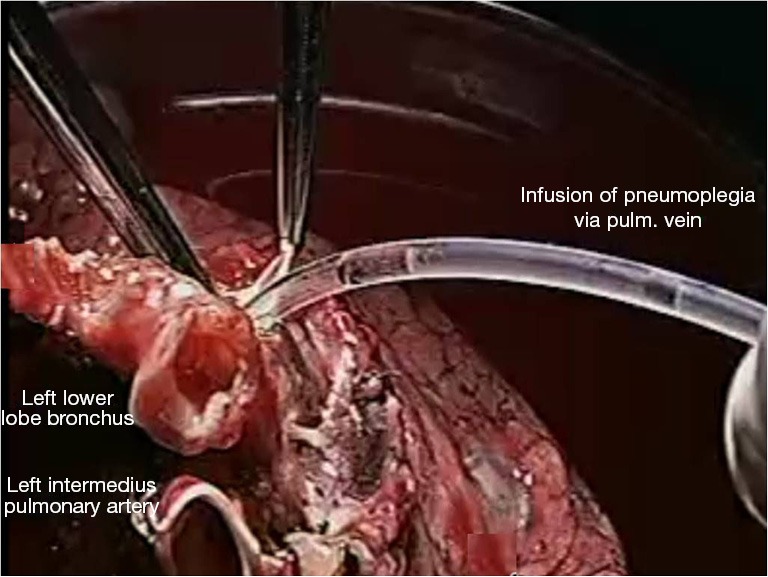
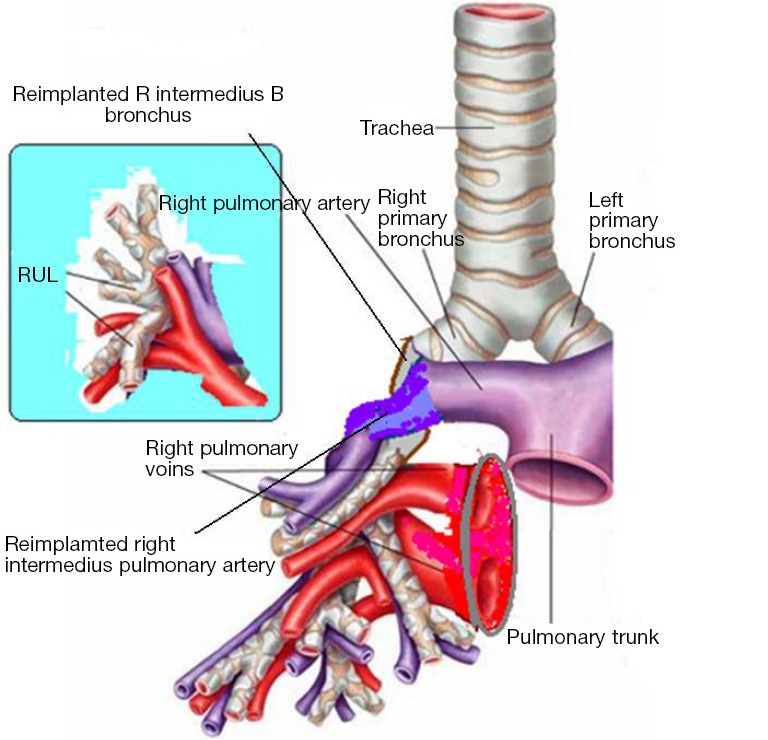
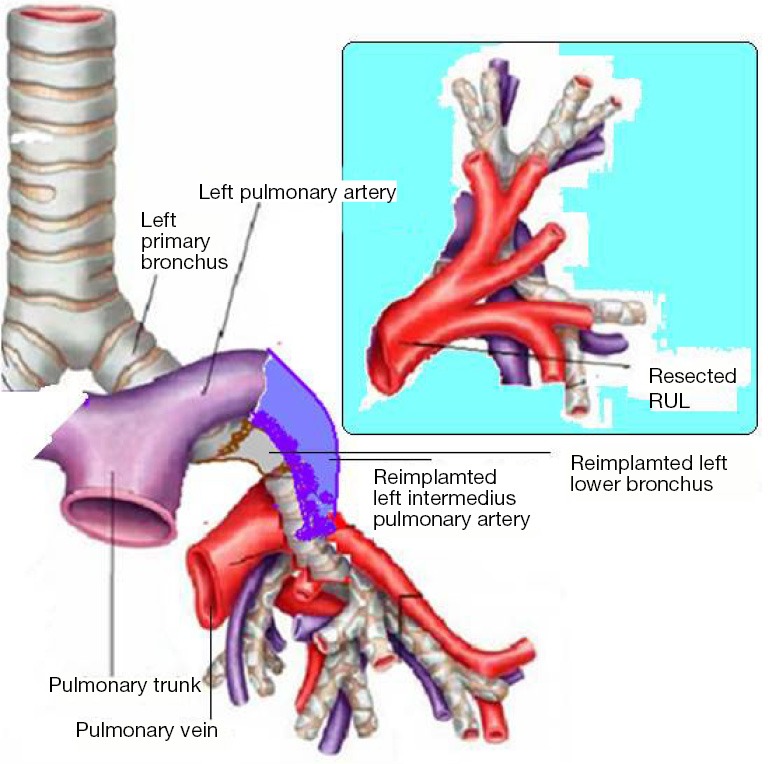
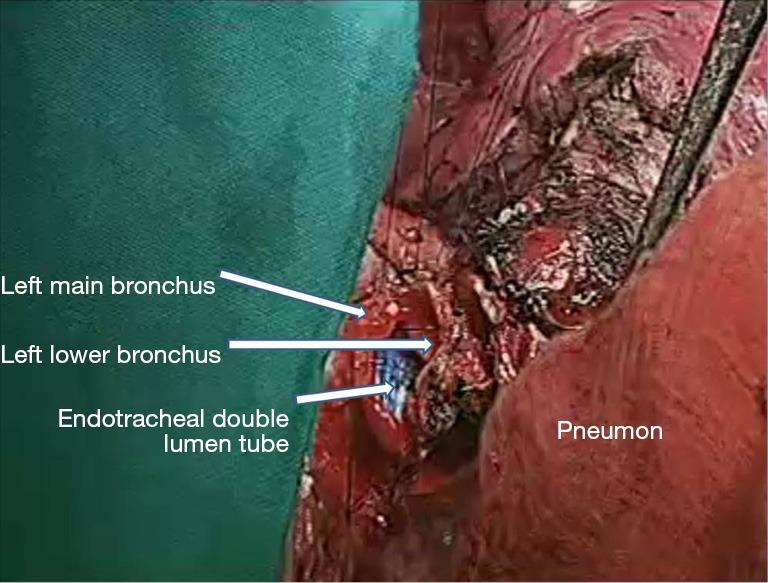
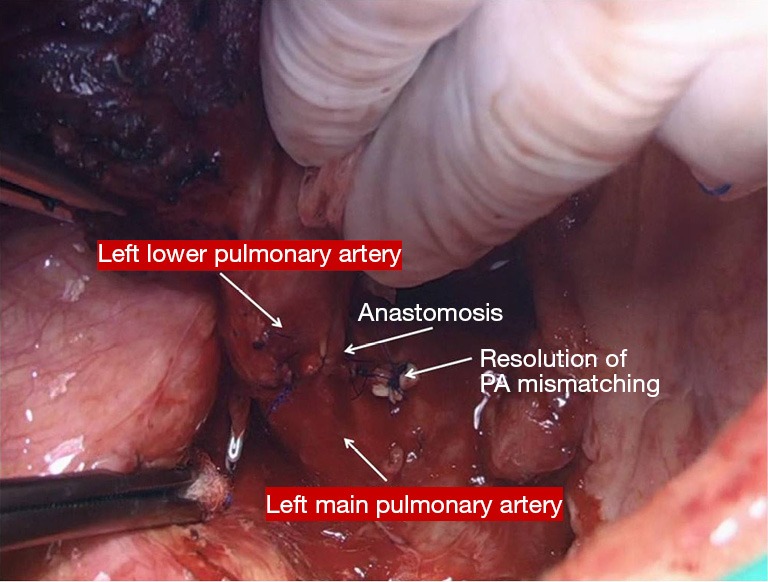
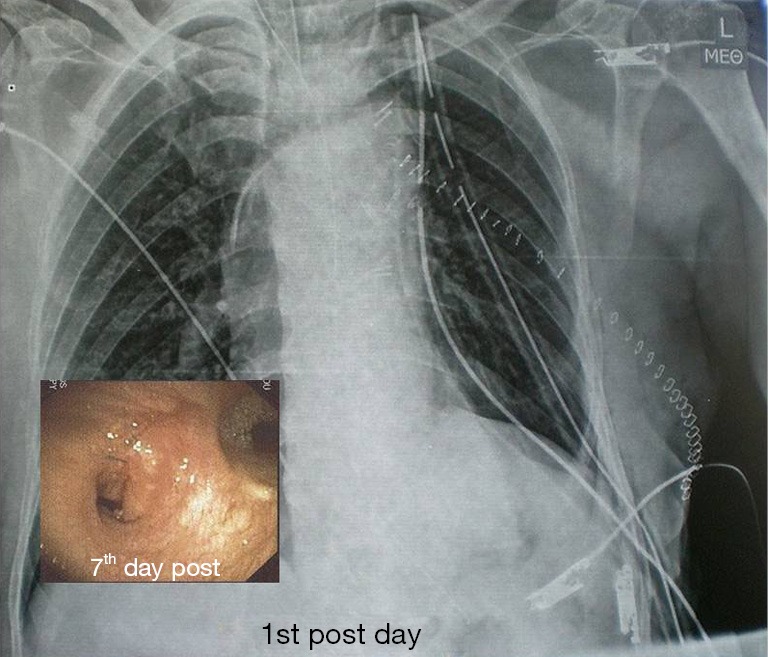
Results: We present 9 patients mean age 62.6+16.2 years (7 males/2 females) underwent ex situ reimplantation due to extensive lung tumor of upper lobes. The surgical technique precludes IV heparinization and then radical pneumonectomy. The entire lung was immersed in Ringer's solution (temperature 4 degrees centigrade) and bench surgery was performed. The involved upper (or upper-middle) lobes with involved lymph nodes were resected, thus leaving the healthy lower lobe of the lung. Pneumoplegia solution, named "Papworth pneumoplegia", was administered (1,473 mL) through catheterization of the pulmonary artery and vein stumps (ante grade and retrograde) along with 250 mL of prostaglandin E1. Re-implantation of the lower lobe was performed (I) on the right side, implantation involved the anastomosis of lower pulmonary vein in the site of the cuff of left atrium, followed by suturing the stump of the intermedius pulmonary artery to the right main pulmonary artery and finally the bronchial stumps-intermedius bronchus to the right main bronchus; (II) on the left side the pulmonary vein was anastomosed first, followed by the bronchial stumps and finally by the pulmonary artery. The graft ischemia time was 70.2+8.4 minutes ranged between 55 and 80 minutes.
Conclusions: Re-implantation or auto-transplantation should be considered as a safe option for the appropriate patient with lung cancer. The ex situ separation of the cancerous lobes is technically feasible and allows extensive pulmonary resection while minimizing the loss of pulmonary reserve. Based on our work, the major factors that play a role for the survival of initially resected and then re-implanted lung graft, are: (I) the ischemia time of the re-implanted lobe; (II) the proper use of pneumoplegia solutions, along with prostaglandin E1 and heparin; (III) the occurrence of pulmonary vein thrombosis; and (IV) the bronchial anastomosis.
Keywords: Non-small lung cancer; auto-transplantation; bench surgery; ex situ; re-implantation.
Conflict of interest statement
Figures
References
-
- Pearson FG, Cooper JD, Deslauriers J, et al, editors. Thoracic surgery 2nd ed. New York: Churchill Livingstone 2002:837-47.
-
- Tedder M, Anstadt MP, Tedder SD, et al. Current morbidity, mortality, and survival after bronchoplastic procedures for malignancy. Ann Thorac Surg 1992;54:387-91. - PubMed
-
- Venuta F, Rendina EA, Bufi M, et al. Preimplantation retrograde pneumoplegia in clinical lung transplantation. J Thorac Cardiovasc Surg 1999;118:107-14. - PubMed
-
- Martin-Ucar AE, Chaudhuri N, Edwards JG, et al. Can pneumonectomy for non-small cell lung cancer be avoided? An audit of parenchymal sparing lung surgery. Eur J Cardiothorac Surg 2002;21:601-5. - PubMed
-
- de Perrot M, Liu M, Waddell TK, et al. Ischemia-reperfusion-induced lung injury. Am J Respir Crit Care Med 2003;167:490-511. - PubMed
LinkOut - more resources
Full Text Sources