A Proteomic Analysis of the Body Wall, Digestive Tract, and Reproductive Tract of Brugia malayi
- PMID: 26367142
- PMCID: PMC4569401
- DOI: 10.1371/journal.pntd.0004054
A Proteomic Analysis of the Body Wall, Digestive Tract, and Reproductive Tract of Brugia malayi
Abstract
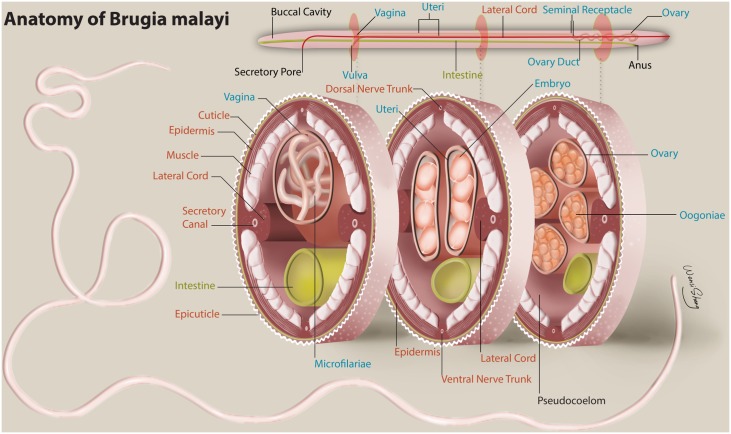
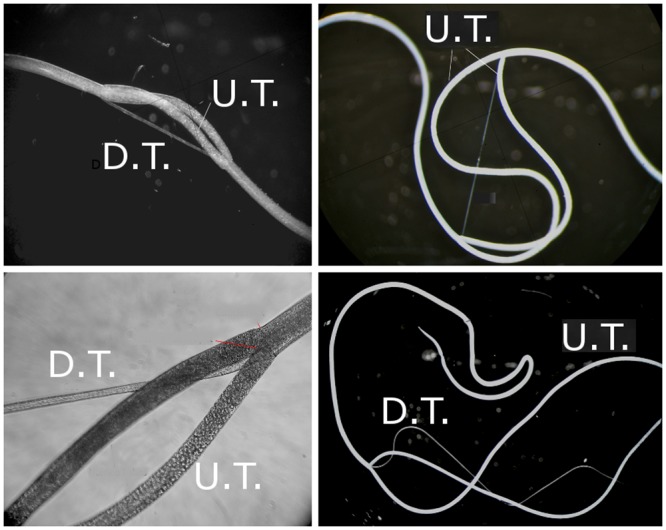
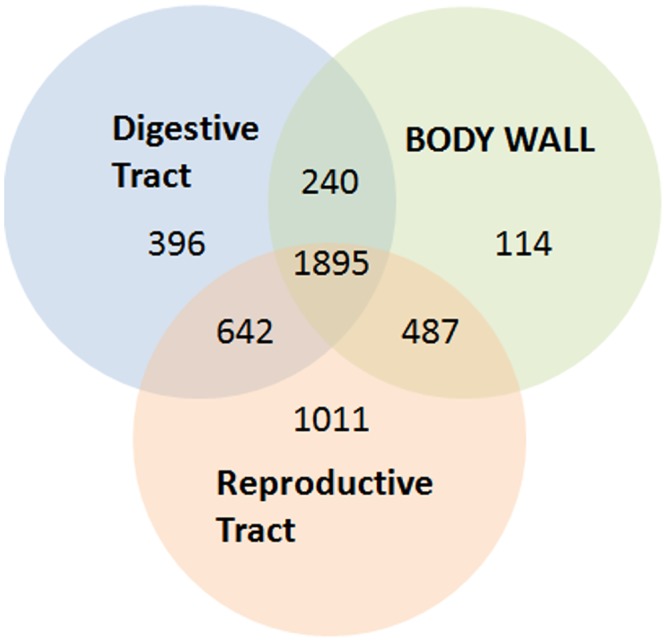
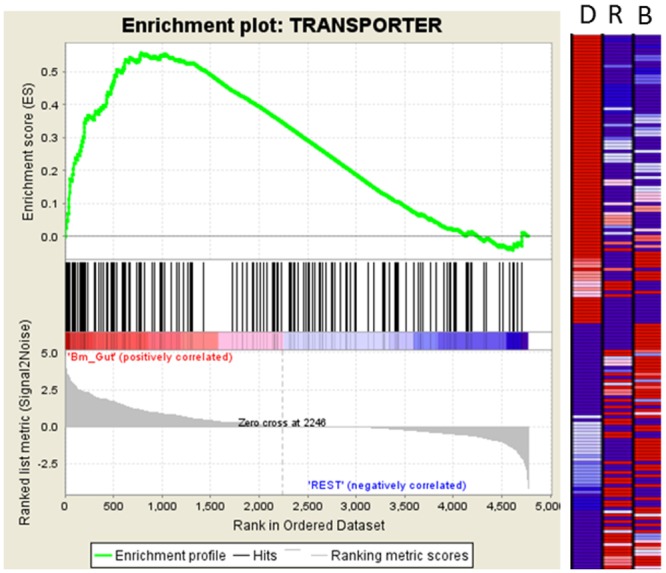
Filarial worms are parasitic nematodes that cause devastating diseases such as lymphatic filariasis (LF) and onchocerciasis. Filariae are nematodes with complex anatomy including fully developed digestive tracts and reproductive organs. To better understand the basic biology of filarial parasites and to provide insights into drug targets and vaccine design, we conducted a proteomic analysis of different anatomic fractions of Brugia malayi, a causative agent of LF. Approximately 500 adult female B. malayi worms were dissected, and three anatomical fractions (body wall, digestive tract, and reproductive tract) were obtained. Proteins from each anatomical fraction were extracted, desalted, trypsinized, and analyzed by microcapillary reverse-phase liquid chromatography-tandem-mass spectrometry. In total, we identified 4,785 B. malayi proteins. While 1,894 were identified in all three anatomic fractions, 396 were positively identified only within the digestive tract, 114 only within the body wall, and 1,011 only within the reproductive tract. Gene set enrichment analysis revealed a bias for transporters to be present within the digestive tract, suggesting that the intestine of adult filariae is functional and important for nutrient uptake or waste removal. As expected, the body wall exhibited increased frequencies of cytoskeletal proteins, and the reproductive tract had increased frequencies of proteins involved in nuclear regulation and transcription. In assessing for possible vaccine candidates, we focused on proteins sequestered within the digestive tract, as these could possibly represent "hidden antigens" with low risk of prior allergic sensitization. We identified 106 proteins that are enriched in the digestive tract and are predicted to localize to the surface of cells in the the digestive tract. It is possible that some of these proteins are on the luminal surface and may be accessible by antibodies ingested by the worm. A subset of 27 of these proteins appear especially promising vaccine candidates as they contain significant non-cytoplasmic domains, only 1-2 transmembrane domains, and a high degree of homology to W. bancrofti and/or O. volvulus.
Conflict of interest statement
I have read the journal's policy and the authors of this manuscript have the following competing interests: CPM, SB, TBN, and EM have filed a patent application for the use of digestive tract antigens as vaccine candidates in filariasis. This does not alter our adherence to all PLOS policies on sharing data and materials.
Figures
References
-
- Bennuru S, Meng Z, Ribeiro JM, Semnani RT, Ghedin E, Chan K, et al. Stage-specific proteomic expression patterns of the human filarial parasite Brugia malayi and its endosymbiont Wolbachia. Proceedings of the National Academy of Sciences of the United States of America. 2011;108(23):9649–54. Epub 2011/05/25. 10.1073/pnas.1011481108 - DOI - PMC - PubMed
-
- Bennuru S, Semnani R, Meng Z, Ribeiro JM, Veenstra TD, Nutman TB. Brugia malayi excreted/secreted proteins at the host/parasite interface: stage- and gender-specific proteomic profiling. PLoS neglected tropical diseases. 2009;3(4):e410 Epub 2009/04/09. 10.1371/journal.pntd.0000410 - DOI - PMC - PubMed
Publication types
MeSH terms
Substances
LinkOut - more resources
Full Text Sources
Other Literature Sources
Research Materials