


Effect of Acetazolamide on Obesity-Induced Glomerular Hyperfiltration: A Randomized Controlled Trial
- PMID: 26367377
- PMCID: PMC4569381
- DOI: 10.1371/journal.pone.0137163
Effect of Acetazolamide on Obesity-Induced Glomerular Hyperfiltration: A Randomized Controlled Trial
Abstract
Aims: Obesity is an important risk factor for the development of chronic kidney disease. One of the major factors involved in the pathogenesis of obesity-associated kidney disease is glomerular hyperfiltration. Increasing salt-delivery to the macula densa is expected to decrease glomerular filtration rate (GFR) by activating tubuloglomerular feedback. Acetazolamide, a carbonic anhydrase inhibitor which inhibits salt reabsorption in the proximal tubule, increases distal salt delivery. Its effects on obesity-related glomerular hyperfiltration have not previously been studied. The aim of this investigation was to evaluate whether administration of acetazolamide to obese non diabetic subjects reduces glomerular hyperfiltration.
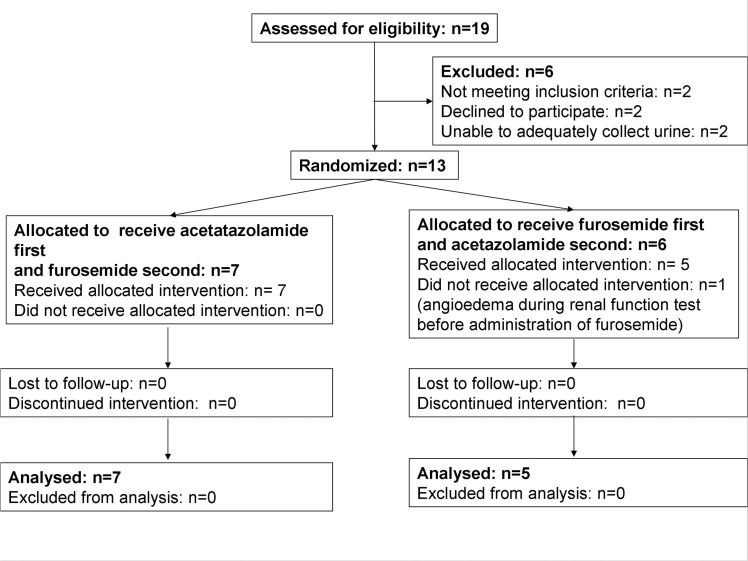
Materials and methods: The study was performed using a randomized double-blind crossover design. Obese non-diabetic men with glomerular hyperfiltration were randomized to receive intravenously either acetazolamide or furosemide at equipotent doses. Twelve subjects received the allocated medications. Two weeks later, the same subjects received the drug which they had not received during the first study. Inulin clearance, p-aminohippuric acid clearance and fractional lithium excretion were measured before and after medications administration. The primary end point was a decrease in GFR, measured as inulin clearance.
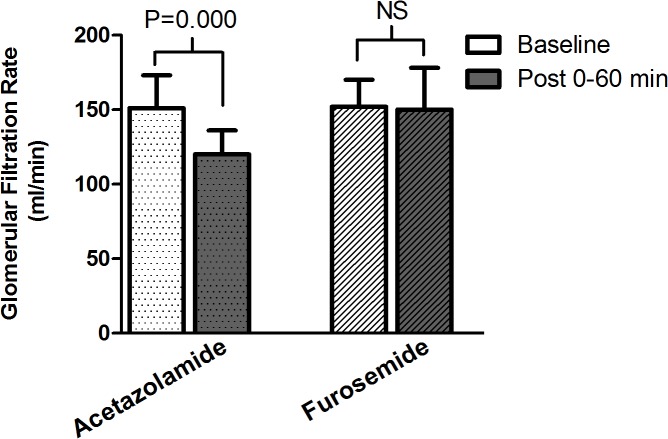
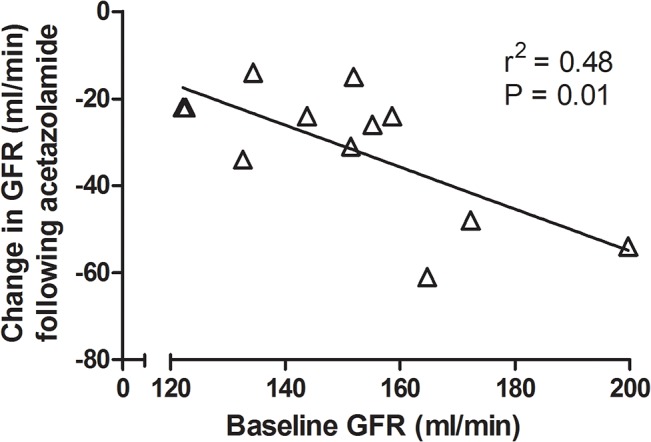
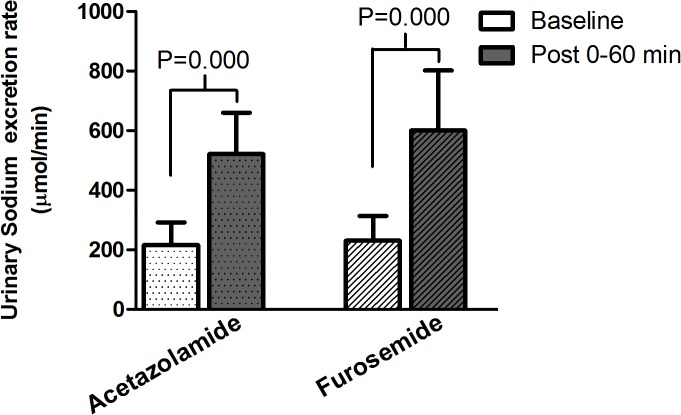
Results: GFR decreased by 21% following acetazolamide and did not decrease following furosemide. Renal vascular resistance increased by 12% following acetazolamide, while it remained unchanged following furosemide administration. Natriuresis increased similarly following acetazolamide and furosemide administration. Sodium balance was similar in both groups.
Conclusions: Intravenous acetazolamide decreased GFR in obese non-diabetic men with glomerular hyperfiltration. Furosemide, administered at equipotent dose, did not affect GFR, suggesting that acetazolamide reduced glomerular hyperfiltration by activating tubuloglomerular feedback.
Trial registration: ClinicalTrials.gov NCT01146288.
Conflict of interest statement
Figures
References
-
- Wang Y, Chen X, Song Y, Caballero B, Cheskin LJ. (2008) Association between obesity and kidney disease: a systematic review and meta-analysis. Kidney Int 2008; 73: 19–33. - PubMed
-
- Kambham N, Markowitz GS, Valeri AM, Lin J, D’Agati VD. (2001) Obesity-related glomerulopathy: an emerging epidemic. Kidney Int 59:1498–509. - PubMed
-
- Bonnet F, Deprele C, Sassolas A, Moulin P, Alamartine E, Berthezène F et al. (2001) Excessive body weight as a new independent risk factor for clinical and pathological progression in primary IgA nephritis. Am J Kidney Dis 37:720–7. - PubMed
-
- González E, Gutiérrez E, Morales E, Hernández E, Andres A, Bello I et al. (2005) Factors influencing the progression of renal damage in patients with unilateral renal agenesis and remnant kidney. Kidney Int 68:263–70. - PubMed
Publication types
MeSH terms
Substances
Associated data
LinkOut - more resources
Full Text Sources
Other Literature Sources
Medical
