


Efficiency of a phone coaching program on adherence to continuous positive airway pressure in sleep apnea hypopnea syndrome: a randomized trial
- PMID: 26370444
- PMCID: PMC4570038
- DOI: 10.1186/s12890-015-0099-7
Efficiency of a phone coaching program on adherence to continuous positive airway pressure in sleep apnea hypopnea syndrome: a randomized trial
Abstract
Background: Continuous Positive Airway Pressure (CPAP) remains the reference treatment for moderate to severe forms of the Sleep Apnea/Hypopnea Syndrome (SAHS). Compliance to the treatment appears to be a key factor to improving health status of these patients.
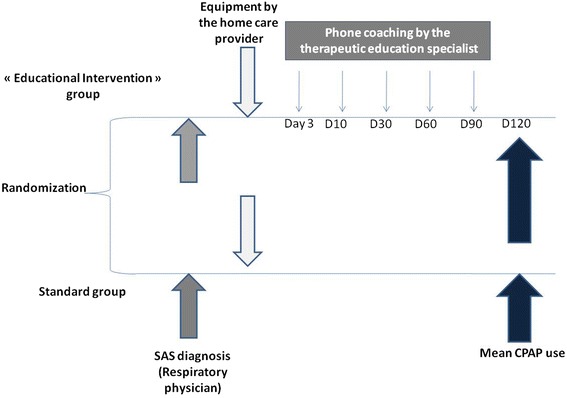
Methods: We conducted a multicenter, prospective, randomized, controlled, parallel group trial of standard support completed or not within 3 months of coaching sessions for newly diagnosed SAHS patients starting CPAP therapy. This study has been recorded by AFSSAPS with the RCB number: 2009-A01127-50 and received favourably by the Human Studies Committee in France. The coaching session consisted of 5 sessions of telephone-based counselling by competent staff. The primary outcome was the proportion of patients using CPAP more than 3 h per night for 4 months; the secondary outcome was mean hours of CPAP usage in the 2 groups.
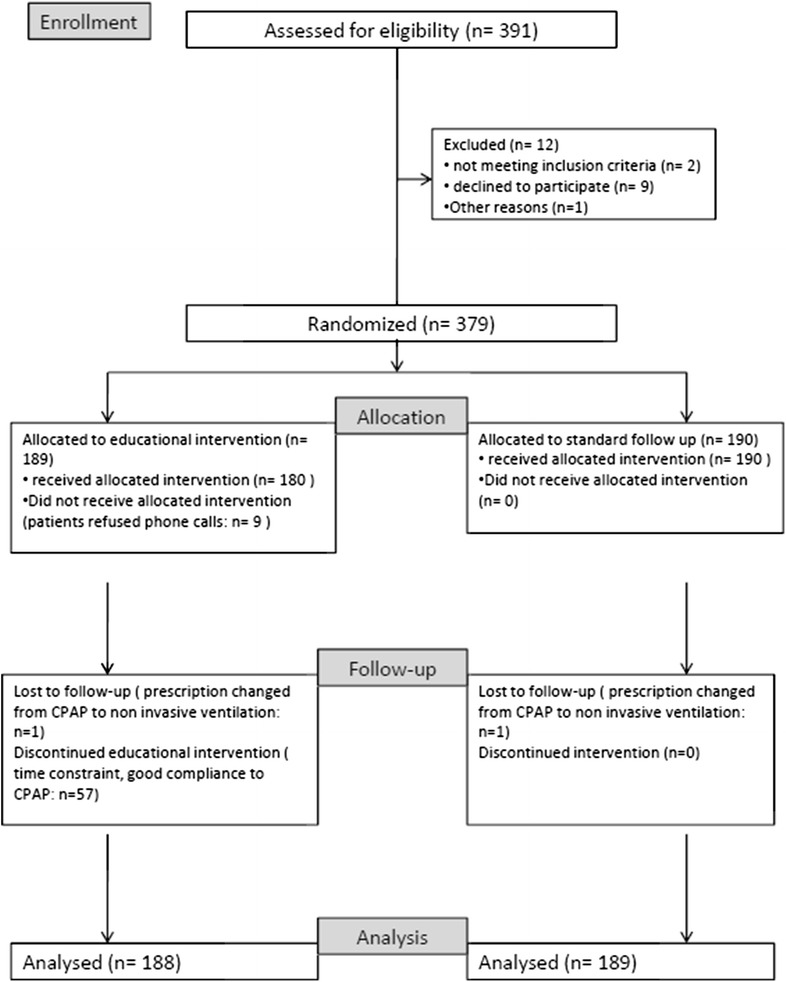
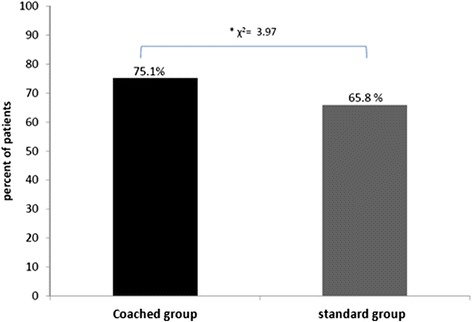
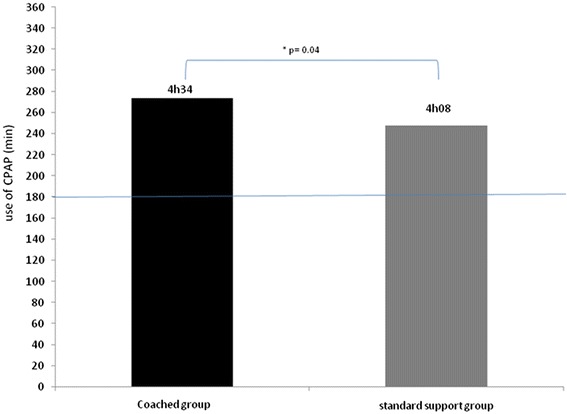
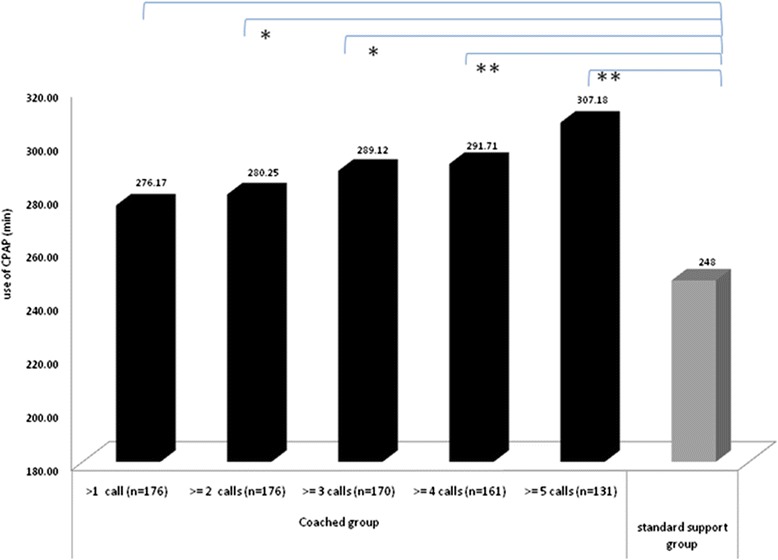
Results: Three hundred and seventy-nine patients fulfilled the inclusion criteria and were randomized. The percentage of patients using CPAP more than 3 h per night for 4 months was 65 % for the standard support group and 75 % for the coached group. This difference reached a statistical significance (χ2 = 3.97). The mean CPAP usage was increased in the coached group versus standard group. A difference of 26 min was observed (4 h34+/-2 h17 and 4 h08+/-2 h25 respectively, p = 0.04).
Conclusion: This study shows that SAHS patients who benefit from phone coaching are statistically more compliant to CPAP than a standard support group is. A simple phone coaching procedure based on knowledge of the disease and reinforcement messages about treatment benefits helps to improve CPAP adherence in SAHS patients.
Trial registration: NCT02435355.
Figures
References
-
- Laaban JP. Sleep apnea syndrome and obesity. Rev Pneumol Clin. 2002;58(2):91–8. - PubMed
-
- Nieto FJ, Young TB, Lind BK, Shahar E, Samet JM, Redline S, et al. Association of sleep-disordered breathing, sleep apnea, and hypertension in a large community-based study. Sleep Heart Health Study JAMA. 2000;283(14):1829–36. - PubMed
Publication types
MeSH terms
Associated data
LinkOut - more resources
Full Text Sources
Other Literature Sources
Medical
