Relapse prevention in major depressive disorder: Mindfulness-based cognitive therapy versus an active control condition
- PMID: 26371618
- PMCID: PMC4571290
- DOI: 10.1037/ccp0000050
Relapse prevention in major depressive disorder: Mindfulness-based cognitive therapy versus an active control condition
Abstract
Objective: We evaluated the comparative effectiveness of mindfulness-based cognitive therapy (MBCT) versus an active control condition (ACC) for depression relapse prevention, depressive symptom reduction, and improvement in life satisfaction.
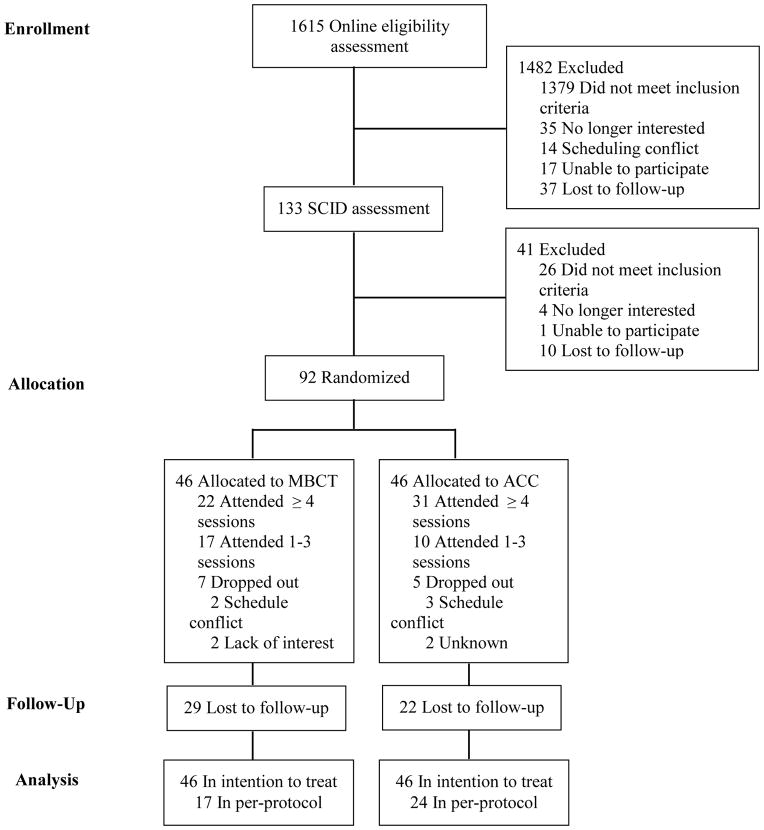
Method: Ninety-two participants in remission from major depressive disorder with residual depressive symptoms were randomized to either an 8-week MBCT or a validated ACC that is structurally equivalent to MBCT and controls for nonspecific effects (e.g., interaction with a facilitator, perceived social support, treatment outcome expectations). Both interventions were delivered according to their published manuals.
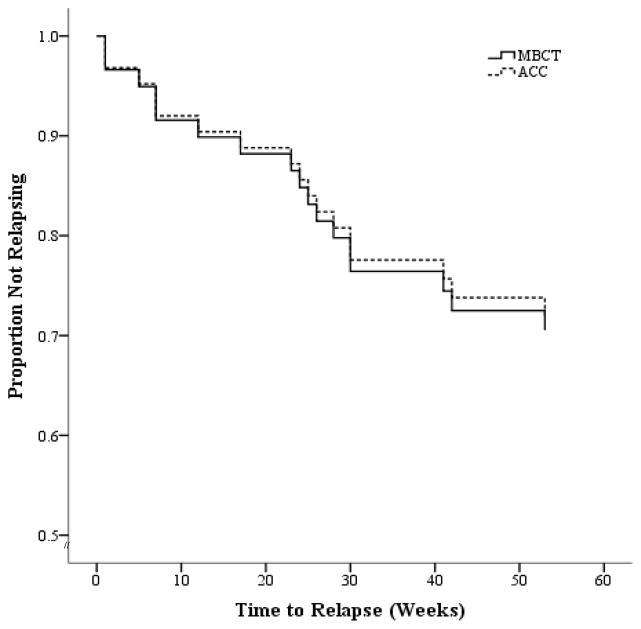
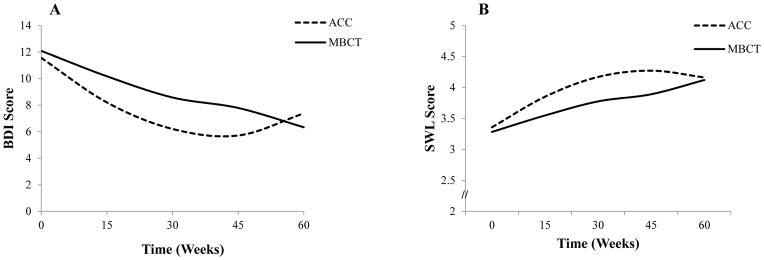
Results: Intention-to-treat analyses indicated no differences between MBCT and ACC in depression relapse rates or time to relapse over a 60-week follow-up. Both groups experienced significant and equal reductions in depressive symptoms and improvements in life satisfaction. A significant quadratic interaction (Group × Time) indicated that the pattern of depressive symptom reduction differed between groups. The ACC experienced immediate symptom reduction postintervention and then a gradual increase over the 60-week follow-up. The MBCT group experienced a gradual linear symptom reduction. The pattern for life satisfaction was identical but only marginally significant.
Conclusions: MBCT did not differ from an ACC on rates of depression relapse, symptom reduction, or life satisfaction, suggesting that MBCT is no more effective for preventing depression relapse and reducing depressive symptoms than the active components of the ACC. Differences in trajectory of depressive symptom improvement suggest that the intervention-specific skills acquired may be associated with differential rates of therapeutic benefit. This study demonstrates the importance of comparing psychotherapeutic interventions to active control conditions.
(c) 2015 APA, all rights reserved).
Figures
References
-
- Beck AT. Cognitive therapy of depression. New York: Guilford Press; 1979.
-
- Beck AT, Steer RA, Brown GK. Beck Depression Inventory-II. San Antonio, TX: Psychological Corporation; 1996.
-
- Bifulco A, Brown GW, Moran P, Ball C, Campbell C. Predicting depression in women: the role of past and present vulnerability. Psychol Med. 1998;28(1):39–50. - PubMed
Publication types
MeSH terms
Grants and funding
LinkOut - more resources
Full Text Sources
Other Literature Sources
Medical