Molecular Pathways: Targeting the Stimulator of Interferon Genes (STING) in the Immunotherapy of Cancer
- PMID: 26373573
- PMCID: PMC4750108
- DOI: 10.1158/1078-0432.CCR-15-1362
Molecular Pathways: Targeting the Stimulator of Interferon Genes (STING) in the Immunotherapy of Cancer
Abstract
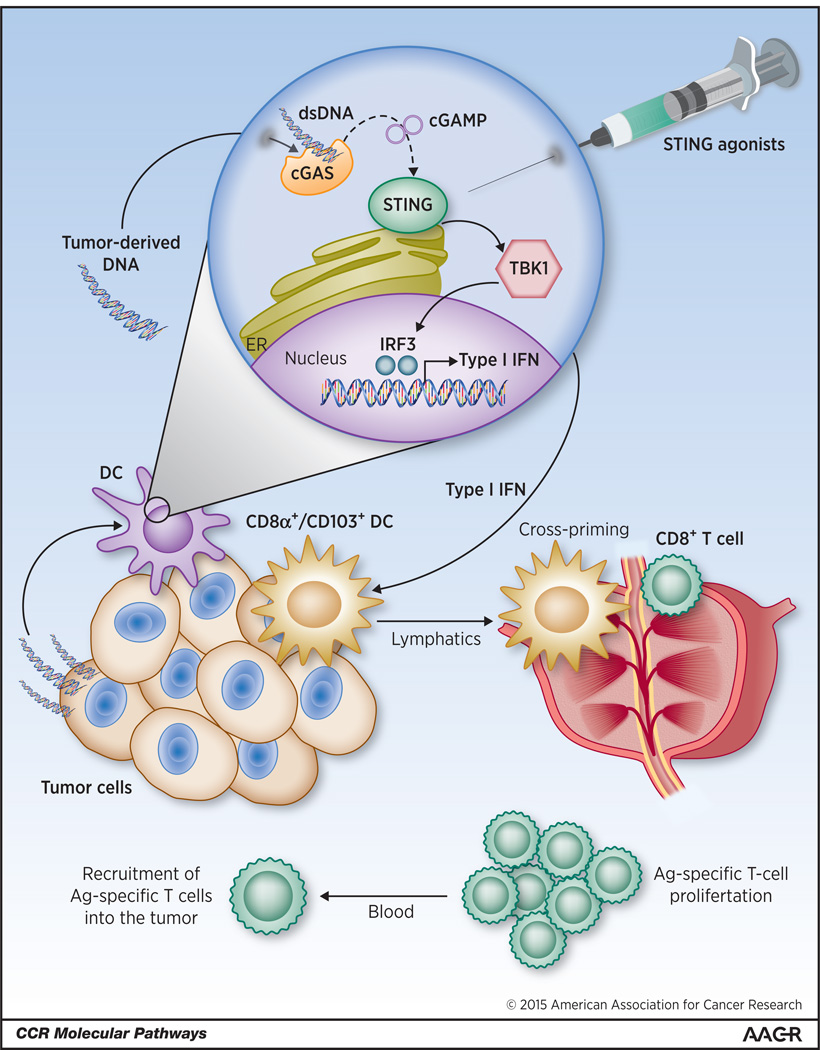
Novel immunotherapy approaches are transforming the treatment of cancer, yet many patients remain refractory to these agents. One hypothesis is that immunotherapy fails because of a tumor microenvironment that fails to support recruitment of immune cells, including CD8(+) T cells. Therefore, new approaches designed to initiate a de novo antitumor immune response from within the tumor microenvironment are being pursued. Recent evidence has indicated that spontaneous activation of the Stimulator of Interferon Genes (STING) pathway within tumor-resident dendritic cells leads to type I IFN production and adaptive immune responses against tumors. This pathway is activated in the presence of cytosolic DNA that is detected by the sensor cyclic GMP-AMP synthase (cGAS) and generates cyclic GMP-AMP (cGAMP), which binds and activates STING. As a therapeutic approach, intratumoral injection of STING agonists has demonstrated profound therapeutic effects in multiple mouse tumor models, including melanoma, colon, breast, prostate, and fibrosarcoma. Better characterization of the STING pathway in human tumor recognition, and the development of new pharmacologic approaches to engage this pathway within the tumor microenvironment in patients, are important areas for clinical translation.
©2015 American Association for Cancer Research.
Conflict of interest statement
No other potential conflicts of interest were disclosed.
Figures
References
-
- Barber GN. STING-dependent cytosolic DNA sensing pathways. Trends Immunol. 2014;35:88–93. - PubMed
Publication types
MeSH terms
Substances
Grants and funding
LinkOut - more resources
Full Text Sources
Other Literature Sources
Molecular Biology Databases
Research Materials