


PTEN expression in benign human endometrial tissue and cancer in relation to endometrial cancer risk factors
- PMID: 26376893
- PMCID: PMC4628559
- DOI: 10.1007/s10552-015-0666-5
PTEN expression in benign human endometrial tissue and cancer in relation to endometrial cancer risk factors
Abstract
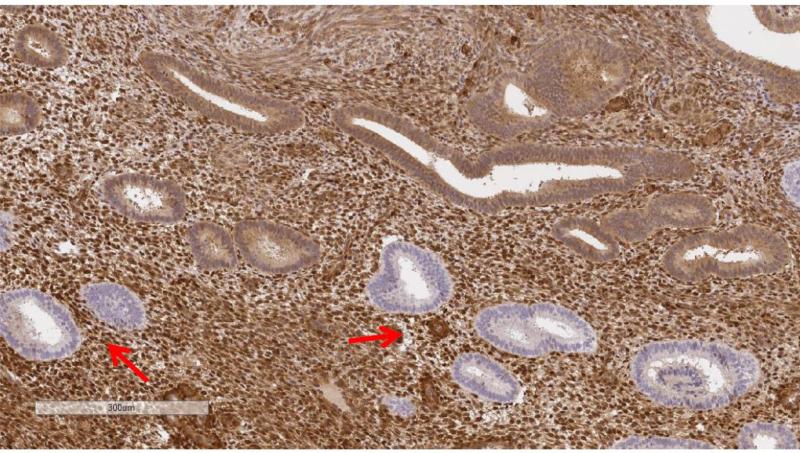
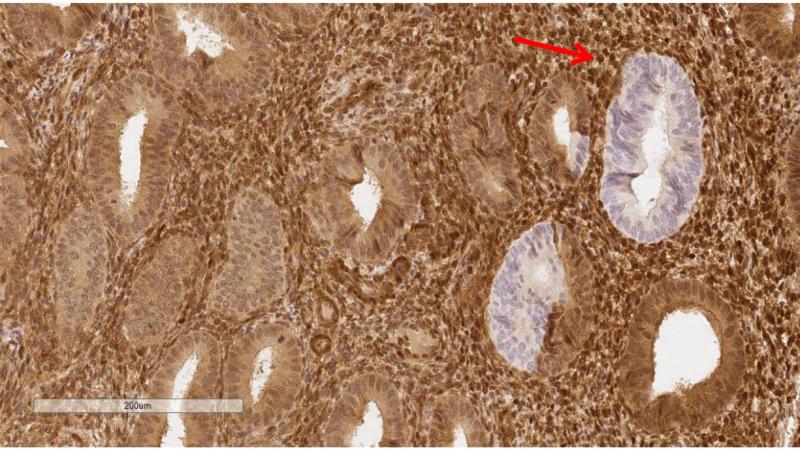
Purpose: Clonal loss of PTEN expression occurs frequently in endometrial carcinoma and endometrial hyperplasia. Limited data from immunohistochemical studies suggest that PTEN-null appearing endometrial glands are detectable in women without pathologic abnormalities, but the relationship of PTEN expression to endometrial cancer risk factors has not been extensively explored. We evaluated relationships between endometrial cancer risk factors and loss of PTEN expression in a set of benign endometrial samples prospectively collected from women undergoing hysterectomy and in endometrial cancer tissues from a population-based case-control study.
Methods: We used a validated PTEN immunohistochemical assay to assess expression in epidemiological studies designed to assess benign endometrium [Benign Reproductive Tissue Evaluation Study (n = 73); Einstein Endometrium Study (n = 19)], and endometrial cancer [Polish Endometrial Cancer Study (n = 148)] tissues. Associations between endometrial cancer risk factors (collected via study-specific risk factor questionnaires) and PTEN expression in endometrial tissues were determined using Fisher's exact tests.
Results: PTEN loss was detected in 19% of benign endometrial tissues versus 55% in endometrial cancers. NSAID use was statistically significantly associated with PTEN loss in the benign endometrium (p = 0.02).
Conclusion: Our data demonstrate that PTEN loss is detectable in endometrial tissues that are benign and malignant, with substantially more frequent loss in endometrial cancer compared with benign endometrium. However, alterations in expression were unrelated to most risk factors in this analysis, except for the association with NSAID use, which may represent a chance finding or reverse causality among patients with endometriosis who may have PTEN pathway abnormalities in eutopic endometrium. Further evaluation of factors associated with PTEN loss and long-term follow-up of women with PTEN-null endometrial glands may be useful in understanding early events in endometrial carcinogenesis.
Keywords: Endometrial cancer; PTEN; Risk factors.
Figures
References
-
- American Cancer Society . Cancer Facts & Figures 2015. American Cancer Society; Atlanta: 2015.
-
- Sansal I, Sellers WR. The biology and clinical relevance of the PTEN tumor suppressor pathway. Journal of clinical oncology : official journal of the American Society of Clinical Oncology. 2004;22(14):2954–2963. doi:10.1200/JCO.2004.02.141. - PubMed
-
- Matias-Guiu X, Prat J. Molecular pathology of endometrial carcinoma. Histopathology. 2013;62(1):111–123. doi:10.1111/his.12053. - PubMed
Publication types
MeSH terms
Substances
Grants and funding
LinkOut - more resources
Full Text Sources
Other Literature Sources
Research Materials
