


Factors influencing obesogenic dietary intake in young children (0-6 years): systematic review of qualitative evidence
- PMID: 26377503
- PMCID: PMC4577937
- DOI: 10.1136/bmjopen-2014-007396
Factors influencing obesogenic dietary intake in young children (0-6 years): systematic review of qualitative evidence
Abstract
Background: Obesogenic dietary intake is prevalent in young children and is associated with obesity and other adverse health outcomes in childhood and later in life.
Objective: To describe the barriers to and facilitators of obesogenic dietary intake in early childhood, in order to inform interventions and public health policies to prevent obesity.
Design: Systematic review of qualitative literature on factors influencing obesogenic diets in children aged 0-6 years.
Data sources: MEDLINE, EMBASE, CINAHL, PsycINFO, Web of Knowledge, British Nursing Index, ASSIA and Sociological Abstracts.
Review methods: Qualitative studies meeting the inclusion criteria were synthesised. Data were analysed by creating a thematic framework, underpinned by the socioecological model, which included familiarisation of data across the studies, indexing, charting, mapping and interpretation.
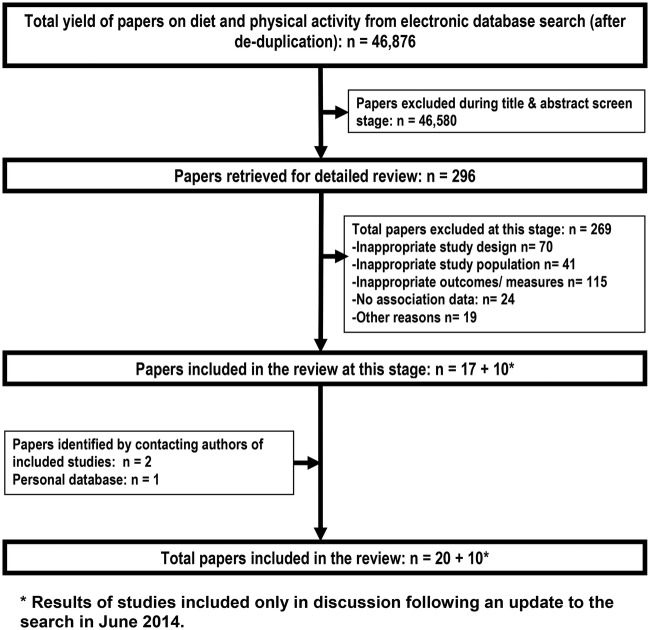
Results: 20 studies from the USA (10), Europe (6) and Australia (4) included the views of 1067 participants (901 parents/caregivers, 37 children, 87 teachers, 15 dieticians and 27 nursery staff). Study designs included focus groups (n=16), individual interviews (n=6) and ethnography (n=1) with some studies using more than one design. Despite wide differences in the study context and focus, several consistent themes emerged. Parental factors increasing young children's obesogenic diets were: negative parent/family/peer modelling, lack of knowledge, time constraints, using food as reward, affordability and concerns about child's health. Child preferences also increased intake. Environmental factors increasing intake include: availability, advertising, societal, cultural and preschool/childcare influences.
Conclusions: Future intervention strategies should aim to promote modelling of positive behaviours, create home and preschool environments that promote healthy diets, and simultaneously target factors at the family and preschool/childcare levels.
Trial registration number: This review is one of a series of systematic reviews on the determinants of obesogenic behaviours in young children, registered with the International Prospective Register for Systematic Reviews (PROSPERO), CRD42012002881.
Keywords: NUTRITION & DIETETICS; PREVENTIVE MEDICINE.
Published by the BMJ Publishing Group Limited. For permission to use (where not already granted under a licence) please go to http://group.bmj.com/group/rights-licensing/permissions.
Figures
References
-
- The Health and Social Care Information Centre LS. National Child Measurement Programme: England, 2012/13 school year; December 2013. 2013. http://www.hscic.gov.uk/catalogue/PUB13115/nati-chil-meas-prog-eng-2012–...
-
- WHO. Diet, nutrition and the prevention of chronic diseases; Report of a joint WHO/FAO expert consultation. Geneva; World Health Organization, 2003.
Publication types
MeSH terms
Grants and funding
LinkOut - more resources
Full Text Sources
Other Literature Sources
Medical
