


Bio-efficacy of new long-lasting insecticide-treated bed nets against Anopheles funestus and Anopheles gambiae from central and northern Mozambique
- PMID: 26377825
- PMCID: PMC4574012
- DOI: 10.1186/s12936-015-0885-y
Bio-efficacy of new long-lasting insecticide-treated bed nets against Anopheles funestus and Anopheles gambiae from central and northern Mozambique
Abstract
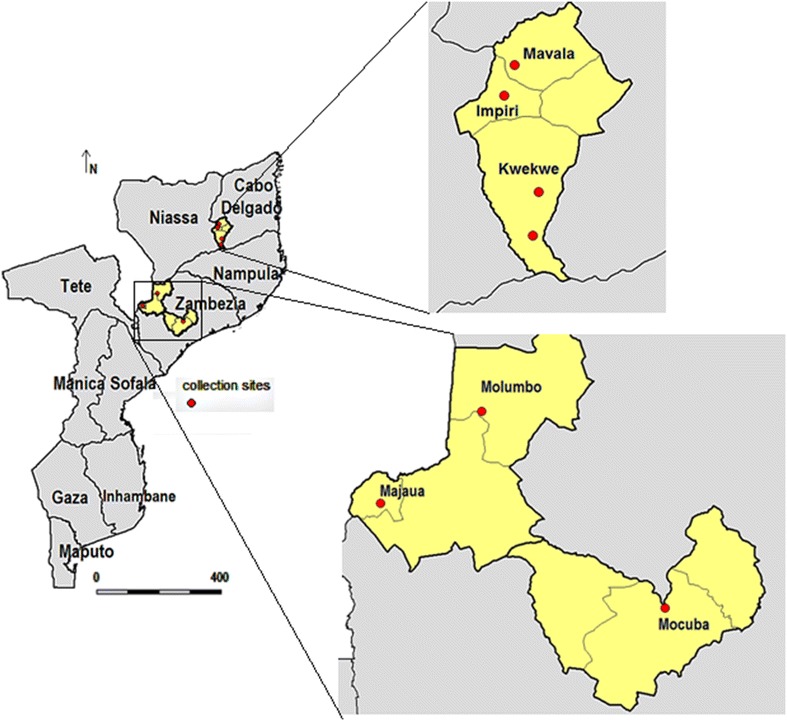
Background: Long-lasting insecticide-treated nets (LLINs) are one of the main methods used for controlling malaria transmission in Mozambique. The proliferation of several types of LLINs and the re-emergence of insecticide resistance in the local vector populations poses challenges to the local malaria control programme on selecting suitable insecticide-based vector control products. Therefore, this study evaluated the insecticide susceptibility and bio-efficacy of selected new LLINs against wild populations of Anopheles funestus sensu lato and A. gambiae s.l. from Northern and Central Mozambique. The study also investigated whether the insecticide contents on the LINNs fabrics were within the WHOPES recommended target range.
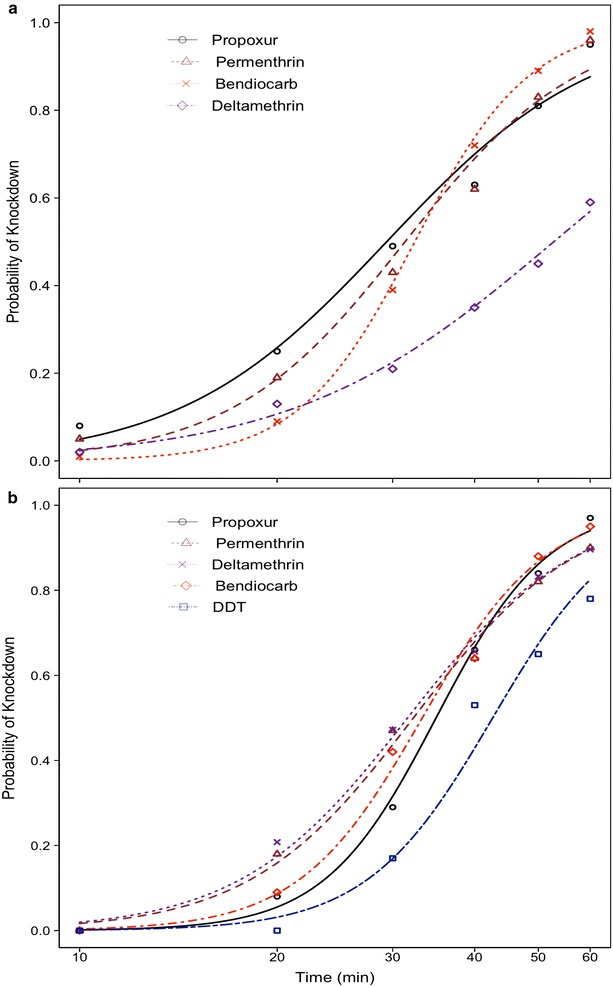
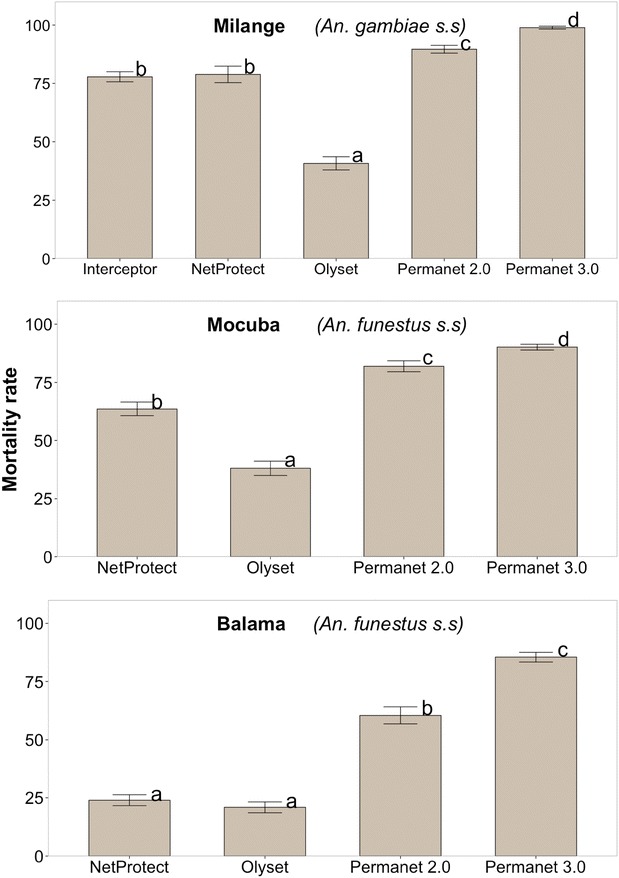
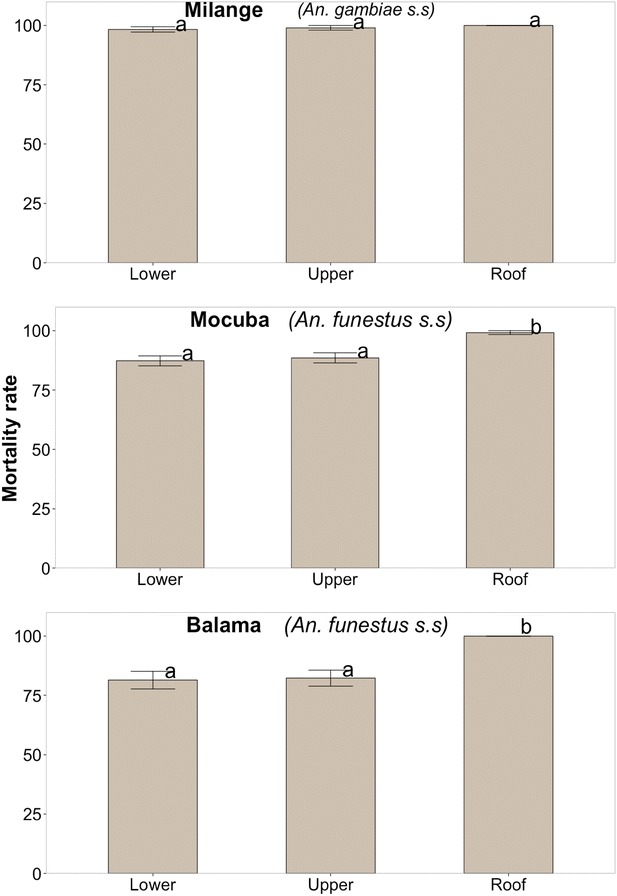
Methods: The susceptibility of 2-5 day old wild female A. funestus and A. gambiae sensu stricto against the major classes of insecticides used for vector control, viz: deltamethrin (0.05 %), permethrin (0.75 %), propoxur (0.1 %), bendiocarb (0.1 %) and DDT (4 %), was determined using WHO cylinder susceptibility tests. WHO cone bioassays were conducted to determine the bio-efficacy of both pyrethroid-only LLINs (Olyset(®), Permanet 2.0(®), NetProtect(®) and Interceptor(®)) and, Permanet 3.0(®) a combination LLIN against A. funestus s.s, from Balama, Mocuba and Milange districts, respectively. The bio-efficacy of LLINs against the insectary-susceptible A. arabiensis (Durban strain) was assessed, as well. Untreated bed net swatches were used as negative controls. Chemical analyses, by high performance liquid chromatography, were undertaken to assess whether the insecticide contents on the LLINs fabrics fell within recommended target dose ranges. The frequency of kdr gene mutations was determined from a random sample of A. gambiae s.s. from both WHO susceptibility and cone bioassay experiments.
Results: Anopheles funestus from Balama district showed resistance to deltamethrin and possible resistance to permethrin, propoxur and bendiocarb, whilst A. gambiae from Mocuba district was susceptible to deltamethrin, bendiocarb and propoxur. There were no kdr mutants found in the sample of 256 A. gambiae tested. Overall, 186 LLIN swatches were tested. Mosquitoes exposed to Olyset(®) had the lowest knockdown (±standard error) and mortality rate (±standard error) in all studied sites regardless of vectors species tested. Permanet 3.0 showed the highest bio-efficacy independent of vector species tested and level of insecticide resistance detected. All types of LLINs effectively killed susceptible A. arabiensis Durban strain. The insecticide content of Olyset(®) and Permanet 2.0(®) was higher than the target dose but NetProtect(®) had a lower insecticide content than the target dose.
Conclusion: The study shows evidence of considerable heterogeneity in both insecticide susceptibility and the level of bio-efficacy of commonly available types of LLINs against wild A. funestus and A. gambiae from Balama, Mocuba and Milange districts, located in north and centre of Mozambique. The findings suggest that vector control approaches combining different types of insecticides might help to tackle the apparent problem of pyrethroid resistance in the vector populations from these three sites. Results from bioassays on laboratory-susceptible A. arabiensis strongly suggest that LLINs can offer some protection against susceptible malaria vectors.
Figures
References
-
- Millennium Development Goal (MDG) 6: Combat HIV/AIDS and other diseases. http://www.mz.one.in.org.
-
- Programa Nacional de Controlo da Malária . Plano Estratégico da Malária. Maputo: Ministério da Saúde, República de Moçambique; 2012.
MeSH terms
Substances
LinkOut - more resources
Full Text Sources
Other Literature Sources
Medical
Miscellaneous
