


The Control of Methicillin-Resistant Staphylococcus aureus Blood Stream Infections in England
- PMID: 26380336
- PMCID: PMC4567090
- DOI: 10.1093/ofid/ofv035
The Control of Methicillin-Resistant Staphylococcus aureus Blood Stream Infections in England
Abstract
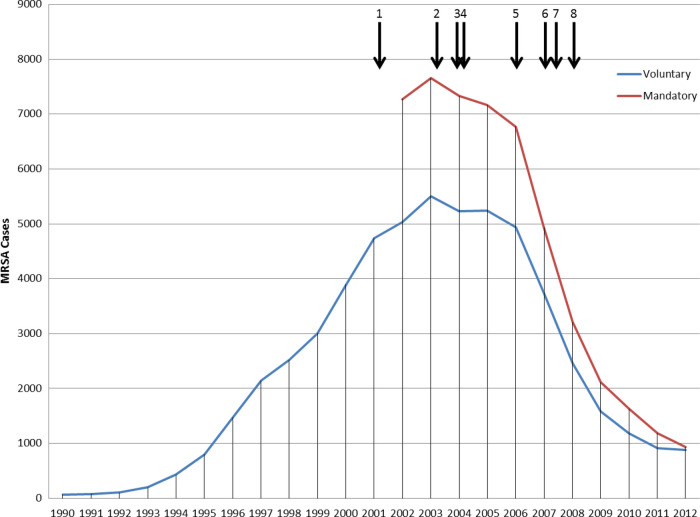
Methicillin-resistant Staphylococcus aureus (MRSA) blood stream infection (BSI) is a major healthcare burden in some but not all healthcare settings, and it is associated with 10%-20% mortality. The introduction of mandatory reporting in England of MRSA BSI in 2001 was followed in 2004 by the setting of target reductions for all National Health Service hospitals. The original national target of a 50% reduction in MRSA BSI was considered by many experts to be unattainable, and yet this goal has been far exceeded (∼80% reduction with rates still declining). The transformation from endemic to sporadic MRSA BSI involved the implementation of serial national infection prevention directives, and the deployment of expert improvement teams in organizations failed to meet their improvement trajectory targets. We describe and appraise the components of the major public health infection prevention campaign that yielded major reductions in MRSA infection. There are important lessons and opportunities for other healthcare systems where MRSA infection remains endemic.
Keywords: healthcare-associated infections.
Figures
References
-
- Phillips I. MRSA: a historical perspective. In: Gould I, ed. MRSA in Practice. London: Royal Society of Medicine Press Ltd, 2007: 1–12.
-
- Jevons MP. Celbelinin-resistant staphylococci. BMJ 1961; i:564–7.
-
- Pavillard R, Harvey K, Douglas D, et al. Epidemic of hospitalised infection due to methicillin-resistant Staphylococcus aureus in major Victorian hospitals. Med J Aust 1982; I:451–4. - PubMed
-
- Gilbert GL, Asche V, Hewstone AS, et al. Methicillin-resistant Staphylococcus aureus in neonatal nurseries. Med J Aust 1982; I:455–9. - PubMed
-
- Spicer WJ. Three strategies in the control of staphylococci including methicillin-resistant Staphylococcus aureus. J Hosp Infect 1984; 5(Suppl A):45–9. - PubMed
Publication types
LinkOut - more resources
Full Text Sources
Other Literature Sources
