


Tryptophan metabolism, disposition and utilization in pregnancy
- PMID: 26381576
- PMCID: PMC4626867
- DOI: 10.1042/BSR20150197
Tryptophan metabolism, disposition and utilization in pregnancy
Abstract
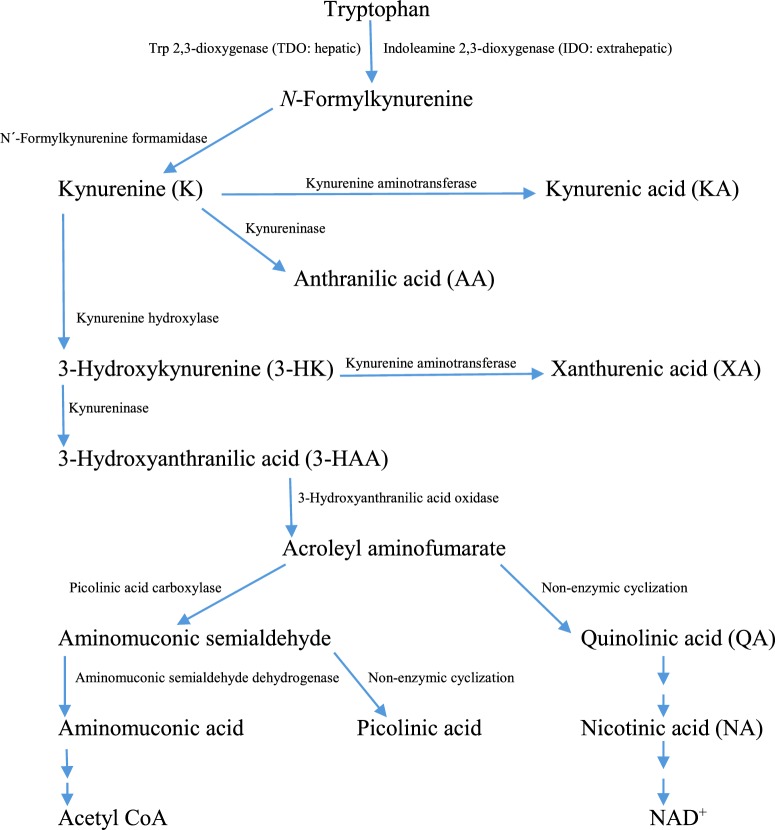
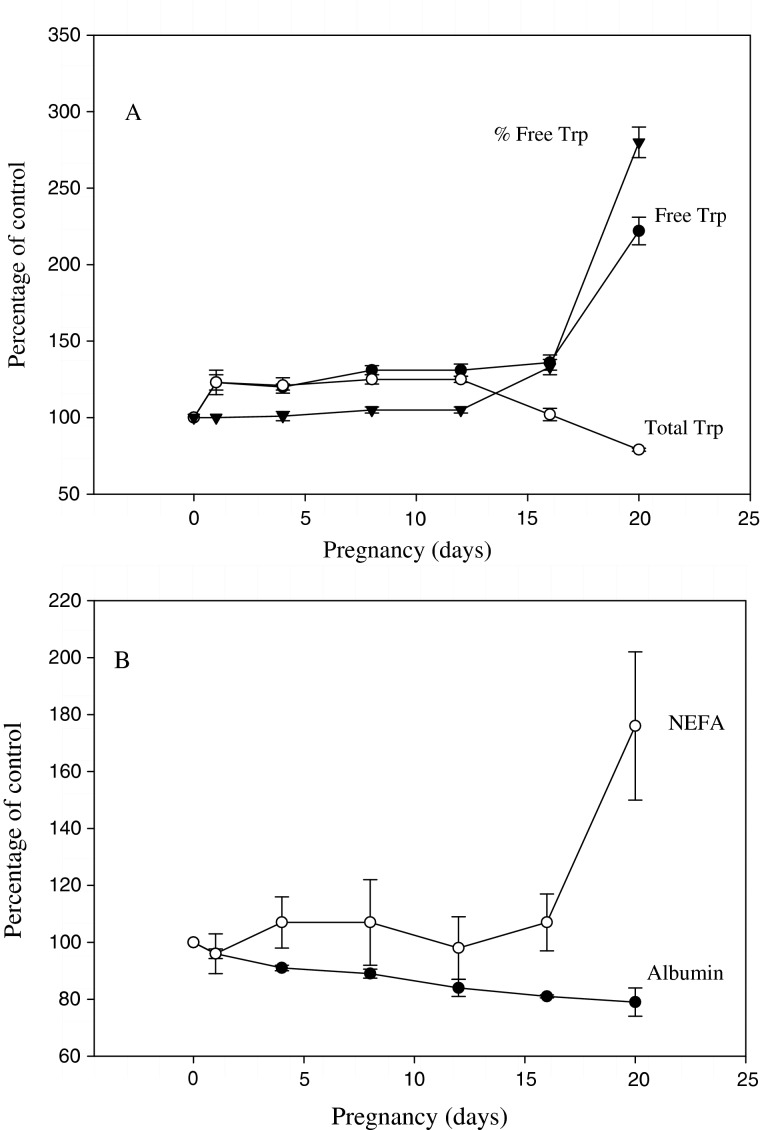
Tryptophan (Trp) requirements in pregnancy are several-fold: (1) the need for increased protein synthesis by mother and for fetal growth and development; (2) serotonin (5-HT) for signalling pathways; (3) kynurenic acid (KA) for neuronal protection; (4) quinolinic acid (QA) for NAD(+) synthesis (5) other kynurenines (Ks) for suppressing fetal rejection. These goals could not be achieved if maternal plasma [Trp] is depleted. Although plasma total (free + albumin-bound) Trp is decreased in pregnancy, free Trp is elevated. The above requirements are best expressed in terms of a Trp utilization concept. Briefly, Trp is utilized as follows: (1) In early and mid-pregnancy, emphasis is on increased maternal Trp availability to meet the demand for protein synthesis and fetal development, most probably mediated by maternal liver Trp 2,3-dioxygenase (TDO) inhibition by progesterone and oestrogens. (2) In mid- and late pregnancy, Trp availability is maintained and enhanced by the release of albumin-bound Trp by albumin depletion and non-esterified fatty acid (NEFA) elevation, leading to increased flux of Trp down the K pathway to elevate immunosuppressive Ks. An excessive release of free Trp could undermine pregnancy by abolishing T-cell suppression by Ks. Detailed assessment of parameters of Trp metabolism and disposition and related measures (free and total Trp, albumin, NEFA, K and its metabolites and pro- and anti-inflammatory cytokines in maternal blood and, where appropriate, placental and fetal material) in normal and abnormal pregnancies may establish missing gaps in our knowledge of the Trp status in pregnancy and help identify appropriate intervention strategies.
Keywords: albumin; free tryptophan; immunosuppression; kynurenine metabolites; non-esterified fatty acids; pre-eclampsia.
© 2015 Authors.
Figures
References
-
- Taylor M.W., Feng G.S. Relationship between interferon-gamma, indoleamine 2,3-dioxygenase, and tryptophan catabolism. FASEB J. 1991;5:2516–2522. - PubMed
Publication types
MeSH terms
Substances
LinkOut - more resources
Full Text Sources
Other Literature Sources
Medical
