


Voltage-gated Ca(2+) influx through L-type channels contributes to sarcoplasmic reticulum Ca(2+) loading in skeletal muscle
- PMID: 26383921
- PMCID: PMC4626550
- DOI: 10.1113/JP270252
Voltage-gated Ca(2+) influx through L-type channels contributes to sarcoplasmic reticulum Ca(2+) loading in skeletal muscle
Abstract
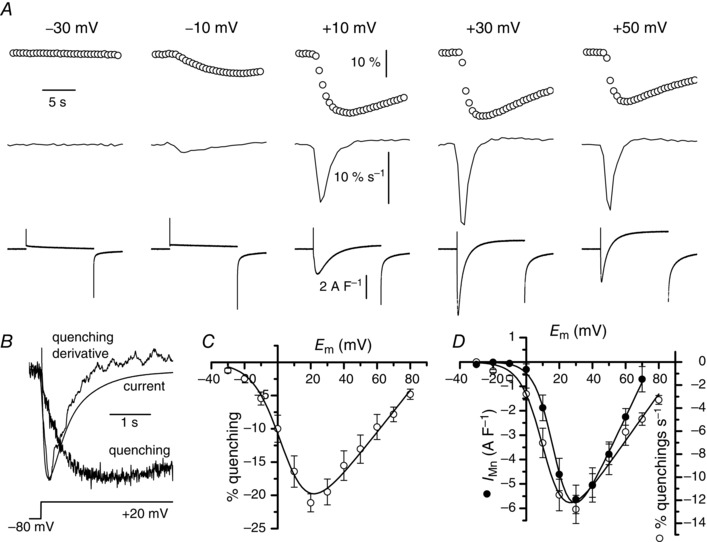
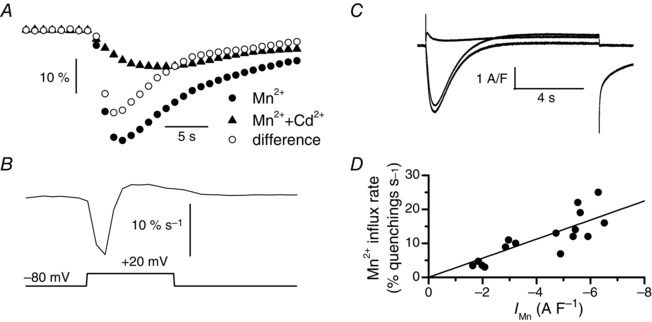
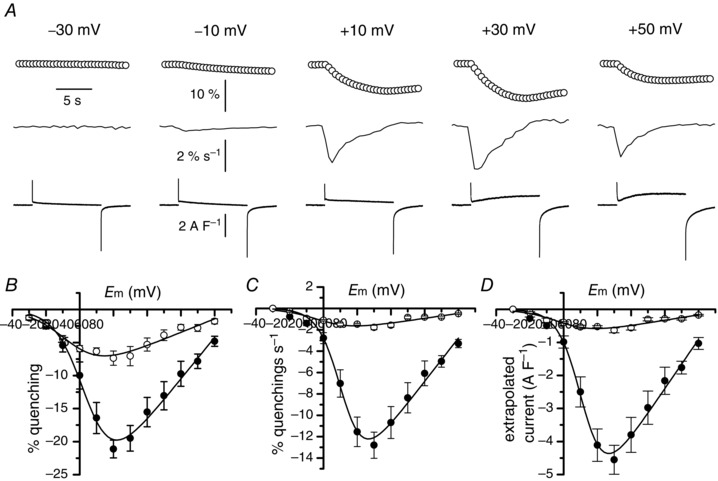
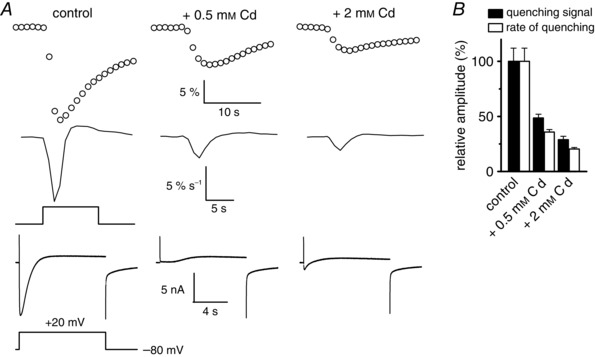
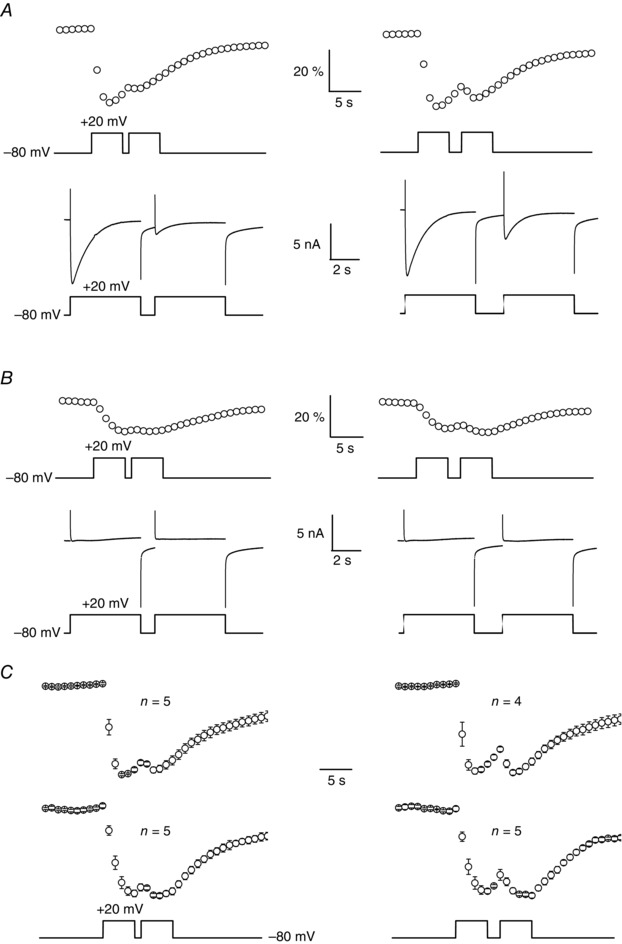
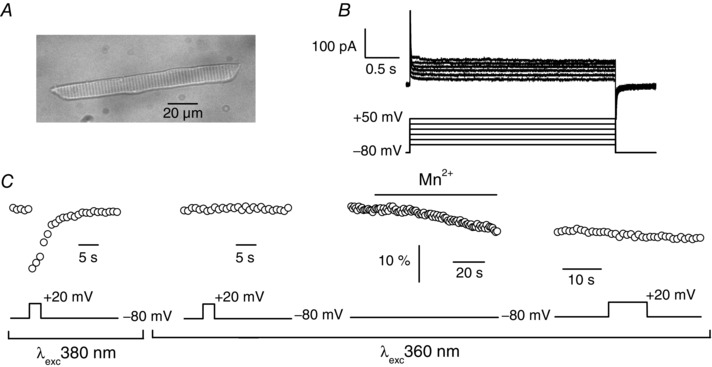
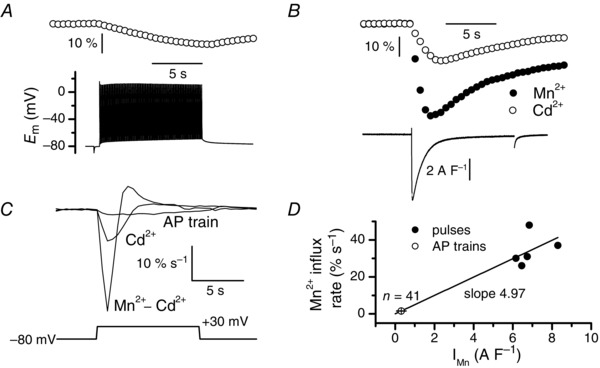
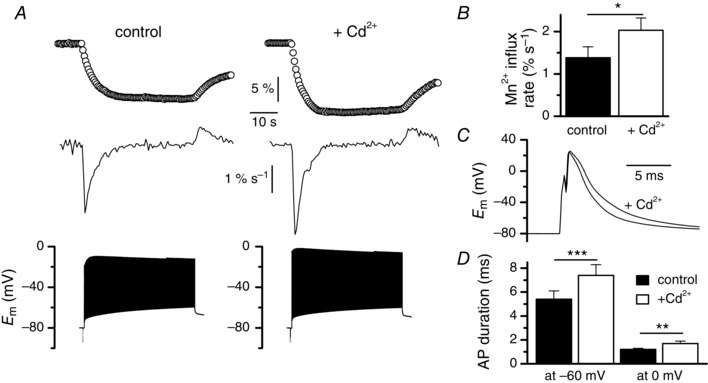
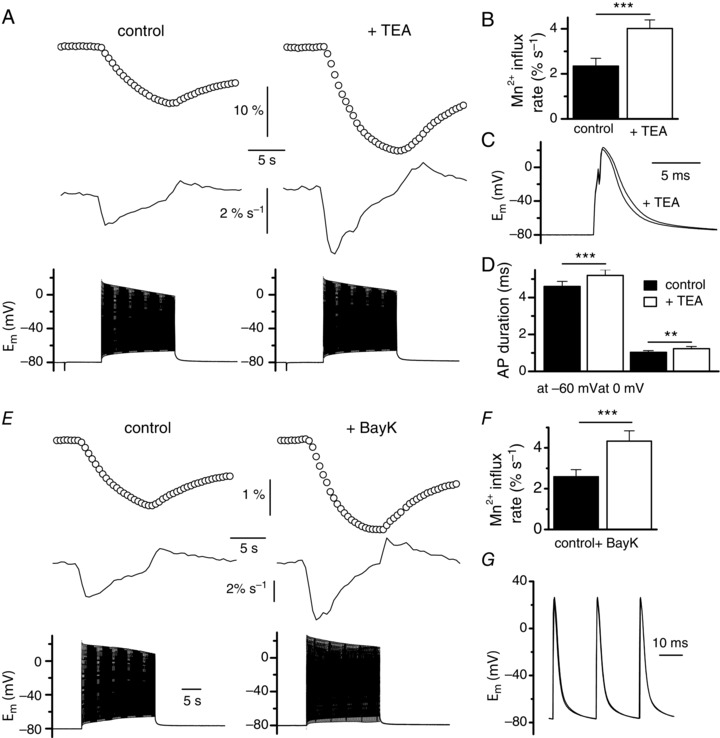
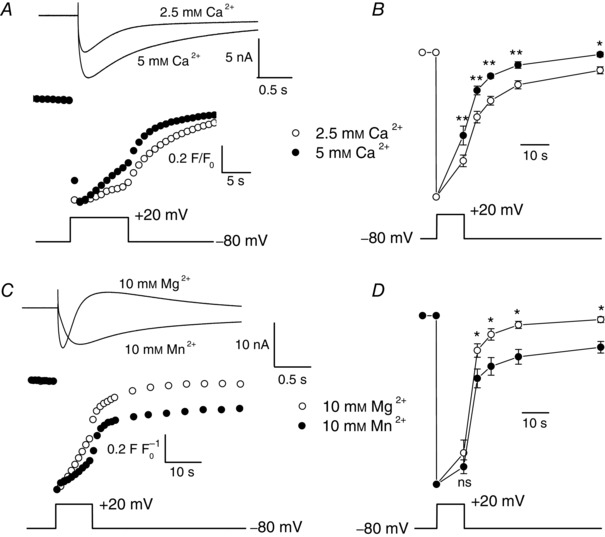
Muscle contraction is triggered by Ca(2+) ions released from the sarcoplasmic reticulum (SR) in response to depolarization of skeletal muscle fibres. Muscle activation is also associated with a voltage-activated trans-sarcolemmal Ca(2+) influx early identified as a current flowing through L-type Ca(2+) channels. Because removal of external Ca(2+) does not impede fibres from contracting, a negligible role was given to this voltage-activated Ca(2+) entry, although the decline of Ca(2+) release is more pronounced in the absence of Ca(2+) during long-lasting activation. Furthermore, it is not clearly established whether Ca(2+) exclusively flows through L-type channels or in addition through a parallel voltage-activated pathway distinct from L-type channels. Here, by monitoring the quenching of fura-2 fluorescence resulting from Mn(2+) influx in voltage-controlled mouse and zebrafish isolated muscle fibres, we show that the L-type current is the only contributor to Ca(2+) influx during long-lasting depolarizations in skeletal muscle. Calibration of the Mn(2+) quenching signal allowed us to estimate a mean Mn(2+) current of 0.31 ± 0.06 A F(-1) flowing through L-type channels during a train of action potentials. Measurements of SR Ca(2+) changes with fluo-5N in response to depolarization revealed that an elevated voltage-activated Ca(2+) current potentiated SR Ca(2+) loading and addition of external Mn(2+) produced quenching of fluo-5N in the SR, indicating that voltage-activated Ca(2+) /Mn(2+) influx contributes to SR Ca(2+) /Mn(2+) loading.
© 2015 The Authors. The Journal of Physiology © 2015 The Physiological Society.
Figures
References
-
- Armstrong CM, Bezanilla FM & Horowicz P (1972). Twitches in the presence of ethylene glycol bis(‐aminoethyl ether)‐N,N′‐tetracetic acid. Biochim Biophys Acta 267, 605–608. - PubMed
Publication types
MeSH terms
Substances
LinkOut - more resources
Full Text Sources
Research Materials
Miscellaneous
