


Trends in Any and High-Dose Opioid Analgesic Receipt Among Aging Patients With and Without HIV
- PMID: 26384973
- PMCID: PMC5006945
- DOI: 10.1007/s10461-015-1197-5
Trends in Any and High-Dose Opioid Analgesic Receipt Among Aging Patients With and Without HIV
Erratum in
-
Erratum to: Trends in Any and High-Dose Opioid Analgesic Receipt Among Aging Patients With and Without HIV.AIDS Behav. 2017 Apr;21(4):1228. doi: 10.1007/s10461-017-1725-6. AIDS Behav. 2017. PMID: 28188459 No abstract available.
Abstract
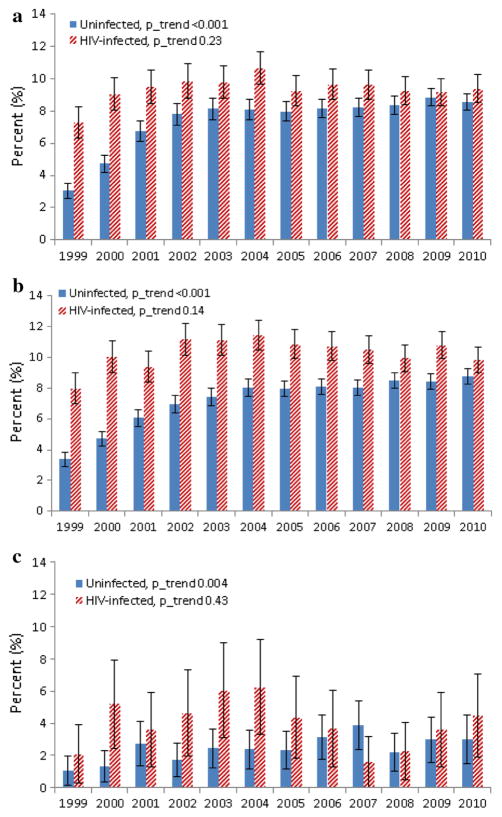
Harms of opioid analgesics, especially high-dose therapy among individuals with comorbidities and older age, are increasingly recognized. However, trends in opioid receipt among HIV-infected patients are not well characterized. We examined trends, from 1999 to 2010, in any and high-dose (≥120 mg/day) opioid receipt among patients with and without HIV, by age strata, controlling for demographic and clinical correlates. Of 127,216 patients, 64 % received at least one opioid prescription. Opioid receipt increased substantially among HIV-infected and uninfected patients over the study; high-dose therapy was more prevalent among HIV-infected patients. Trends in high-dose receipt stratified by three age groups revealed an increasing trend in each age strata, higher among HIV-infected patients. Correlates of any opioid receipt included HIV, PTSD and major depression. Correlates of high-dose receipt included HIV, PTSD, major depression and drug use disorders. These findings suggest a need for appropriate balance of risks and benefits, especially as these populations age.
Keywords: Aging; Analgesics; Chronic; Human immunodeficiency virus; Opioids; Pain.
Figures


References
-
- Drug Enforcement Administration. [Accessed 12 July 2010];Retail Drug Summary. 2010 http://www.deadiversion.usdoj.gov/arcos/retail_drug_summary/
-
- Olsen Y, Daumit GL, Ford DE. Opioid prescriptions by U.S. primary care physicians from 1992 to 2001. J Pain. 2006;7(4):225–35. - PubMed
-
- Paulozzi LJ Centers for Disease Control and Prevention. Drug-induced deaths—United States, 2003–2007. Morb Mortal Wkly Rep Surveill Summ. 2011;60(Suppl):60–1. - PubMed
-
- Warner M, Chen LH, Makuc DM. Increase in fatal poisonings involving opioid analgesics in the United States, 1999–2006. NCHS Data Brief. 2009;22:1–8. - PubMed
Publication types
MeSH terms
Substances
Grants and funding
LinkOut - more resources
Full Text Sources
Other Literature Sources
Medical
