


Catabolism of coniferyl aldehyde, ferulic acid and p-coumaric acid by Saccharomyces cerevisiae yields less toxic products
- PMID: 26392265
- PMCID: PMC4578848
- DOI: 10.1186/s12934-015-0338-x
Catabolism of coniferyl aldehyde, ferulic acid and p-coumaric acid by Saccharomyces cerevisiae yields less toxic products
Abstract
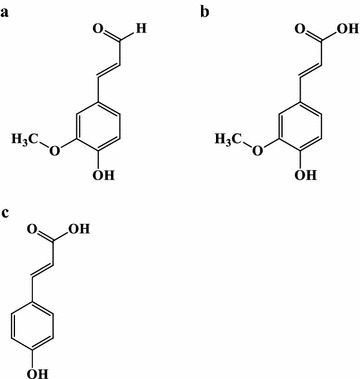
Background: Lignocellulosic substrates and pulping process streams are of increasing relevance to biorefineries for second generation biofuels and biochemical production. They are known to be rich in sugars and inhibitors such as phenolic compounds, organic acids and furaldehydes. Phenolic compounds are a group of aromatic compounds known to be inhibitory to fermentative organisms. It is known that inhibition of Sacchromyces cerevisiae varies among phenolic compounds and the yeast is capable of in situ catabolic conversion and metabolism of some phenolic compounds. In an approach to engineer a S. cerevisiae strain with higher tolerance to phenolic inhibitors, we selectively investigated the metabolic conversion and physiological effects of coniferyl aldehyde, ferulic acid, and p-coumaric acid in Saccharomyces cerevisiae. Aerobic batch cultivations were separately performed with each of the three phenolic compounds. Conversion of each of the phenolic compounds was observed on time-based qualitative analysis of the culture broth to monitor various intermediate and final metabolites.
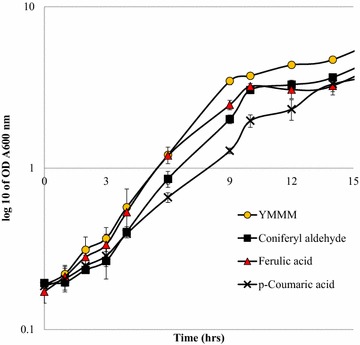
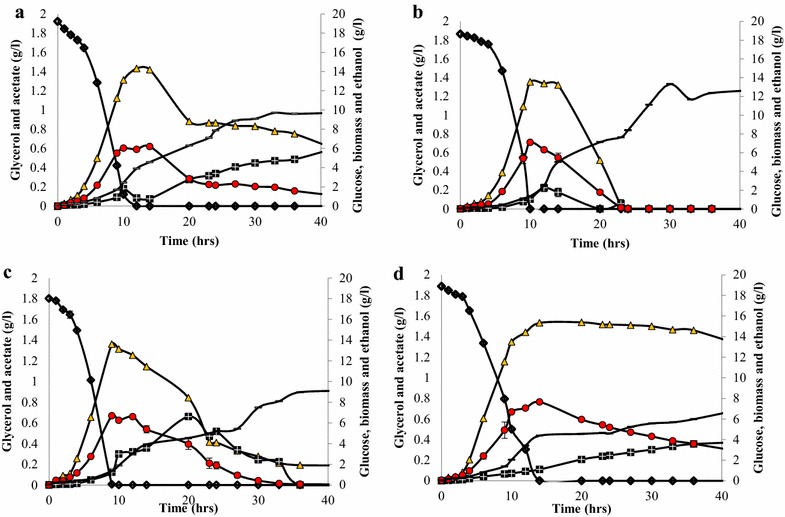
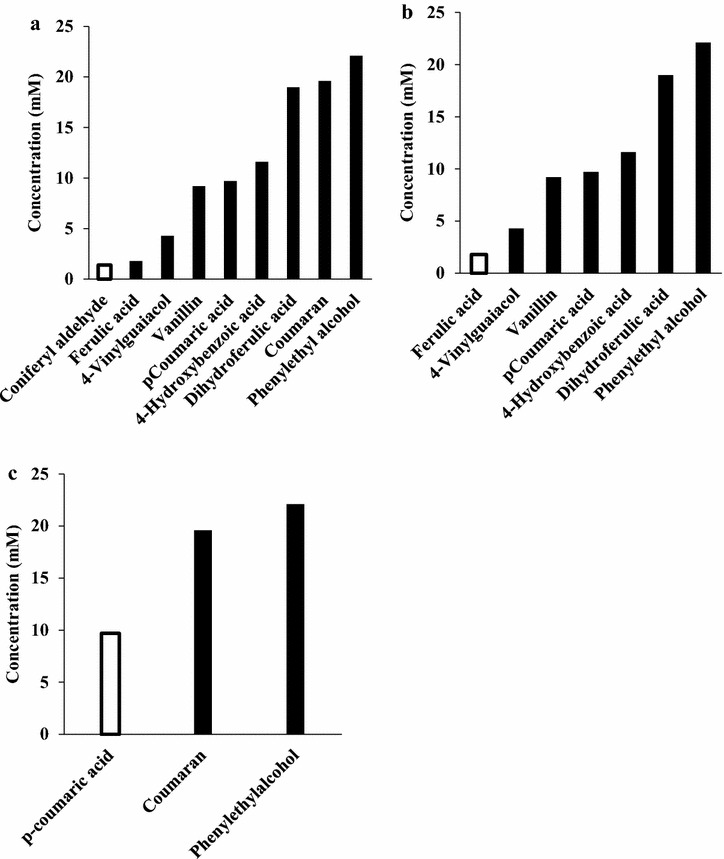
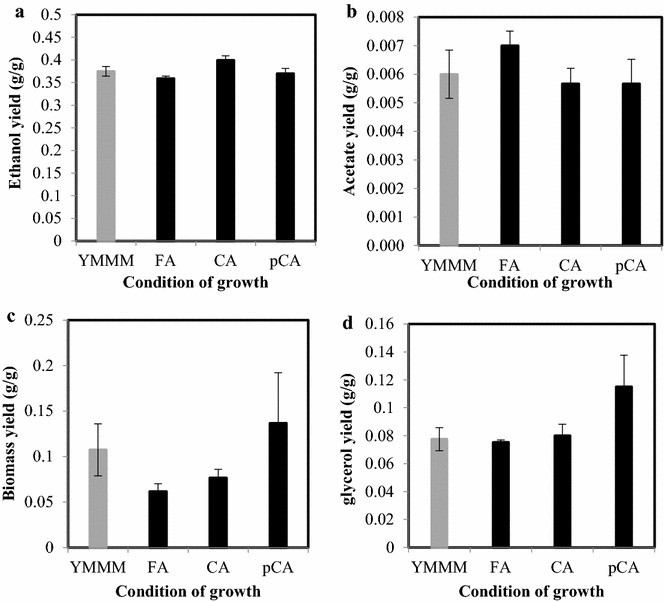
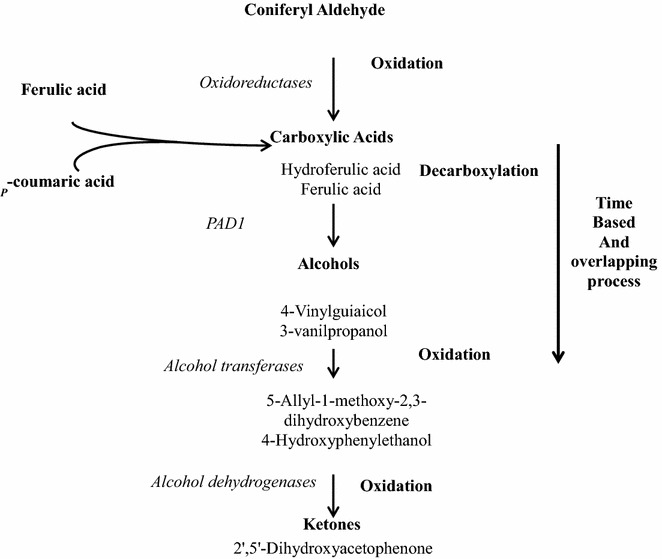
Result: Coniferyl aldehyde was rapidly converted within the first 24 h, while ferulic acid and p-coumaric acid were more slowly converted over a period of 72 h. The conversion of the three phenolic compounds was observed to involved several transient intermediates that were concurrently formed and converted to other phenolic products. Although there were several conversion products formed from coniferyl aldehyde, ferulic acid and p-coumaric acid, the conversion products profile from the three compounds were similar. On the physiology of Saccharomyces cerevisiae, the maximum specific growth rates of the yeast was not affected in the presence of coniferyl aldehyde or ferulic acid, but it was significantly reduced in the presence of p-coumaric acid. The biomass yields on glucose were reduced to 73 and 54 % of the control in the presence of coniferyl aldehyde and ferulic acid, respectively, biomass yield increased to 127 % of the control in the presence of p-coumaric acid. Coniferyl aldehyde, ferulic acid and p-coumaric acid and their conversion products were screened for inhibition, the conversion products were less inhibitory than coniferyl aldehyde, ferulic acid and p-coumaric acid, indicating that the conversion of the three compounds by Saccharomyces cerevisiae was also a detoxification process.
Conclusion: We conclude that the conversion of coniferyl aldehyde, ferulic acid and p-coumaric acid into less inhibitory compounds is a form of stress response and a detoxification process. We hypothesize that all phenolic compounds are converted by Saccharomyces cerevisiae using the same metabolic process. We suggest that the enhancement of the ability of S. cerevisiae to convert toxic phenolic compounds into less inhibitory compounds is a potent route to developing a S. cerevisiae with superior tolerance to phenolic compounds.
Figures
 ) glycerol, (
 ) acetate, (
 ) ethanol, (
 ) biomass, (
 ) Glucose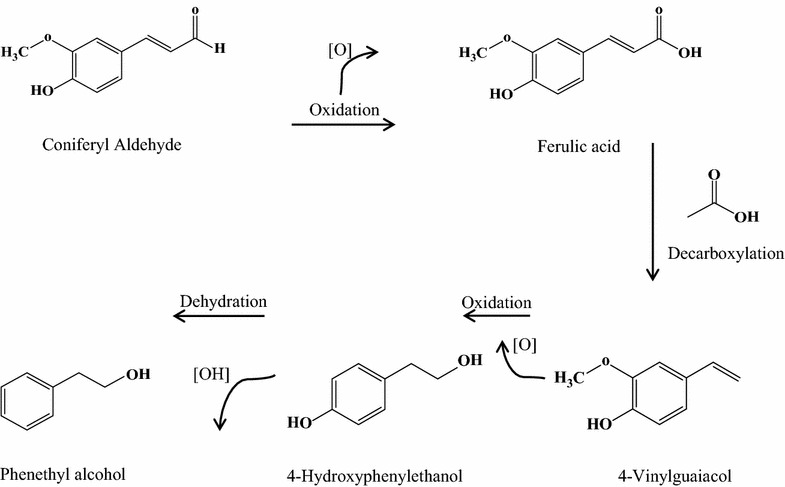
References
-
- Brown RC. Biorenewable resources: engineering new products from agriculture, 1st edn. Ames: Iowa State Press; 2003. xii, p. 286.
-
- Larsson S, Palmqvist E, Hahn-Hägerdal B, Tengborg C, Stenberg K, Zacchi G, et al. The generation of fermentation inhibitors during dilute acid hydrolysis of softwood. Enzyme Microbial Technol. 1999;24(3–4):151–159. doi: 10.1016/S0141-0229(98)00101-X. - DOI
-
- Guss CO. Acid hydrolysis of waste wood for use in plastics United States Department Of Agriculture Forest Service, Forest Products Laboratory, Madison, Wisconsin. 1945; Report No. R1481.
Publication types
MeSH terms
Substances
LinkOut - more resources
Full Text Sources
Other Literature Sources
