The advancement of human pluripotent stem cell-derived therapies into the clinic
- PMID: 26395136
- PMCID: PMC6514400
- DOI: 10.1242/dev.126482
The advancement of human pluripotent stem cell-derived therapies into the clinic
Erratum in
-
The advancement of human pluripotent stem cell-derived therapies into the clinic.Development. 2015 Oct 15;142(20):3614. doi: 10.1242/dev.131250. Development. 2015. PMID: 26487784 Free PMC article.
Abstract
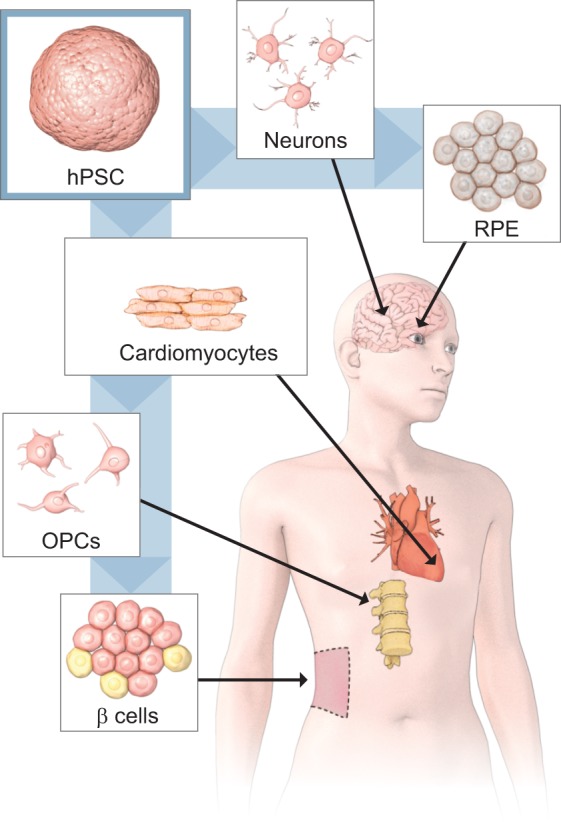
Human pluripotent stem cells (hPSCs) offer many potential applications for drug screening and 'disease in a dish' assay capabilities. However, a more ambitious goal is to develop cell therapeutics using hPSCs to generate and replace somatic cells that are lost as a result of disease or injury. This Spotlight article will describe the state of progress of some of the hPSC-derived therapeutics that offer the most promise for clinical use. Lessons from developmental biology have been instrumental in identifying signaling molecules that can guide these differentiation processes in vitro, and will be described in the context of these cell therapy programs.
Keywords: Clinical medicine; HPSC-cardiomyocytes; Human Pluripotent Stem Cell.
© 2015. Published by The Company of Biologists Ltd.
Figures
References
-
- All A. H., Gharibani P., Gupta S., Bazley F. A., Pashai N., Chou B.-K., Shah S., Resar L. M., Cheng L., Gearheart J. D. et al. (2015). Early intervention for spinal cord injury with human induced pluripotent stem cells oligodendrocyte progenitors. PLoS ONE 10, e116933 10.1371/journal.pone.0116933 - DOI - PMC - PubMed
-
- Biernaskie J., Sparling J. S., Liu J., Shannon C. P., Plemel J. R., Xie Y., Miller F. D. and Tetzlaff W. (2007). Skin-derived precursors generate myelinating Schwann cells that promote remyelination and functional recovery after contusion spinal cord injury. J. Neurosci. 27, 9545-9559. 10.1523/JNEUROSCI.1930-07.2007 - DOI - PMC - PubMed
Publication types
MeSH terms
Grants and funding
LinkOut - more resources
Full Text Sources
Other Literature Sources