Review
. 2015 Oct;52(10):6136-42.
doi: 10.1007/s13197-015-1785-4. Epub 2015 Mar 27.

Health-promoting value and food applications of black cumin essential oil: an overview

Affiliations
Review

Health-promoting value and food applications of black cumin essential oil: an overview

Mohamed F R Hassanien et al. J Food Sci Technol. 2015 Oct.

Abstract

Black cumin (Nigella sativa L.) seeds and its essential oil have been widely used in functional foods, nutraceuticals and pharmaceutical products. Analysis of Nigella sativa essential oil using GC and GC-MS resulted in the identification of many bioactive compounds representing ca. 85 % of the total content. The main compounds included p-cymene, thymoquinone, α-thujene, longifolene, β-pinene, α-pinene and carvacrol. Nigella sativa essential oil exhibited different biological activities including antifungal, antibacterial and antioxidant potentials. Nigella sativa essential oil showed complete inhibition zones against different Gram-negative and Gram-positive bacteria including Penicillium citrinum Bacillus cereus, Bacillus subtilis, Staphylococcus aureus and Pseudomonas aeruginosa. The essential oil showed stronger antioxidant potential in comparison with synthetic antioxidants (i.e., BHA and BHT) in a rapeseed oil model system. The oil exhibited also stronger radical scavenging activity against DPPH·radical in comparison with synthetic antioxidants. The diversity of applications to which Nigella sativa essential oil can be put gives this oil industrial importance.

Keywords: Functional properties; Longifolene; Nigella sativa; Novel food thymoquinone.


Figures
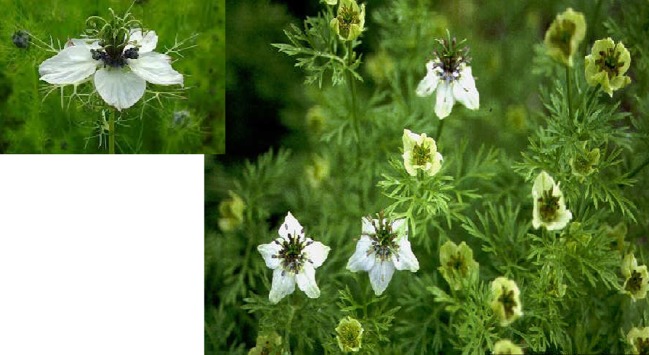
Fig. 1
Fig. 1
Nigella sativa plant has a stiff, erect, branching stem, bears deeply-cut greyish-green leaves and terminal greyish-blue flowers, followed by odd, toothed seed vessels, and filled with small somewhat compressed seeds
Fig. 2
Fig. 2
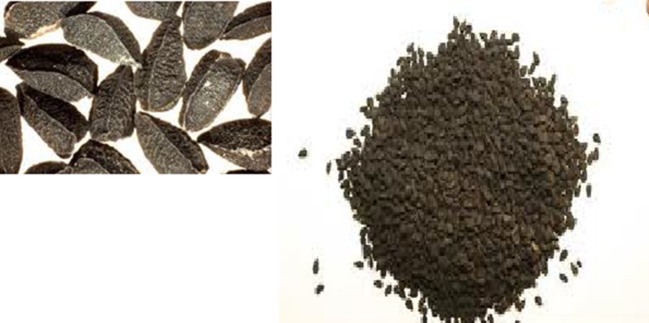
Nigella sativa seeds are three-cornered, with two sides flat and one convex, black or brown externally, white and oleaginous within. Seeds have a strong, agreeable aromatic odor, like that of nutmegs, and a spicy, pungent taste
Fig. 3
Fig. 3
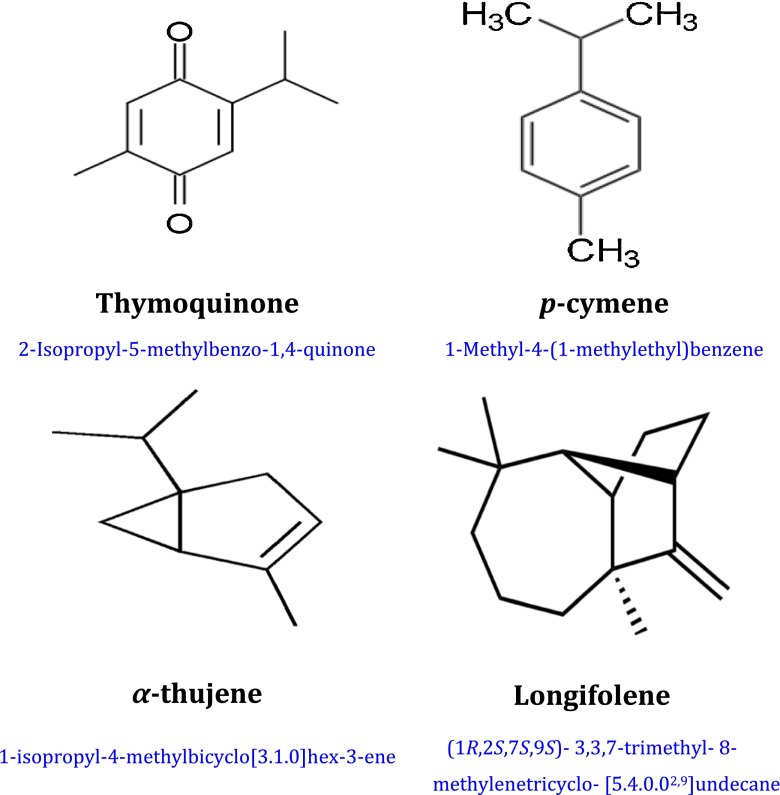
Structure of the identified compounds in Nigella sativa essential oil
Fig. 4
Fig. 4
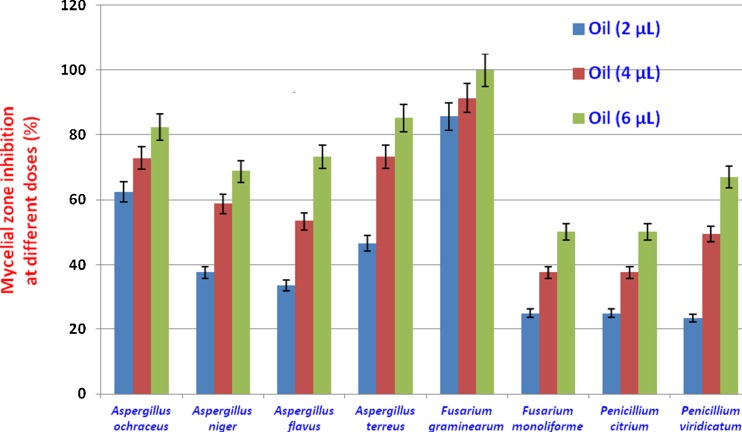
Antifungal impact of Nigella sativa essential oil against different food pathogenic fungi by the poison food medium method

References

    1. Abdel-Wahhab MA, Aly SE. Antioxidant property of Nigella sativa (black cumin) and Syzygium aromaticum (clove) in rats during aflatoxicosis. J Appl Toxicol. 2005;25:218–223. doi: 10.1002/jat.1057. - DOI - PubMed
    1. Ahmad A, Husain A, Mujeeb M, Khan SA, Najmi AK, Siddique NA, Damanhouri ZA, Anwar F. A review on therapeutic potential of Nigella sativa: a miracle herb. Asian Pac J Trop Biomed. 2013;3:337–352. doi: 10.1016/S2221-1691(13)60075-1. - DOI - PMC - PubMed
    1. Ali BH, Blunden G. Pharmacological and toxicological properties of Nigella sativa. Phytother Res. 2003;17:299–305. doi: 10.1002/ptr.1309. - DOI - PubMed
    1. Alzoreky NS, Nakahara K. Antimicrobial activity of extracts from some edible plants commonly consumed in Asia. Int J Food Microbiol. 2003;80:223–230. doi: 10.1016/S0168-1605(02)00169-1. - DOI - PubMed
    1. Bakkali F, Averbeck S, Averbeck D, Idaomar M. Biological effects of essential oils e a review. Food Chem Toxicol. 2008;46:446–475. doi: 10.1016/j.fct.2007.09.106. - DOI - PubMed