


Mixture design of rice flour, maize starch and wheat starch for optimization of gluten free bread quality
- PMID: 26396377
- PMCID: PMC4573150
- DOI: 10.1007/s13197-015-1769-4
Mixture design of rice flour, maize starch and wheat starch for optimization of gluten free bread quality
Abstract
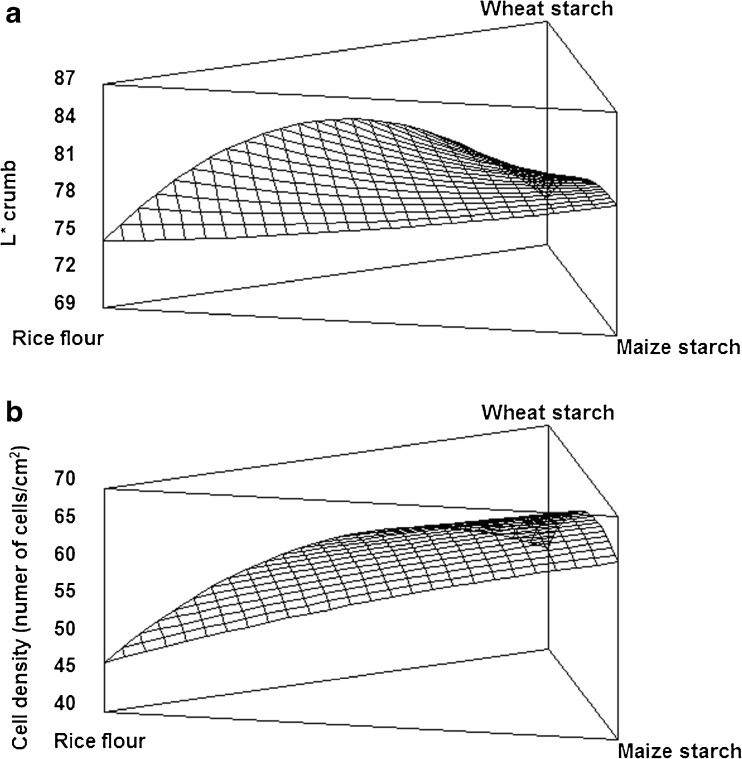
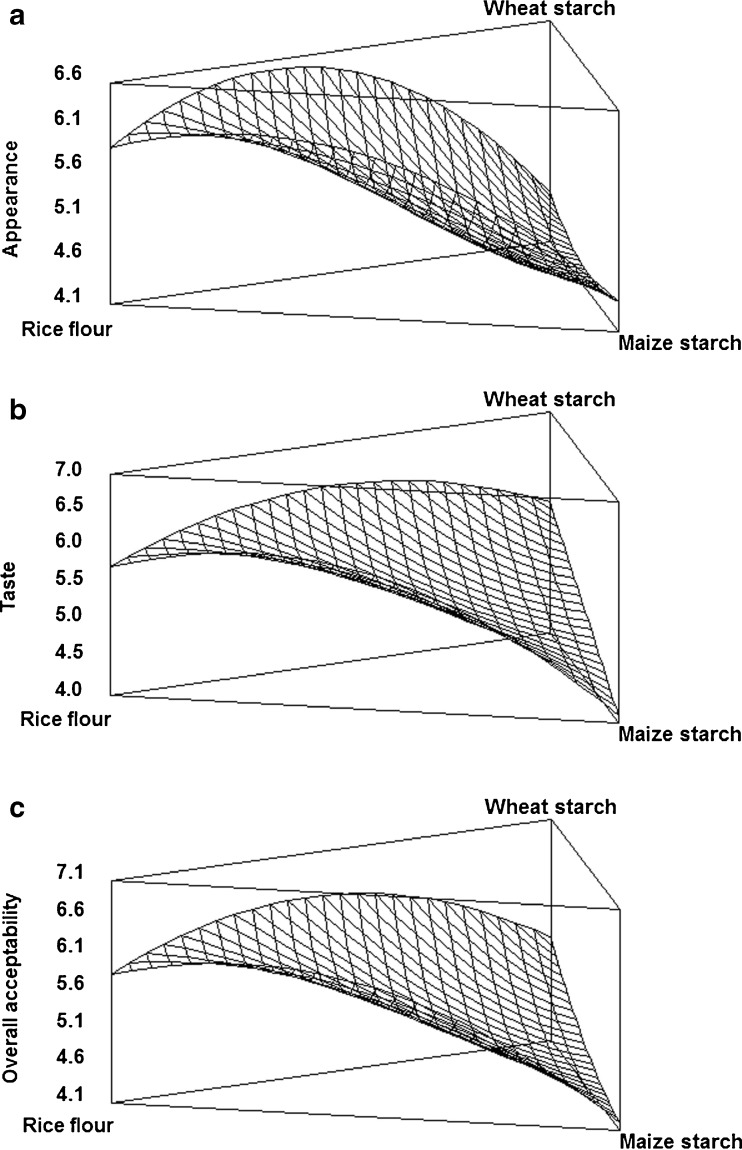
Gluten-free bread production requires gluten-free flours or starches. Rice flour and maize starch are two of the most commonly used raw materials. Over recent years, gluten-free wheat starch is available on the market. The aim of this research was to optimize mixtures of rice flour, maize starch and wheat starch using an experimental mixture design. For this purpose, dough rheology and its fermentation behaviour were studied. Quality bread parameters such as specific volume, texture, cell structure, colour and acceptability were also analysed. Generally, starch incorporation reduced G* and increased the bread specific volume and cell density, but the breads obtained were paler than the rice flour breads. Comparing the starches, wheat starch breads had better overall acceptability and had a greater volume than maize-starch bread. The highest value for sensorial acceptability corresponded to the bread produced with a mixture of rice flour (59 g/100 g) and wheat starch (41 g/100 g).
Keywords: Gluten-free bread; Maize starch; Mixture design; Rheology; Rice flour; Wheat starch.
Figures
References
-
- AACC (2012) American Association of Cereal Chemist, 11th Edition. St Paul
-
- Commission Regulation (EC) No. 41/2009. Article 3: Composition and labelling of foodstuffs for people intolerant to gluten
-
- de la Hera E, Talegón M, Caballero P, Gomez M. Influence of maize flour particle size on gluten-free breadmaking. J Sci Food Agric. 2012;15:924–932. - PubMed
-
- de la Hera E, Martínez M, Gómez M. Influence of flour particle size on quality of gluten-free rice bread. LWT-Food Sci Technol. 2013;54:199–206. doi: 10.1016/j.lwt.2013.04.019. - DOI
-
- Deutsch H, Poms R, Heeres H, Van der Kamp J-W. Labeling and regulatory issues. In: Arendt EK, Dal Bello F, editors. Gluten-free cereal products and beverages. Burlington: Elsevier; 2008. pp. 29–46.
LinkOut - more resources
Full Text Sources
Other Literature Sources