


Behavior During Tethered Kicking in Infants With Periventricular Brain Injury
- PMID: 26397087
- PMCID: PMC4703037
- DOI: 10.1097/PEP.0000000000000173
Behavior During Tethered Kicking in Infants With Periventricular Brain Injury
Abstract
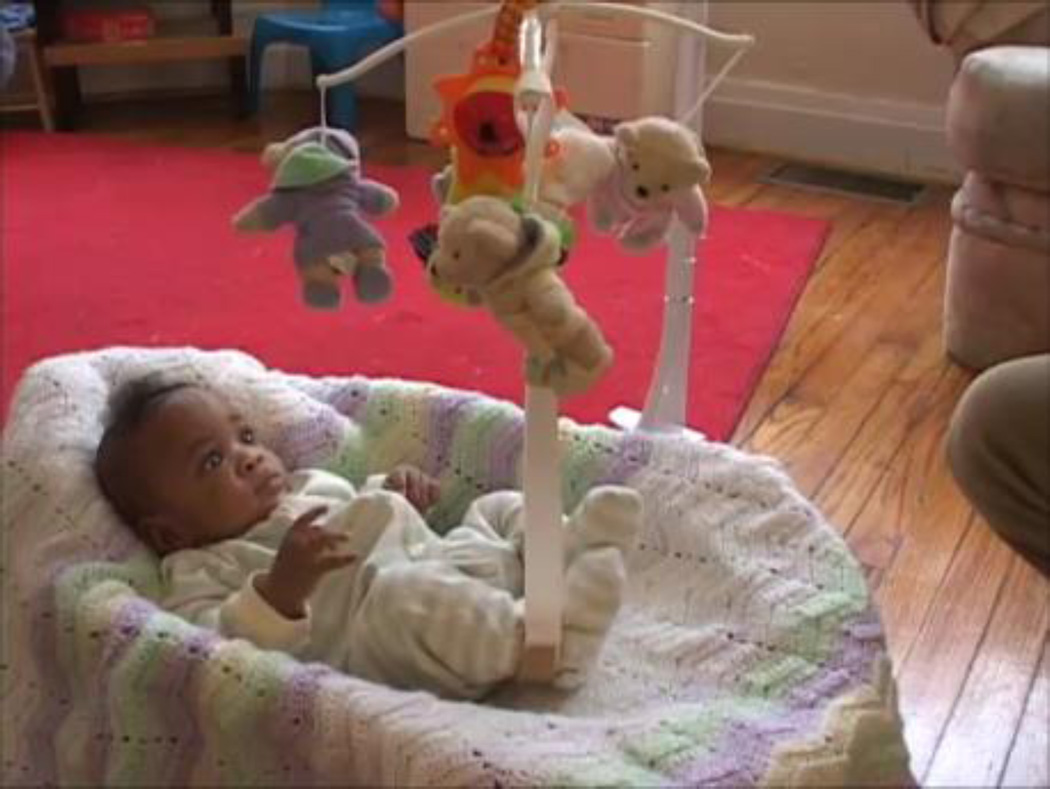
Purpose: To describe behavior of children with periventricular brain injury (PBI) in a tethered-kicking intervention.
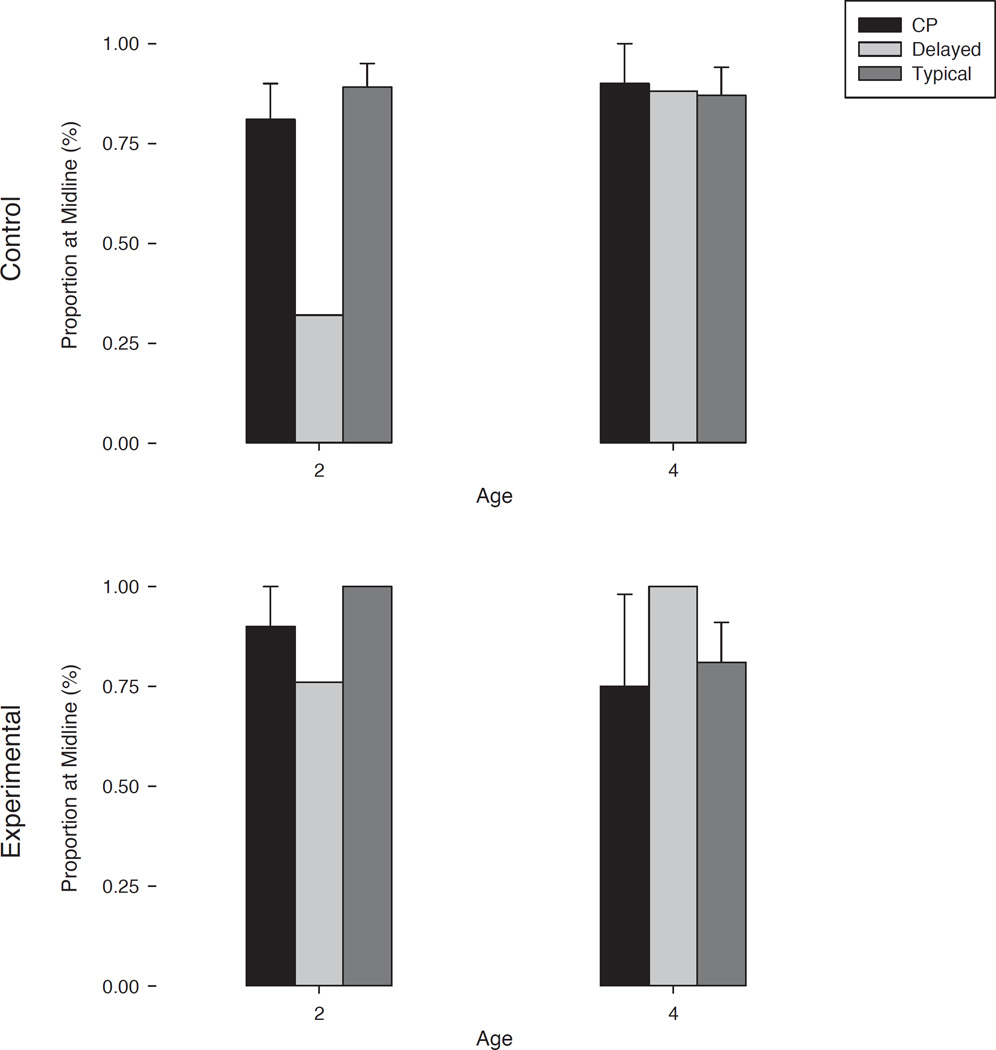
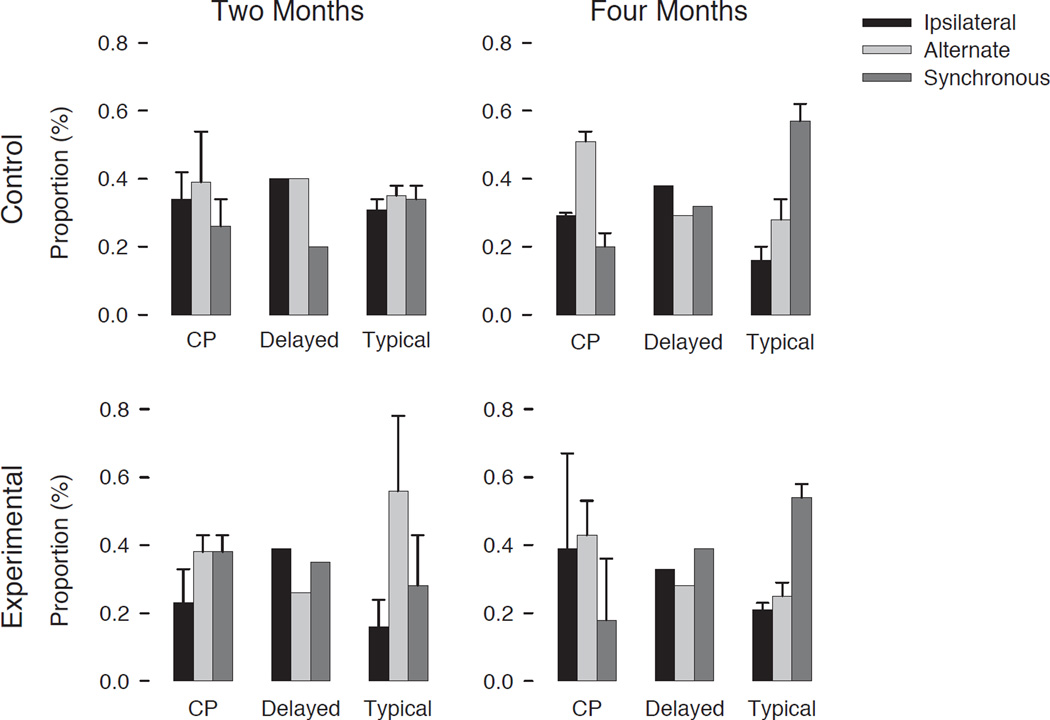
Methods: Sixteen infants with PBI were randomly assigned to exercise or no-training in a longitudinal pilot study. Frequencies of leg movements and interlimb coordination were described from videos at 2 and 4 months' corrected age (CA).
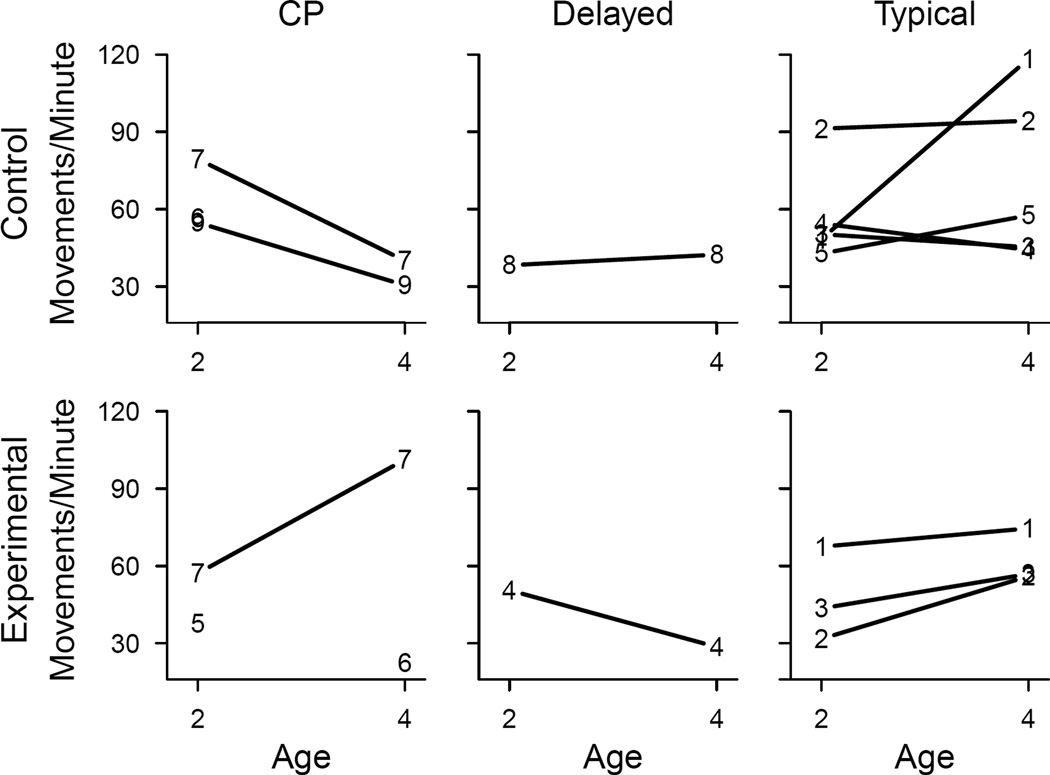
Results: Eight of the 13 children (62%) with longitudinal data increased the frequency of leg movements while tethered to a mobile between 2 and 4 months' CA. Movement frequency was correlated with scores on the Test of Infant Motor Performance, but no differences between experimental groups were found. Children with typical development at 12 months' CA increased the proportion of leg movements that were synchronous between 2 and 4 months, as did a child with cerebral palsy in the experimental group.
Conclusions: The tethered-kicking intervention facilitates movement in infants with PBI, but effects on development remain to be demonstrated.
Conflict of interest statement
Statement of Interests: Suzann K. Campbell is the Managing Partner of Infant Motor Performance Scales, LLC (IMPS), the publisher of the Test of Infant Motor Performance (TIMP). Laura Zawacki teaches workshops on the TIMP for IMPS. For the remaining authors, no conflict of interest was declared.
Figures
Comment in
-
Commentary on "Behavior During Tethered Kicking in Infants With Periventricular Brain Injury".Pediatr Phys Ther. 2015 Winter;27(4):413. doi: 10.1097/PEP.0000000000000184. Pediatr Phys Ther. 2015. PMID: 26397088 No abstract available.
References
-
- de Kieviet JF, Piek JP, Aarnoudse-Moens CS, Oosterlaan J. Motor development in very preterm and very low-birth-weight children from birth to adolescence A meta-analysis. JAMA. 2009;302:2235–2242. - PubMed
-
- Roze E, Van Braeckel KNJA, van der Veere CN, et al. Functional outcome at school age of preterm infants with periventricular hemorrhagic infarction. Pediatr. 2009;123:1493–1500. - PubMed
Publication types
MeSH terms
Grants and funding
LinkOut - more resources
Full Text Sources
