. 2015 Sep 23;10(9):e0137456.
doi: 10.1371/journal.pone.0137456. eCollection 2015.

The Oldest Case of Decapitation in the New World (Lapa do Santo, East-Central Brazil)

Affiliations

The Oldest Case of Decapitation in the New World (Lapa do Santo, East-Central Brazil)

André Strauss et al. PLoS One. .

Abstract

We present here evidence for an early Holocene case of decapitation in the New World (Burial 26), found in the rock shelter of Lapa do Santo in 2007. Lapa do Santo is an archaeological site located in the Lagoa Santa karst in east-central Brazil with evidence of human occupation dating as far back as 11.7-12.7 cal kyBP (95.4% interval). An ultra-filtered AMS age determination on a fragment of the sphenoid provided an age range of 9.1-9.4 cal kyBP (95.4% interval) for Burial 26. The interment was composed of an articulated cranium, mandible and first six cervical vertebrae. Cut marks with a v-shaped profile were observed in the mandible and sixth cervical vertebra. The right hand was amputated and laid over the left side of the face with distal phalanges pointing to the chin and the left hand was amputated and laid over the right side of the face with distal phalanges pointing to the forehead. Strontium analysis comparing Burial 26's isotopic signature to other specimens from Lapa do Santo suggests this was a local member of the group. Therefore, we suggest a ritualized decapitation instead of trophy-taking, testifying for the sophistication of mortuary rituals among hunter-gatherers in the Americas during the early Archaic period. In the apparent absence of wealth goods or elaborated architecture, Lapa do Santo's inhabitants seemed to use the human body to express their cosmological principles regarding death.


Conflict of interest statement

Competing Interests: The authors of this manuscript have the following competing interests: Author Renato Kipnis is employed by Scientia Consultoria Científica Ltda. There are no patents, products in development or marketed products to declare. This does not alter their adherence to all the PLOS ONE policies on sharing data and materials.

Figures

Fig 1
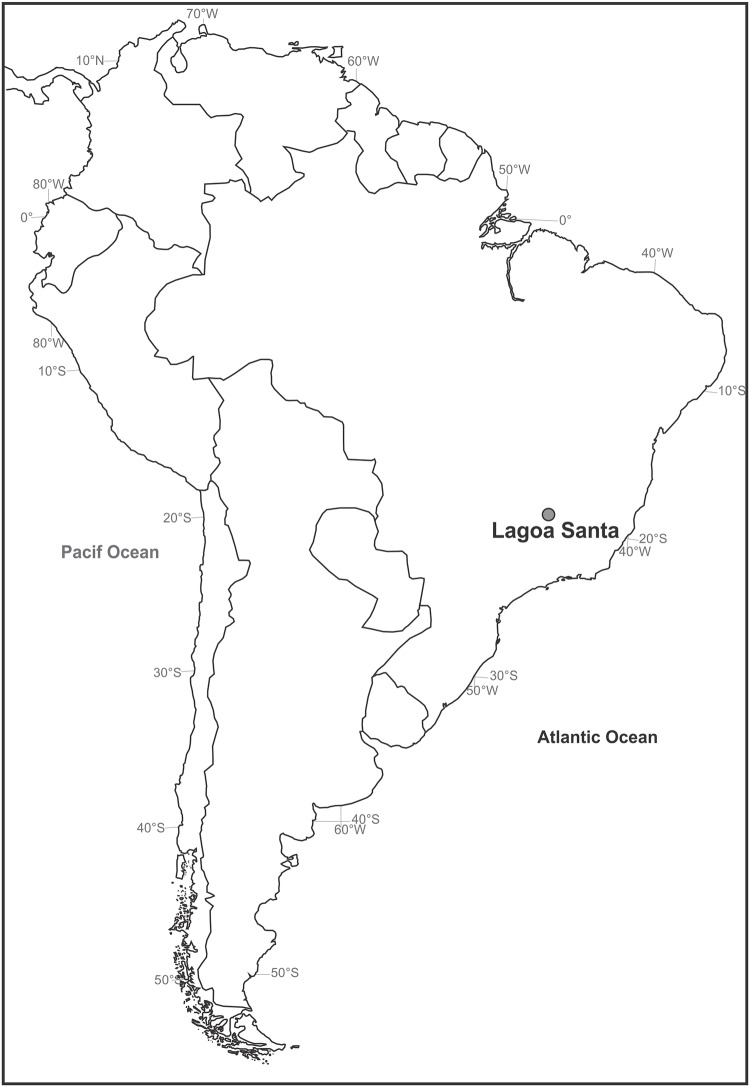
Fig 1. Map of South America.
The location of Lagoa Santa is indicated by the dot.
Fig 2
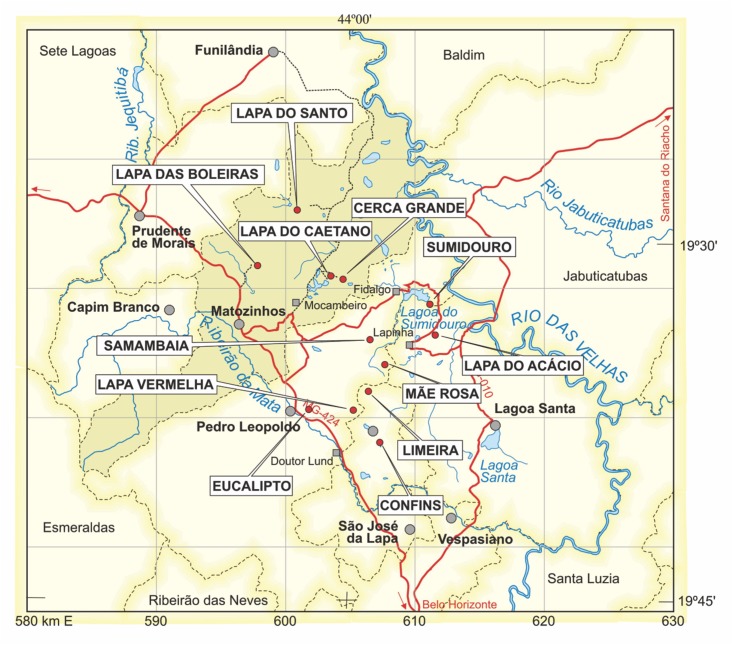
Fig 2. Map of the Lagoa Santa region.
The dots indicate all early Holocene sites where human skeletal remains were found.
Fig 3
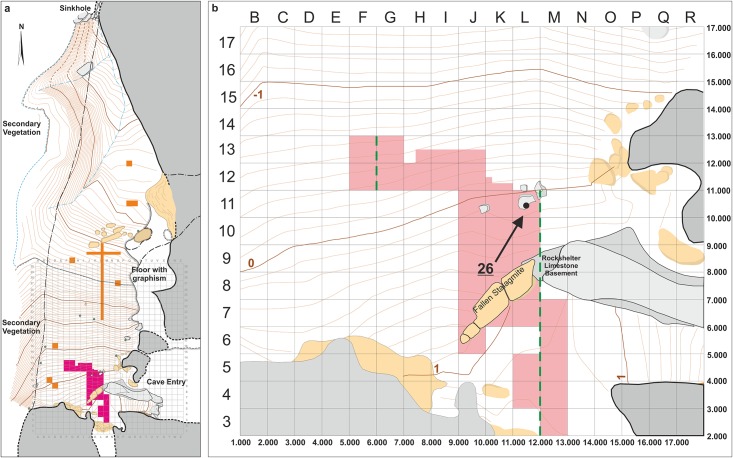
Fig 3. Plan of Lapa do Santo.
a) The grid corresponds to 1 square meter units. Purple and orange areas indicate excavated surfaces. Pink area indicates the main excavation area (MEA). The bedrock is depicted in gray, and secondary deposits such as breccia and stalagmites in beige. The topographic lines are 10 cm equidistant and the associated values correspond to the z-value of the site coordinate system. b) Detail of the MEA area. Black disk and the black arrow indicate the position of Burial 26. Numbers in the lower and right margin indicate the x and y values, respectively, from the coordinate system of site.
Fig 4
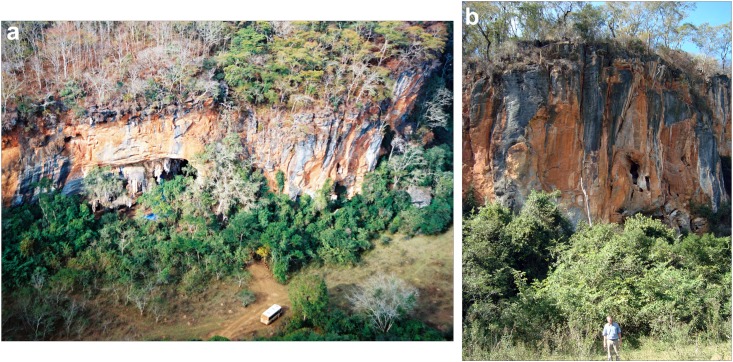
Fig 4. Lapa do Santo massif.
a) Aerial view of the massif in which the rock shelter is located; b) ground view of the massif, the site is located just behind the vegetation. The individual in panel 4b has given written informed consent (as outlined in PLOS consent form) to publish this image.
Fig 5
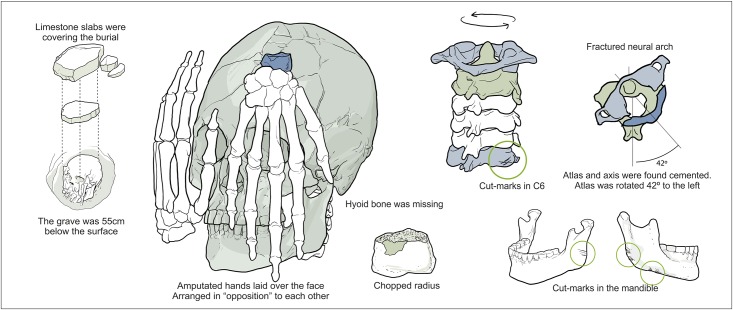
Fig 5. Schematic representation of Burial 26 from Lapa do Santo.
Drawing by Gil Tokyo.
Fig 6
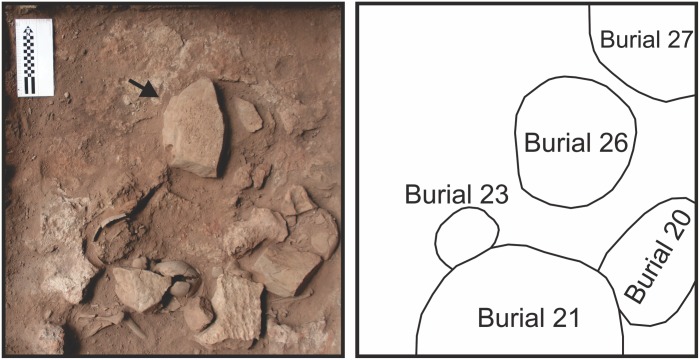
Fig 6. Lapa do Santo unit L11 at level 10.
a) Field picture. The black arrow points to the block that marks the upper limit of the pit of Burial 26; b) schematic representation of Unit L11’s level 10, the black contours indicate the approximate limit of each burial.
Fig 7
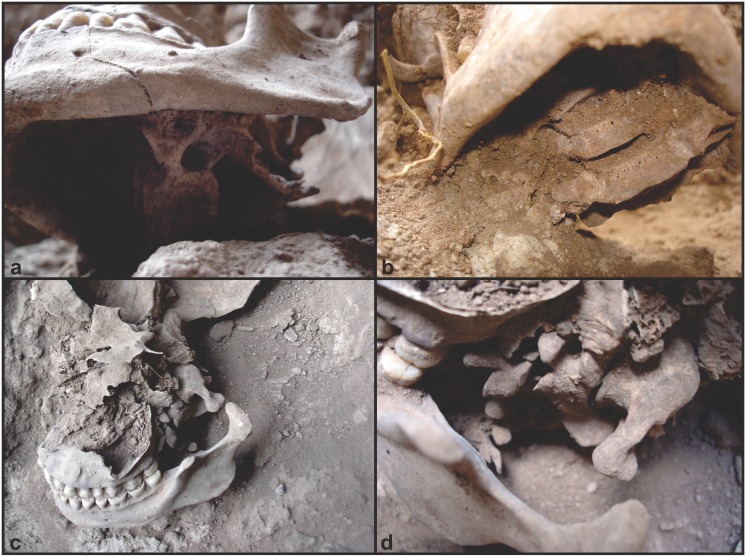
Fig 7. Burial 26. Arrangement of the cervical vertebrae.
a) infero-lateral view; b) infero-anterior view; c) the left part of face and neurocranium were removed to allow the view of the relative position of atlas and foramen magnum; d) detail of the relationship of atlas, axis, and the other cervical vertebrae.
Fig 8
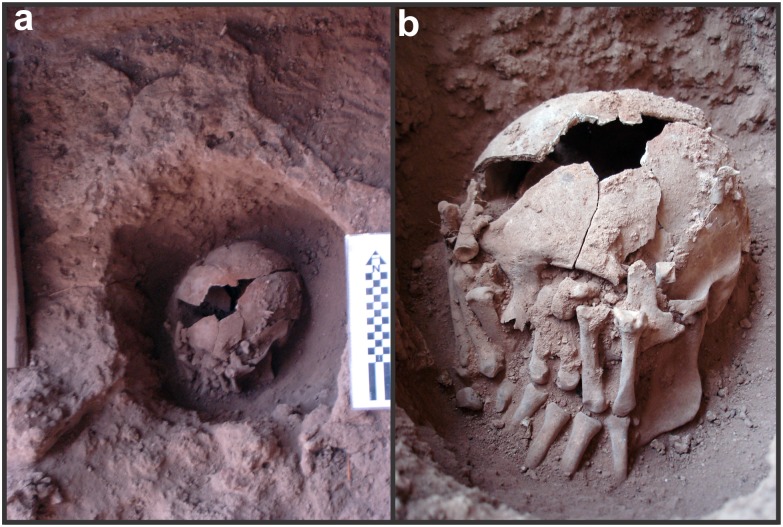
Fig 8. Burial 26.
a) Pit shape; b) Arrangement of the hands over the skull.
Fig 9
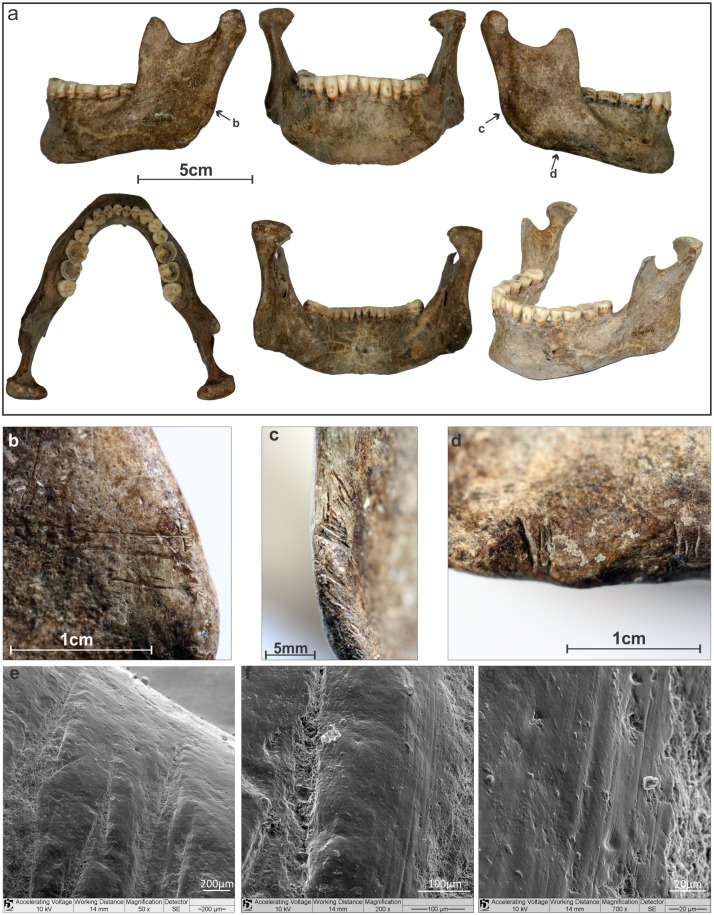
Fig 9. Mandible of Burial 26.
a) The arrows point the location of the incisions; b) Incisions on the lateral surface of the left ramus; c) Incisions on the posterior margin of right ramus; e) Incisions in the lower margin of the right ramus; e); f) and g) SEM of the incisions on the inferior margin of the right ramus.
Fig 10
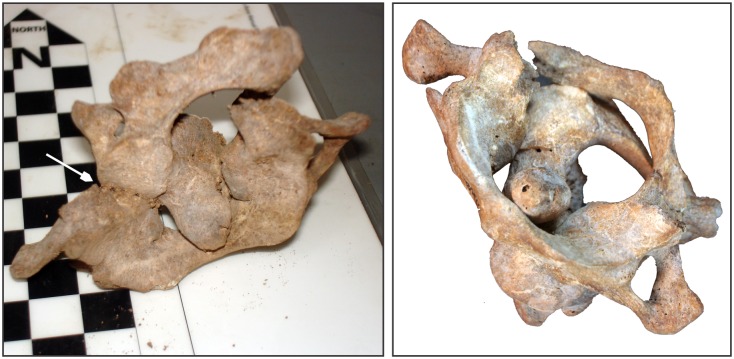
Fig 10. Atlas and axis of Burial 26.
Although in anatomical position due the presence of carbonate cement, the posterior arch of the atlas was broken. a) Picture taken immediately after exhumation; the arrow indicates the point where the neural arch is attached to atlas by means of carbonatic concretion; b) Atlas was rotated 42 degrees in relation to the axis.
Fig 11
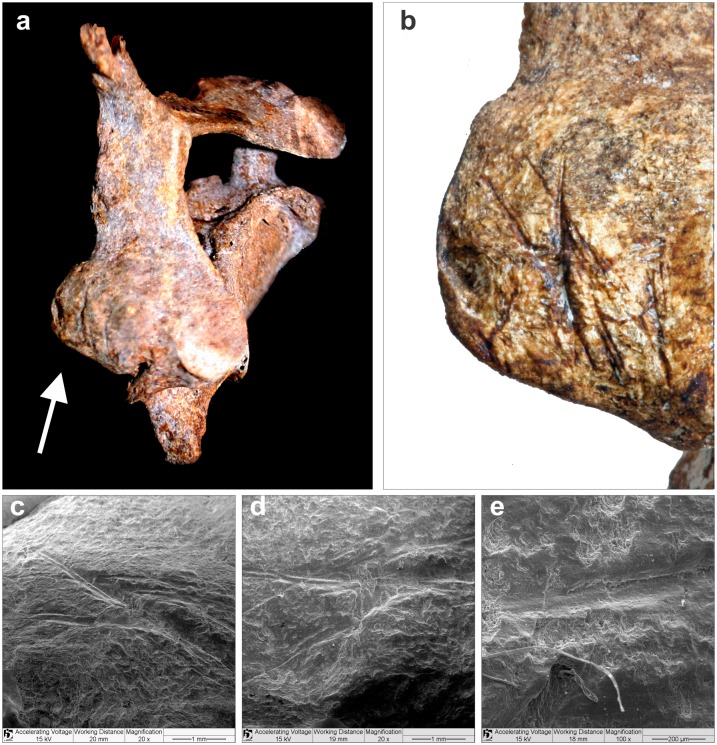
Fig 11. Burial 26’s sixth cervical vertebra.
a) Carbonatic concretion was still present making the incisions in the column of the right articular processes, indicated by white arrow, very subtle; b) detail of the right column of articular processes after removal of concretion; c); d) and e) SEM of the incisions.
Fig 12
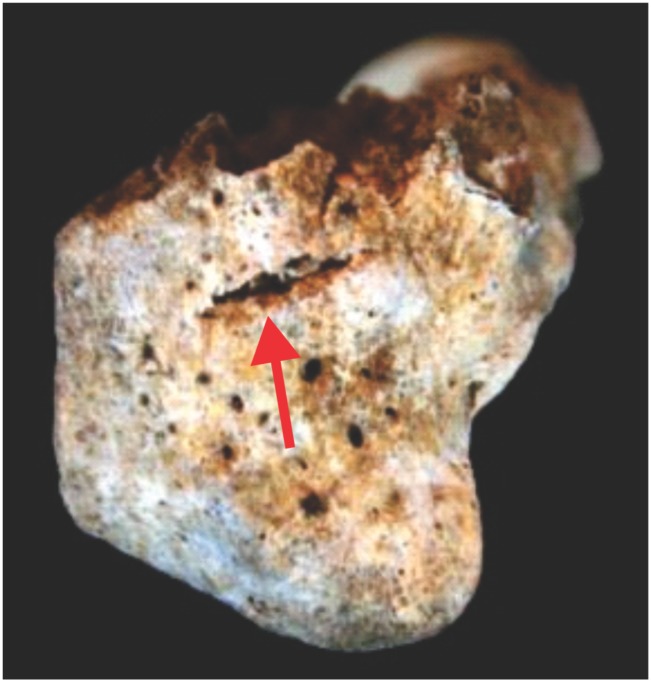
Fig 12. Distal extremity of the right radius.
The red arrow points to the hack mark.
Fig 13
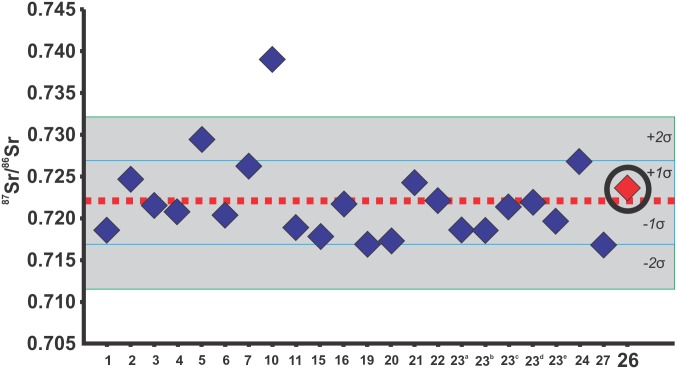
Fig 13. Strontium isotopic analysis.
87Sr/86Sr ratio enamel values from the individuals of Lapa do Santo, plotted on 87Sr/86Sr mean ratio value (red dashed line), mean ratio ± 1σ values (area between blue lines), and mean ratio ± 2σ values (area between green lines) of the entire sample. A black circle marks the decapitated individual.
Fig 14
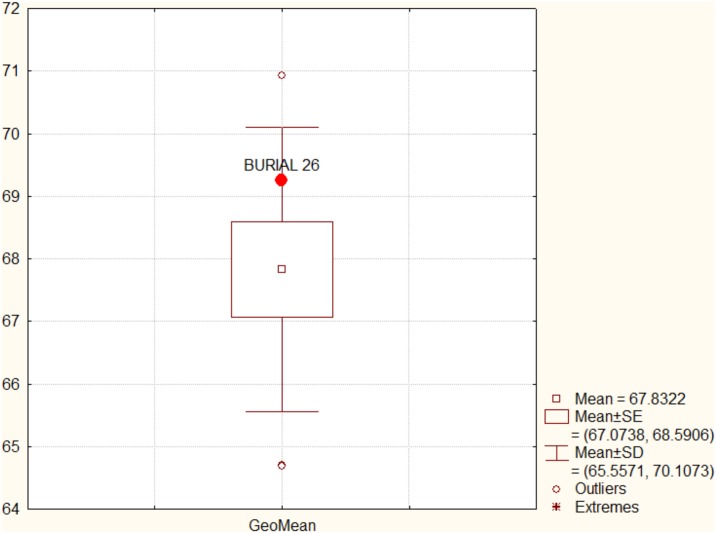
Fig 14. Boxplot of the geometric mean of Burial 26 compared to Lagoa Santa skulls.
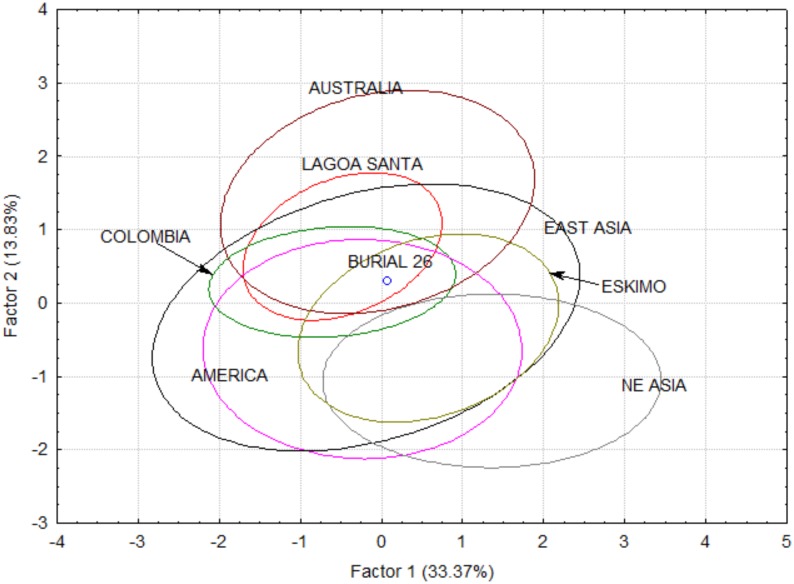
Fig 15
Fig 15. Morphological affinities of Burial 26 compared to the variation of the reference series, based on original variables (size and shape).
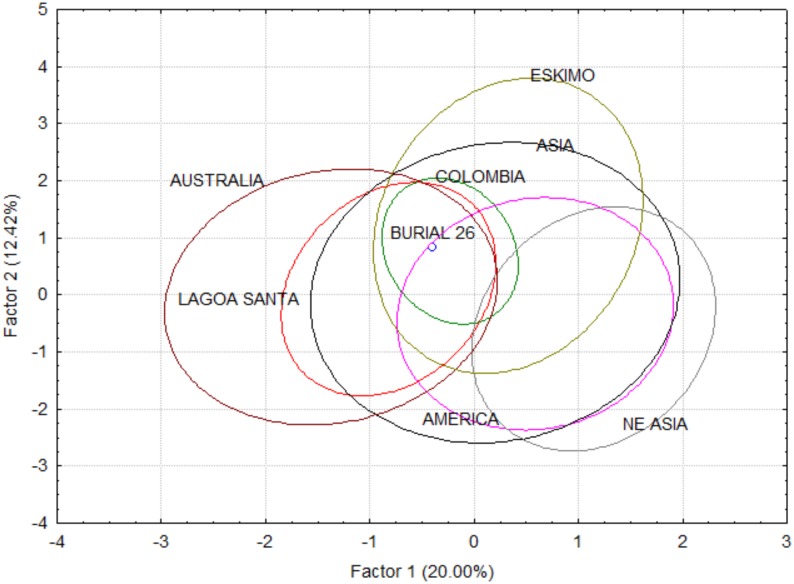
Fig 16
Fig 16. Morphological affinities of Burial 26 compared to the variation of the reference series, based on size corrected variables (shape alone).

References

    1. Chacon R, Dye D. The taking and displaying of human body parts as trophies by Amerindians. New York: Springer; 2007.
    1. Ferguson RB. Blood of the Leviathan: western contact and warfare in Amazonia. Am Ethnol. 1990;17: 237–257.
    1. Lessa A. Rituais de sacrifício: a sobrevivência de uma antiga dimensão do corpo humano. História, Ciências, Saúde-Manguinhos. 2007;14: 907–919.
    1. Viveiro de Castro E. From the enemy’s point of view—Humanity and divinity in an Amazonian Society. Chicago: University of Chicago Press; 1992.
    1. Petersen JB, Crock JG. “Handsome death”: the taking, veneration and consumption of human remains in the insular Caribbean and greater Amazonia In: Chacon R, Dye D, editors. The Taking and Displaying of Human Body Parts as Trophies by Amerindians. New York: Springer; 2007. pp. 547–574.

Publication types

Substances

LinkOut - more resources