


Cystathionine β-Synthase (CBS) Domain-containing Pyrophosphatase as a Target for Diadenosine Polyphosphates in Bacteria
- PMID: 26400082
- PMCID: PMC4646011
- DOI: 10.1074/jbc.M115.680272
Cystathionine β-Synthase (CBS) Domain-containing Pyrophosphatase as a Target for Diadenosine Polyphosphates in Bacteria
Abstract
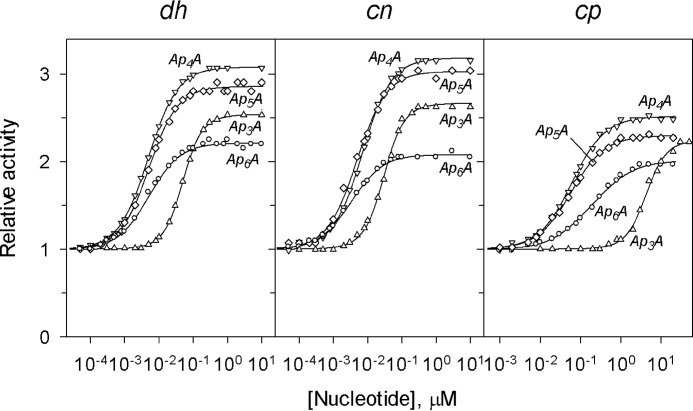
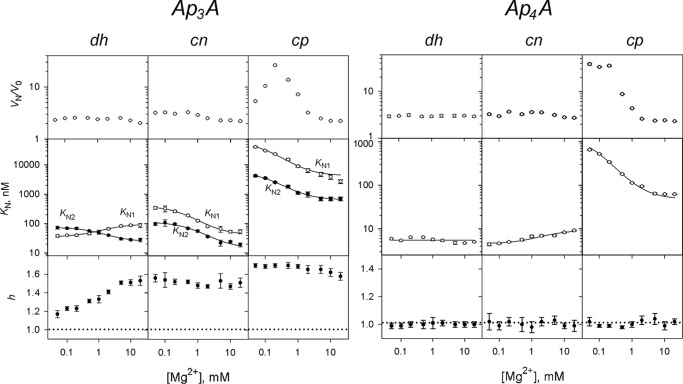
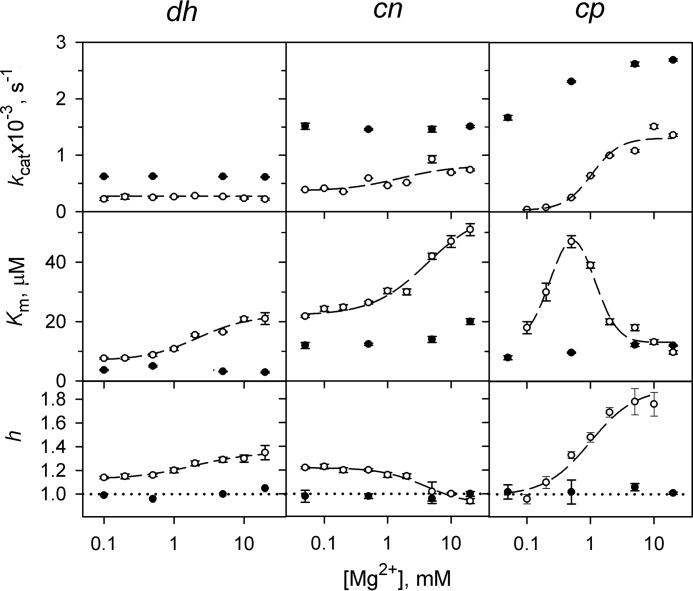
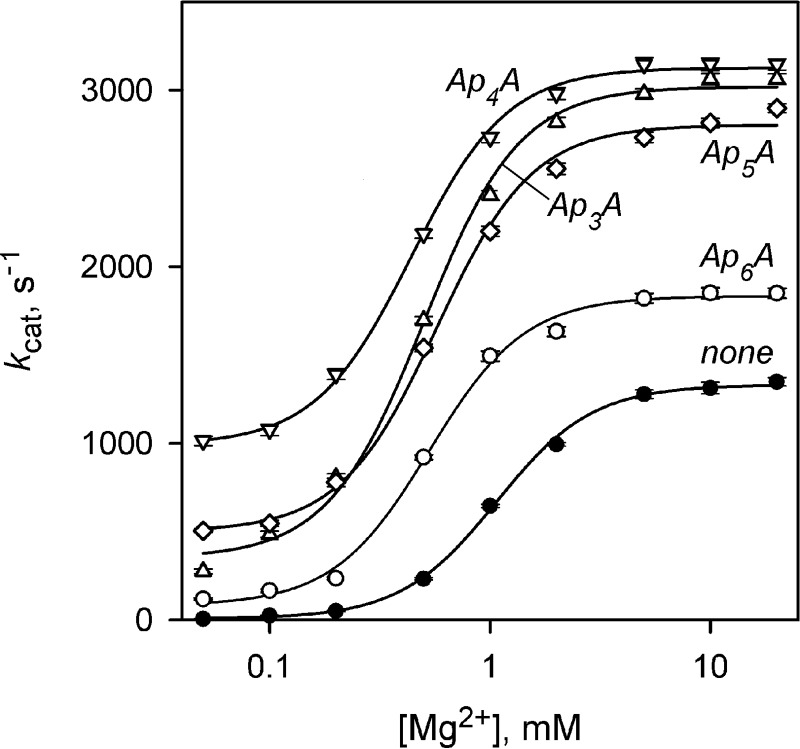
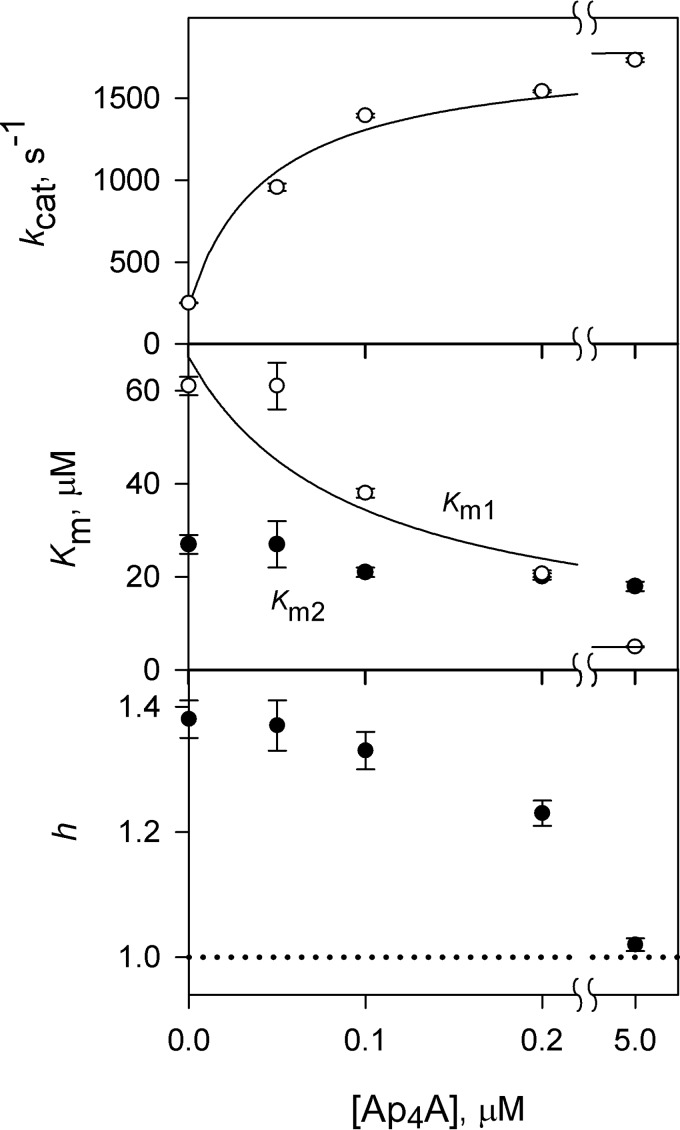
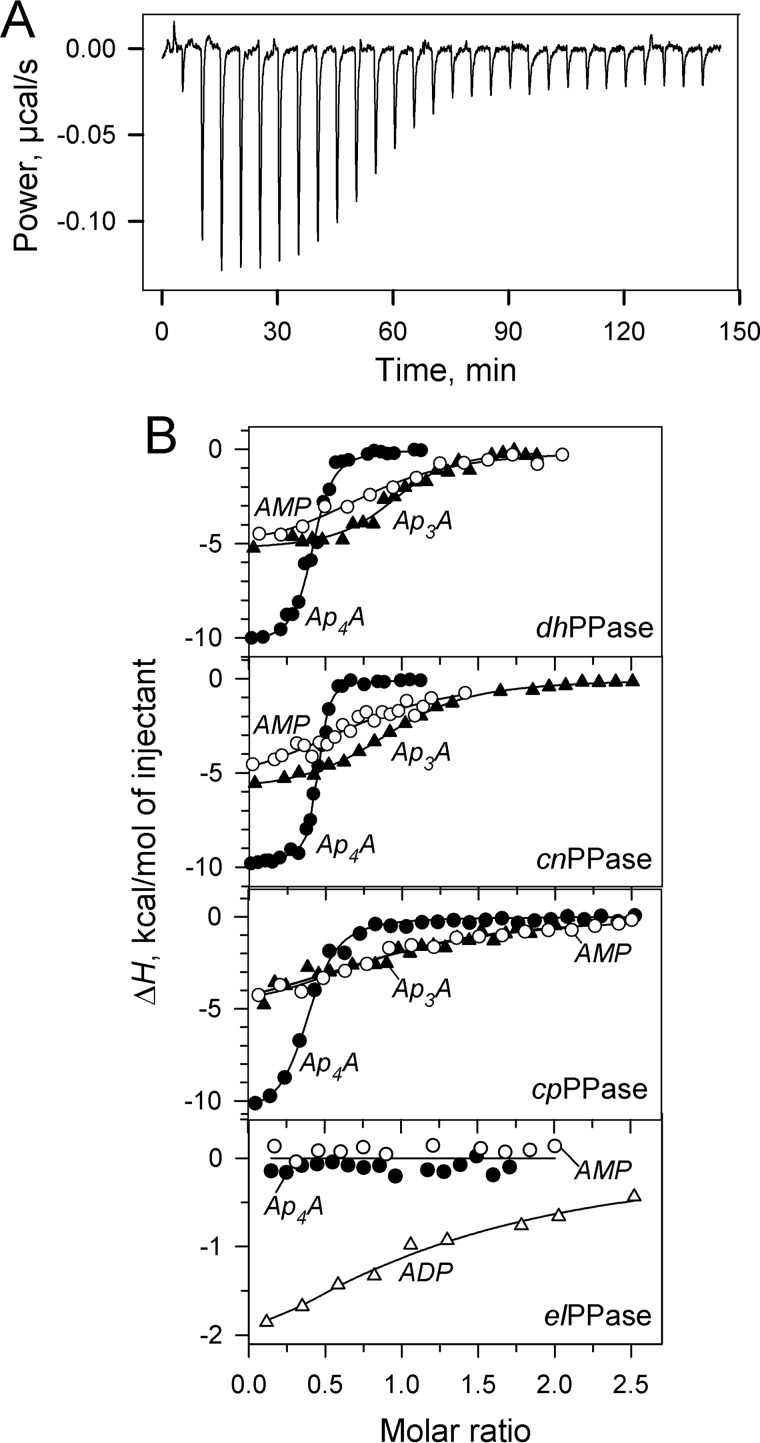
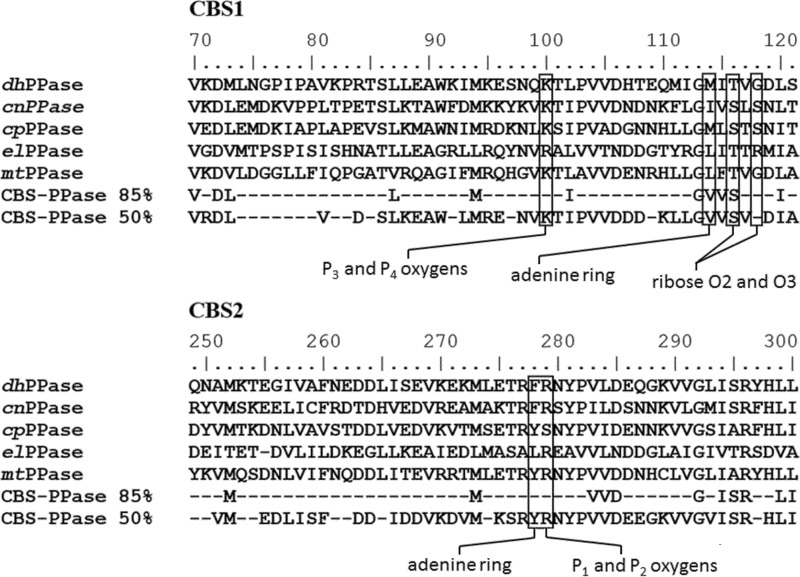
Among numerous proteins containing pairs of regulatory cystathionine β-synthase (CBS) domains, family II pyrophosphatases (CBS-PPases) are unique in that they generally contain an additional DRTGG domain between the CBS domains. Adenine nucleotides bind to the CBS domains in CBS-PPases in a positively cooperative manner, resulting in enzyme inhibition (AMP or ADP) or activation (ATP). Here we show that linear P(1),P(n)-diadenosine 5'-polyphosphates (ApnAs, where n is the number of phosphate residues) bind with nanomolar affinity to DRTGG domain-containing CBS-PPases of Desulfitobacterium hafniense, Clostridium novyi, and Clostridium perfringens and increase their activity up to 30-, 5-, and 7-fold, respectively. Ap4A, Ap5A, and Ap6A bound noncooperatively and with similarly high affinities to CBS-PPases, whereas Ap3A bound in a positively cooperative manner and with lower affinity, like mononucleotides. All ApnAs abolished kinetic cooperativity (non-Michaelian behavior) of CBS-PPases. The enthalpy change and binding stoichiometry, as determined by isothermal calorimetry, were ~10 kcal/mol nucleotide and 1 mol/mol enzyme dimer for Ap4A and Ap5A but 5.5 kcal/mol and 2 mol/mol for Ap3A, AMP, ADP, and ATP, suggesting different binding modes for the two nucleotide groups. In contrast, Eggerthella lenta and Moorella thermoacetica CBS-PPases, which contain no DRTGG domain, were not affected by ApnAs and showed no enthalpy change, indicating the importance of the DTRGG domain for ApnA binding. These findings suggest that ApnAs can control CBS-PPase activity and hence affect pyrophosphate level and biosynthetic activity in bacteria.
Keywords: CBS domain; allosteric regulation; bacterial signal transduction; calorimetry; cooperativity; diadenosine polyphosphate; enzyme kinetics; inorganic pyrophosphatase; stress response.
© 2015 by The American Society for Biochemistry and Molecular Biology, Inc.
Figures
References
-
- Reiss J. R., and Moffatt J. G. (1965) Dismutation reactions of nucleoside polyphosphates: III. the synthesis of α,ω-dinucleoside 5′-polyphosphates. J. Org. Chem. 30, 3381–3387 - PubMed
-
- Fraga H., and Fontes R. (2011) Enzymatic synthesis of mono and dinucleoside polyphosphates. Biochim. Biophys. Acta 1810, 1195–1204 - PubMed
-
- Zamecnik P. C., Stephenson M. L., Janeway C. M., and Randerath K. (1966) Enzymatic synthesis of diadenosine tetraphosphate and diadenosine triphosphate with a purified lysyl-sRNA synthetase. Biochem. Biophys. Res. Commun. 24, 91–97 - PubMed
-
- Goerlich O., Foeckler R., and Holler E. (1982) Mechanism of synthesis of adenosine(5′)tetraphospho(5′)adenosine (AppppA) by aminoacyl-tRNA synthetases. Eur. J. Biochem. 126, 135–142 - PubMed
-
- Wright M., Boonyalai N., Tanner J. A., Hindley A. D., and Miller A. D. (2006) The duality of LysU, a catalyst for both Ap4A and Ap3A formation. FEBS J. 273, 3534–3544 - PubMed
Publication types
MeSH terms
Substances
LinkOut - more resources
Full Text Sources
