


The longitudinal course of non-suicidal self-injury and deliberate self-harm: a systematic review of the literature
- PMID: 26401305
- PMCID: PMC4579518
- DOI: 10.1186/s40479-014-0024-3
The longitudinal course of non-suicidal self-injury and deliberate self-harm: a systematic review of the literature
Abstract
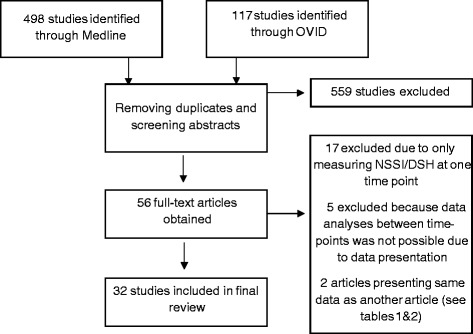
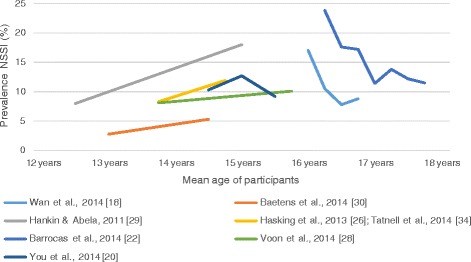
Non-suicidal self-injury (NSSI) has been proposed as diagnostic entity and was added to the section 3 of the DSM 5. Nevertheless, little is known about the long-term course of this disorder and many studies have pointed to the fact that NSSI seems to be volatile over time. We aimed to assemble studies providing longitudinal data about NSSI and furthermore included studies using the definition of deliberate self-harm (DSH) to broaden the epidemiological picture. Using a systematic search strategy, we were able to retrieve 32 studies reporting longitudinal data about NSSI and DSH. We furthermore aimed to describe predictors for the occurrence of NSSI and DSH that were identified in these longitudinal studies. Taken together, there is evidence for an increase in rates of NSSI and DSH in adolescence with a decline in young adulthood. With regards to predictors, rates of depressive symptoms and female gender were often reported as predictor for both NSSI and DSH.
Keywords: Deliberate self-harm; Longitudinal study; Non-suicidal self-injury; Predictors; Systematic review.
Figures
References
-
- American Psychiatric Association . Diagnostic and Statistical Manual of Mental Disorders Fifth Edition (DSM-5) Arlington: American Psychiatric Association; 2013.
-
- Plener PL, Kapusta ND, Kölch MG, Kaess M, Brunner R. Nicht-suizidale Selbstverletzung als eigenständige Diagnose: Implikationen des DSM-5 Vorschlages für Forschung und Klinik selbstverletzenden Verhaltens bei Jugendlichen. Zeitschrift Kinder Jugendpsychiatrie Psychotherapie. 2012;40:113–20. doi: 10.1024/1422-4917/a000158. - DOI - PubMed
-
- De Leo D. DSM-V and the future of suicidoloy. Crisis. 2011;32:233–9. - PubMed
-
- Madge N, Hawton K, McMahon EM, Corcoran P, De Leo D, de Wilde EJ, Fekete S, van Heeringen K, Ystgaard M, Arensman E. Psychological characteristics, stressful life events and deliberate self-harm: findings from the child and adolescent self-harm in Europe (CASE) study. Eur Child Adolesc Psychiatry. 2011;20:499–508. doi: 10.1007/s00787-011-0210-4. - DOI - PubMed
LinkOut - more resources
Full Text Sources
Other Literature Sources
