


Rejection sensitivity and symptom severity in patients with borderline personality disorder: effects of childhood maltreatment and self-esteem
- PMID: 26401307
- PMCID: PMC4579499
- DOI: 10.1186/s40479-015-0025-x
Rejection sensitivity and symptom severity in patients with borderline personality disorder: effects of childhood maltreatment and self-esteem
Abstract
Background: Interpersonal dysfunction in Borderline Personality Disorder (BPD) is characterized by an 'anxious preoccupation with real or imagined abandonment' (DSM-5). This symptom description bears a close resemblance to that of rejection sensitivity, a cognitive affective disposition that affects perceptions, emotions and behavior in the context of social rejection. The present study investigates the level of rejection sensitivity in acute and remitted BPD patients and its relation to BPD symptom severity, childhood maltreatment, and self-esteem.
Methods: Data were obtained from 167 female subjects: 77 with acute BPD, 15 with remitted BPD, and 75 healthy controls who were matched with the patients for age and education. The instruments used for assessment were the Rejection Sensitivity Questionnaire, the short version of the Borderline Symptom List, the Childhood Trauma Questionnaire, and the Rosenberg Self-Esteem Scale.
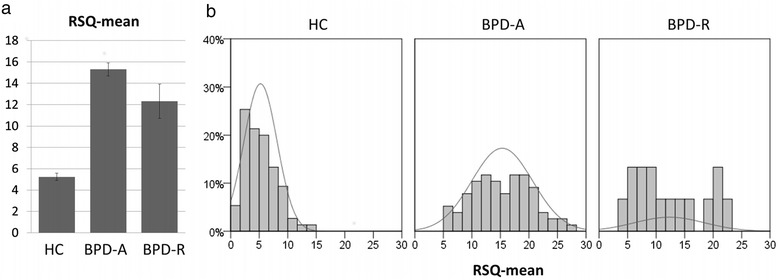
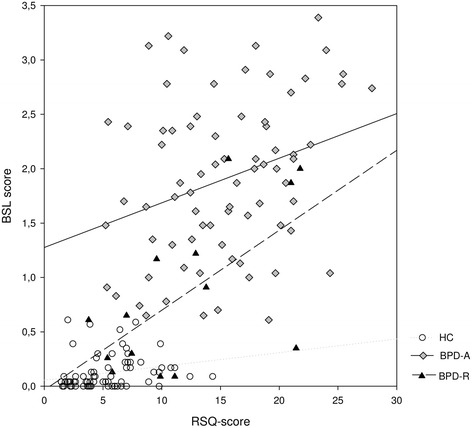
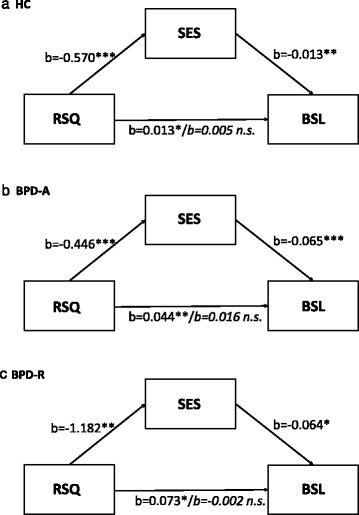
Results: Both acute and remitted BPD patients had higher scores on the Rejection Sensitivity Questionnaire than did healthy controls. Lower self-esteem was found to be positively correlated with both increased BPD symptom severity and higher rejection sensitivity, and mediated the relation between the two. History of childhood maltreatment did not correlate with rejection sensitivity, BPD symptom severity, or self-esteem.
Conclusions: Our findings support the hypothesis that rejection sensitivity is an important component in BPD, even for remitted BPD patients. Level of self-esteem appears to be a relevant factor in the relationship between rejection sensitivity and BPD symptom severity. Therapeutic interventions for BPD would do well to target rejection sensitivity.
Keywords: Aggression; Anxiety; Borderline personality disorder; Childhood maltreatment; Rejection sensitivity; Self-esteem.
Figures
References
-
- Pietrzak J, Downey G, Ayduk O. Rejection sensitivity as an interpersonal vulnerability. In: Baldwin MW, editor. Interpersonal cognition. New York: Guilford Publications; 2005.
LinkOut - more resources
Full Text Sources
Other Literature Sources
