


Skeletal muscle wasting in cachexia and sarcopenia: molecular pathophysiology and impact of exercise training
- PMID: 26401465
- PMCID: PMC4575550
- DOI: 10.1002/jcsm.12043
Skeletal muscle wasting in cachexia and sarcopenia: molecular pathophysiology and impact of exercise training
Abstract
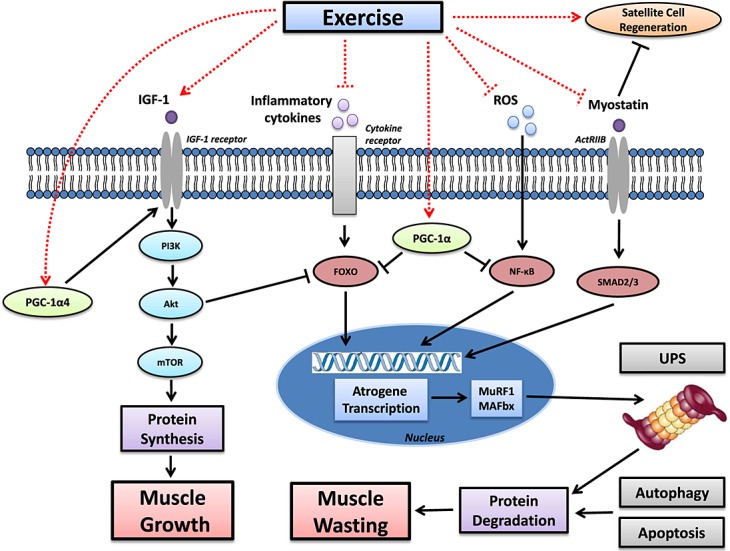
Skeletal muscle provides a fundamental basis for human function, enabling locomotion and respiration. Transmission of external stimuli to intracellular effector proteins via signalling pathways is a highly regulated and controlled process that determines muscle mass by balancing protein synthesis and protein degradation. An impaired balance between protein synthesis and breakdown leads to the development of specific myopathies. Sarcopenia and cachexia represent two distinct muscle wasting diseases characterized by inflammation and oxidative stress, where specific regulating molecules associated with wasting are either activated (e.g. members of the ubiquitin-proteasome system and myostatin) or repressed (e.g. insulin-like growth factor 1 and PGC-1α). At present, no therapeutic interventions are established to successfully treat muscle wasting in sarcopenia and cachexia. Exercise training, however, represents an intervention that can attenuate or even reverse the process of muscle wasting, by exerting anti-inflammatory and anti-oxidative effects that are able to attenuate signalling pathways associated with protein degradation and activate molecules associated with protein synthesis. This review will therefore discuss the molecular mechanisms associated with the pathology of muscle wasting in both sarcopenia and cachexia, as well as highlighting the intracellular effects of exercise training in attenuating the debilitating loss of muscle mass in these specific conditions.
Keywords: Cachexia; Exercise training; Molecular analysis; Muscle wasting; Sarcopenia.
Figures
References
-
- Anker SD, Ponikowski P, Varney S, Chua TP, Clark AL, Webb-Peploe KM, et al. Wasting as independent risk factor for mortality in chronic heart failure. Lancet. 1997;349:1050–1053. - PubMed
-
- Zhou X, Wang JL, Lu J, Song Y, Kwak KS, Jiao Q, et al. Reversal of cancer cachexia and muscle wasting by ActRIIB antagonism leads to prolonged survival. Cell. 2010;142:531–543. - PubMed
-
- Carmeli E, Coleman R, Reznick AZ. The biochemistry of aging muscle. Exp Gerontol. 2002;37:477–489. - PubMed
-
- Porter MM, Vandervoort AA, Lexell J. Aging of human muscle: structure, function and adaptability. Scand J Med Sci Sports. 1995;5:129–142. - PubMed
Publication types
LinkOut - more resources
Full Text Sources
Other Literature Sources
Medical
