


Subjective Cognitive Decline in Older Adults: An Overview of Self-Report Measures Used Across 19 International Research Studies
- PMID: 26402085
- PMCID: PMC4617342
- DOI: 10.3233/JAD-150154
Subjective Cognitive Decline in Older Adults: An Overview of Self-Report Measures Used Across 19 International Research Studies
Abstract
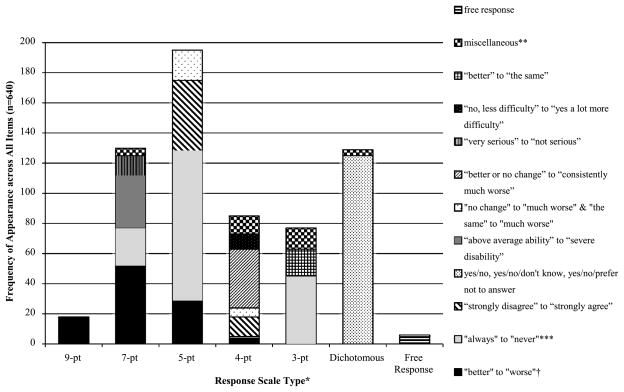
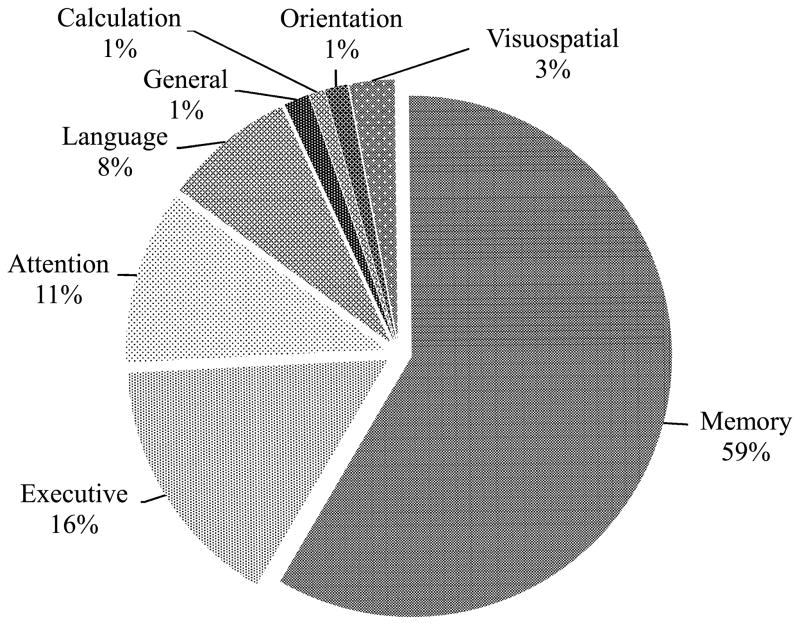
Research increasingly suggests that subjective cognitive decline (SCD) in older adults, in the absence of objective cognitive dysfunction or depression, may be a harbinger of non-normative cognitive decline and eventual progression to dementia. Little is known, however, about the key features of self-report measures currently used to assess SCD. The Subjective Cognitive Decline Initiative (SCD-I) Working Group is an international consortium established to develop a conceptual framework and research criteria for SCD (Jessen et al., 2014, Alzheimers Dement 10, 844-852). In the current study we systematically compared cognitive self-report items used by 19 SCD-I Working Group studies, representing 8 countries and 5 languages. We identified 34 self-report measures comprising 640 cognitive self-report items. There was little overlap among measures- approximately 75% of measures were used by only one study. Wide variation existed in response options and item content. Items pertaining to the memory domain predominated, accounting for about 60% of items surveyed, followed by executive function and attention, with 16% and 11% of the items, respectively. Items relating to memory for the names of people and the placement of common objects were represented on the greatest percentage of measures (56% each). Working group members reported that instrument selection decisions were often based on practical considerations beyond the study of SCD specifically, such as availability and brevity of measures. Results document the heterogeneity of approaches across studies to the emerging construct of SCD. We offer preliminary recommendations for instrument selection and future research directions including identifying items and measure formats associated with important clinical outcomes.
Keywords: Cognition; cognitive complaints; dementia; early detection; memory complaints; mild cognitive impairment; preclinical Alzheimer’s disease; questionnaire; subjective cognition; subjective cognitive impairment; subjective memory complaints.
Figures
References
-
- Amieva H, Le Goff M, Millet X, Orgogozo JM, Pérès K, Barberger-Gateau P, Jacqmin-Gadda H, Dartigues JF. Prodromal Alzheimer’s disease: Successive emergence of the clinical symptoms. Ann Neurol. 2008;64:492–498. - PubMed
-
- Dufouil C, Fuhrer R, Alpérovitch A. Subjective cognitive complaints and cognitive decline: Consequence or predictor? The epidemiology of vascular aging study. J Am Geriatr Soc. 2005;53:616–621. - PubMed
-
- Mitchell AJ, Beaumont H, Ferguson D, Yadegarfar M, Stubbs B. Risk of dementia and mild cognitive impairment in older people with subjective memory complaints: Meta-analysis. Acta Psychiatr Scand. 2014;6:1–13. - PubMed
Publication types
MeSH terms
Grants and funding
- K23 AG044431/AG/NIA NIH HHS/United States
- P30 AG010133/AG/NIA NIH HHS/United States
- P30 AG008051/AG/NIA NIH HHS/United States
- U01 AG 006781/AG/NIA NIH HHS/United States
- RF1 AG025516/AG/NIA NIH HHS/United States
- P01 AG003949/AG/NIA NIH HHS/United States
- K24 AG046373/AG/NIA NIH HHS/United States
- P01 AG025204/AG/NIA NIH HHS/United States
- R01 AG034962/AG/NIA NIH HHS/United States
- K23 AG038479/AG/NIA NIH HHS/United States
- 2P01 AG03949/AG/NIA NIH HHS/United States
- U19 AG10483/AG/NIA NIH HHS/United States
- SC2 AG039235/AG/NIA NIH HHS/United States
- R01 AG019771/AG/NIA NIH HHS/United States
- K24 AG035007/AG/NIA NIH HHS/United States
- R03 AG045474/AG/NIA NIH HHS/United States
- P30 AG10133/AG/NIA NIH HHS/United States
- R01 AG 042437/AG/NIA NIH HHS/United States
- AG 03051/AG/NIA NIH HHS/United States
- P01 AG036694/AG/NIA NIH HHS/United States
- U01 AG024904/AG/NIA NIH HHS/United States
- U19 AG010483/AG/NIA NIH HHS/United States
- P30 AG08051/AG/NIA NIH HHS/United States
- R01 AG027435/AG/NIA NIH HHS/United States
- UL1 TR001108/TR/NCATS NIH HHS/United States
- U54 HD083211/HD/NICHD NIH HHS/United States
- R37 AG025516/AG/NIA NIH HHS/United States
- R01 AG023651/AG/NIA NIH HHS/United States
- R01 LM011360/LM/NLM NIH HHS/United States
- R01 AG042437/AG/NIA NIH HHS/United States
- P50 AG005134/AG/NIA NIH HHS/United States
- UL1 TR001073/TR/NCATS NIH HHS/United States
- R01 AG003051/AG/NIA NIH HHS/United States
- U01 AG006781/AG/NIA NIH HHS/United States
- K23 AG045966/AG/NIA NIH HHS/United States
- R01 AG19771/AG/NIA NIH HHS/United States
LinkOut - more resources
Full Text Sources
Medical
