


Examining links between anxiety, reinvestment and walking when talking by older adults during adaptive gait
- PMID: 26403296
- PMCID: PMC4713710
- DOI: 10.1007/s00221-015-4445-z
Examining links between anxiety, reinvestment and walking when talking by older adults during adaptive gait
Abstract
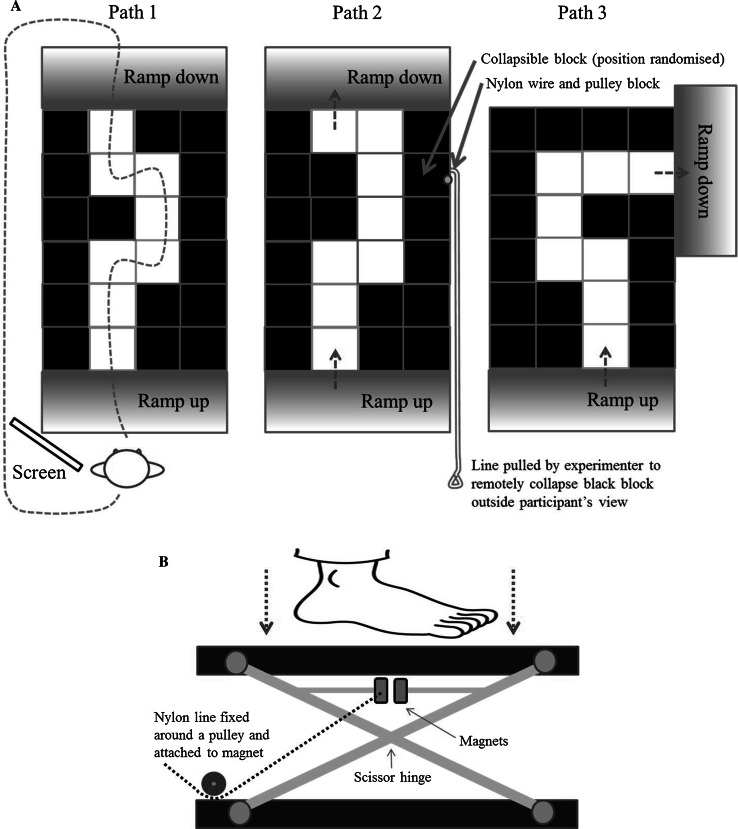
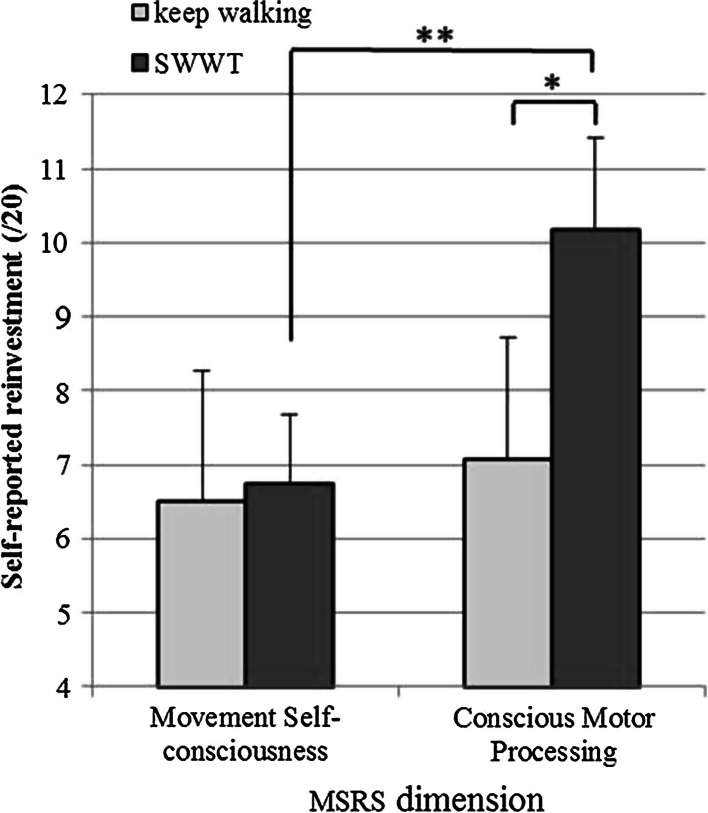
Falls by older adults often result in reduced quality of life and debilitating fear of further falls. Stopping walking when talking (SWWT) is a significant predictor of future falls by older adults and is thought to reflect age-related increases in attentional demands of walking. We examine whether SWWT is associated with use of explicit movement cues during locomotion, and evaluate if conscious control (i.e. movement specific reinvestment) is causally linked to fall-related anxiety during a complex walking task. We observed whether twenty-four older adults stopped walking when talking when asked a question during an adaptive gait task. After certain trials, participants completed a visuospatial recall task regarding walkway features, or answered questions about their movements during the walk. In a subsequent experimental condition, participants completed the walking task under conditions of raised postural threat. Compared to a control group, participants who SWWT reported higher scores for aspects of reinvestment relating to conscious motor processing but not movement self-consciousness. The higher scores for conscious motor processing were preserved when scores representing cognitive function were included as a covariate. There were no group differences in measures of general cognitive function, visuospatial working memory or balance confidence. However, the SWWT group reported higher scores on a test of external awareness when walking, indicating allocation of attention away from task-relevant environmental features. Under conditions of increased threat, participants self-reported significantly greater state anxiety and reinvestment and displayed more accurate responses about their movements during the task. SWWT is not associated solely with age-related cognitive decline or generic increases in age-related attentional demands of walking. SWWT may be caused by competition for phonological resources of working memory associated with consciously processing motor actions and appears to be causally linked with fall-related anxiety and increased vigilance.
Keywords: Attention; Conscious motor processing; Falls; Fear of falling; Movement self-consciousness; Stops walking when talking; Working memory.
Figures

References
-
- Adkin AL, Frank JS, Carpenter MG, Peysar GW (2000) Postural control is scaled to level of postural threat. Gait Posture 12(2):87–93 - PubMed
-
- Baddeley AD. Working memory. Oxford: Oxford University Press; 1986.
-
- Baddeley A. Working memory, thought, and action. Oxford: Oxford University Press; 2007.
Publication types
MeSH terms
LinkOut - more resources
Full Text Sources
Other Literature Sources
Medical
