


Non-operative anti-caries agents and dental caries increment among adults at high caries risk: a retrospective cohort study
- PMID: 26403525
- PMCID: PMC4581405
- DOI: 10.1186/s12903-015-0097-4
Non-operative anti-caries agents and dental caries increment among adults at high caries risk: a retrospective cohort study
Abstract
Background: Consensus guidelines support non-operative preventives for dental caries management; yet, their use in practice is far from universal. The purpose of this study was to evaluate the effectiveness of non-operative anti-caries agents in caries prevention among high caries risk adults at a university clinic where risk-based caries management is emphasized.
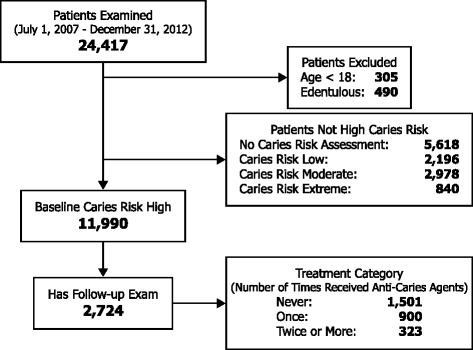
Methods: This retrospective observational study drew data from the electronic patient records of non-edentulous adult patients deemed to be at high risk for dental caries during baseline oral evaluations that were completed between July 1, 2007 and December 31, 2012 at a dental university in the United States. We calculated and compared adjusted mean estimates for the number of new decayed or restored teeth (DFT increment) from baseline to the next completed oral evaluation (N = 2,724 patients with follow-up) across three categories of delivery of non-operative anti-caries agents (e.g., high-concentration fluoride toothpaste, chlorhexidine rinse, xylitol products): never, at a single appointment, or at ≥2 appointments ≥4 weeks apart. Estimates were adjusted for patient and provider characteristics, baseline dental status, losses-to-follow-up, and follow-up time.
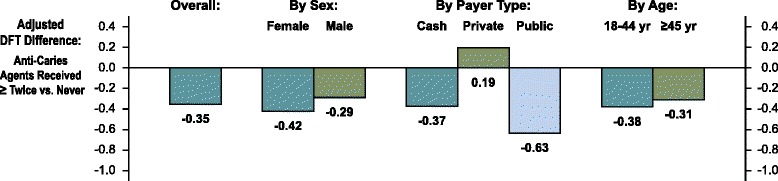
Results: Approximately half the patients did not receive any form of non-operative anti-caries agent. Most that received anti-caries agents were given more than one type of product in combination. One-time delivery of anti-caries agents was associated with a similar DFT increment as receiving no such therapy (difference in increment: -0.04; 95% CI: -0.28, 0.21). However, repeated, spaced delivery of anti-caries agents was associated with approximately one decayed or restored tooth prevented over 18 months for every three patients treated (difference in increment: -0.35; 95% CI: -0.65, -0.08).
Conclusions: These results lend evidence that repeatedly receiving anti-caries agents can reduce tooth decay among high-risk patients engaged in regular dental care.
Figures
References
-
- Diagnosis and Management of Dental Caries Throughout Life. NIH Consensus Statement March 26–28 2001; 18 (1): 1–24. 2001. http://consensus.nih.gov/2001/2001DentalCaries115html.htm. Accessed 13 Jan 2015. - PubMed
-
- Fellows JL, Gordan VV, Gilbert GH, Rindal DB, Qvist V, Litaker MS, et al. Dentist and practice characteristics associated with restorative treatment of enamel caries in permanent teeth: multiple-regression modeling of observational clinical data from the National Dental PBRN. Am J Dent. 2014;27:91–9. - PMC - PubMed
-
- Gomez J, Ellwood RP, Martignon S, Pretty IA. Dentists’ perspectives on caries-related treatment decisions. Community Dent Health. 2014;31:91–8. - PubMed
Publication types
MeSH terms
Substances
Grants and funding
LinkOut - more resources
Full Text Sources
Other Literature Sources
Medical
