


Familial predisposition and genetic risk factors for lymphoma
- PMID: 26405224
- PMCID: PMC4643002
- DOI: 10.1182/blood-2015-04-537498
Familial predisposition and genetic risk factors for lymphoma
Abstract
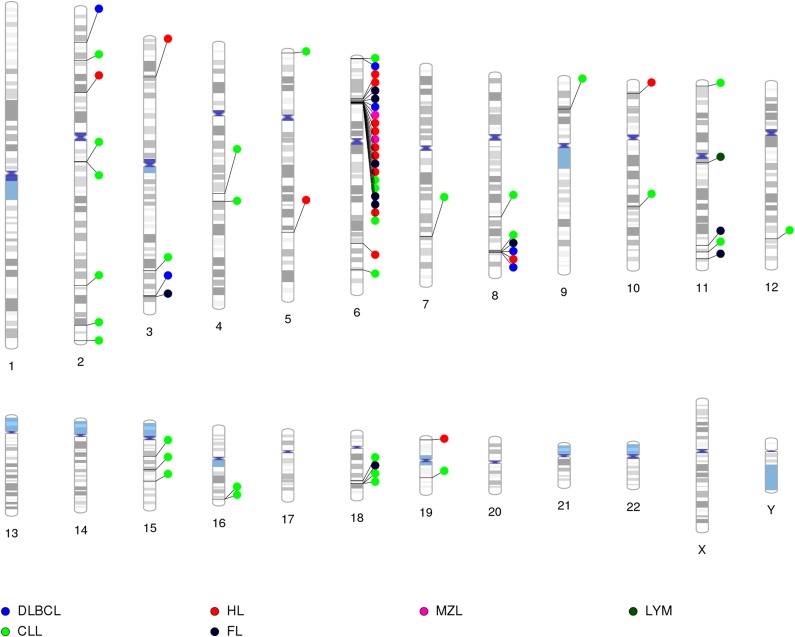
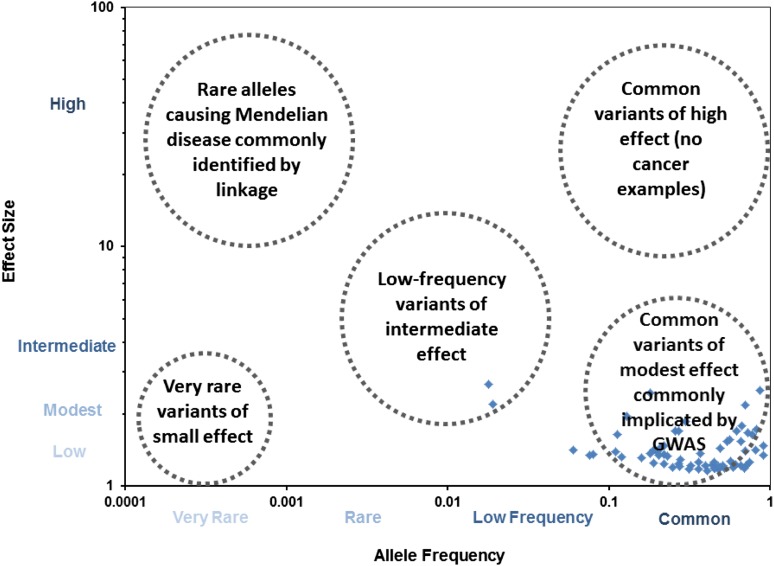
Our understanding of familial predisposition to lymphoma (collectively defined as non-Hodgkin lymphoma [NHL], Hodgkin lymphoma [HL], and chronic lymphocytic leukemia [CLL]) outside of rare hereditary syndromes has progressed rapidly during the last decade. First-degree relatives of NHL, HL, and CLL patients have an ∼1.7-fold, 3.1-fold, and 8.5-fold elevated risk of developing NHL, HL, and CLL, respectively. These familial risks are elevated for multiple lymphoma subtypes and do not appear to be confounded by nongenetic risk factors, suggesting at least some shared genetic etiology across the lymphoma subtypes. However, a family history of a specific subtype is most strongly associated with risk for that subtype, supporting subtype-specific genetic factors. Although candidate gene studies have had limited success in identifying susceptibility loci, genome-wide association studies (GWAS) have successfully identified 67 single nucleotide polymorphisms from 41 loci, predominately associated with specific subtypes. In general, these GWAS-discovered loci are common (minor allele frequency >5%), have small effect sizes (odds ratios, 0.60-2.0), and are of largely unknown function. The relatively low incidence of lymphoma, modest familial risk, and the lack of a screening test and associated intervention, all argue against active clinical surveillance for lymphoma in affected families at this time.
© 2015 by The American Society of Hematology.
Figures
References
-
- Siegel RL, Miller KD, Jemal A. Cancer statistics, 2015. CA Cancer J Clin. 2015;65(1):5–29. - PubMed
-
- Segel GB, Lichtman MA. Familial (inherited) leukemia, lymphoma, and myeloma: an overview. Blood Cells Mol Dis. 2004;32(1):246–261. - PubMed
-
- Jaffe ES, Harris NL, Stein H, Vardiman JW. World Health Organization Classification of Tumours: Pathology and Genetics, Tumours of Hematopoietic and Lymphoid Tissues. Lyon, France: IARC Press; 2001.
-
- Swerdlow S, Campo E, Harris N. World Health Organization Classification of Tumours of Haematopoietic and Lymphoid Tissues. Lyon, France: IARC Press; 2008.
-
- Houlston RS, Catovsky D, Yuille MR. Genetic susceptibility to chronic lymphocytic leukemia. Leukemia. 2002;16(6):1008–1014. - PubMed
Publication types
MeSH terms
Grants and funding
LinkOut - more resources
Full Text Sources
Other Literature Sources
Medical
