


Effects of Different Missing Data Imputation Techniques on the Performance of Undiagnosed Diabetes Risk Prediction Models in a Mixed-Ancestry Population of South Africa
- PMID: 26406594
- PMCID: PMC4583496
- DOI: 10.1371/journal.pone.0139210
Effects of Different Missing Data Imputation Techniques on the Performance of Undiagnosed Diabetes Risk Prediction Models in a Mixed-Ancestry Population of South Africa
Abstract
Background: Imputation techniques used to handle missing data are based on the principle of replacement. It is widely advocated that multiple imputation is superior to other imputation methods, however studies have suggested that simple methods for filling missing data can be just as accurate as complex methods. The objective of this study was to implement a number of simple and more complex imputation methods, and assess the effect of these techniques on the performance of undiagnosed diabetes risk prediction models during external validation.
Methods: Data from the Cape Town Bellville-South cohort served as the basis for this study. Imputation methods and models were identified via recent systematic reviews. Models' discrimination was assessed and compared using C-statistic and non-parametric methods, before and after recalibration through simple intercept adjustment.
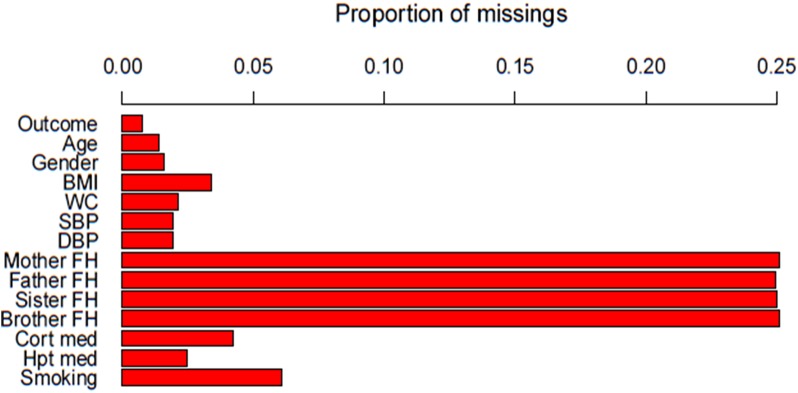
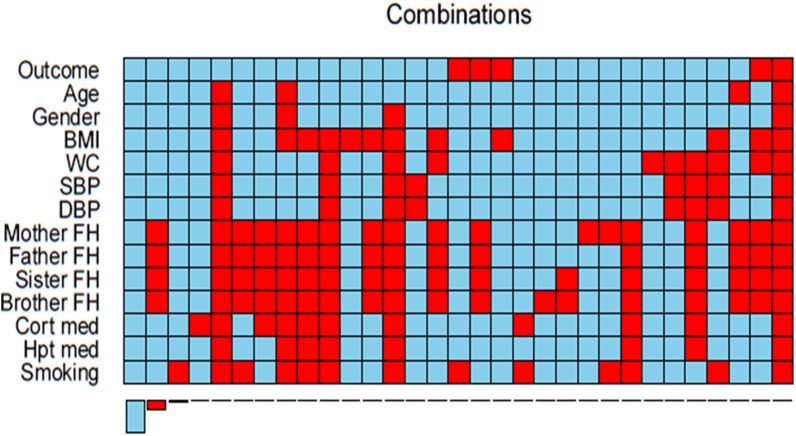
Results: The study sample consisted of 1256 individuals, of whom 173 were excluded due to previously diagnosed diabetes. Of the final 1083 individuals, 329 (30.4%) had missing data. Family history had the highest proportion of missing data (25%). Imputation of the outcome, undiagnosed diabetes, was highest in stochastic regression imputation (163 individuals). Overall, deletion resulted in the lowest model performances while simple imputation yielded the highest C-statistic for the Cambridge Diabetes Risk model, Kuwaiti Risk model, Omani Diabetes Risk model and Rotterdam Predictive model. Multiple imputation only yielded the highest C-statistic for the Rotterdam Predictive model, which were matched by simpler imputation methods.
Conclusions: Deletion was confirmed as a poor technique for handling missing data. However, despite the emphasized disadvantages of simpler imputation methods, this study showed that implementing these methods results in similar predictive utility for undiagnosed diabetes when compared to multiple imputation.
Conflict of interest statement
Figures
References
-
- Donders ART, van der Heijden GJ, Stijnen T, Moons KG. Review: a gentle introduction to imputation of missing values. J Clin Epidemiol. 2006;59(10):1087–91. - PubMed
-
- Schafer JL, Graham JW. Missing data: our view of the state of the art. Psychological methods. 2002;7(2):147 - PubMed
-
- Rubin DB. Inference and missing data. Biometrika. 1976;63(3):581–92.
-
- Greenland S, Finkle WD. A critical look at methods for handling missing covariates in epidemiologic regression analyses. Am J Epidemiol. 1995;142(12):1255–64. - PubMed
-
- Little RJ. Regression with missing X's: a review. Journal of the American Statistical Association. 1992;87(420):1227–37.
Publication types
MeSH terms
LinkOut - more resources
Full Text Sources
Other Literature Sources
Medical
