An Outbreak of Lymphocutaneous Sporotrichosis among Mine-Workers in South Africa
- PMID: 26407300
- PMCID: PMC4583532
- DOI: 10.1371/journal.pntd.0004096
An Outbreak of Lymphocutaneous Sporotrichosis among Mine-Workers in South Africa
Abstract
Background: The largest outbreak of sporotrichosis occurred between 1938 and 1947 in the gold mines of Witwatersrand in South Africa. Here, we describe an outbreak of lymphocutaneous sporotrichosis that was investigated in a South African gold mine in 2011.
Methodology: Employees working at a reopened section of the mine were recruited for a descriptive cross-sectional study. Informed consent was sought for interview, clinical examination and medical record review. Specimens were collected from participants with active or partially-healed lymphocutaneous lesions. Environmental samples were collected from underground mine levels. Sporothrix isolates were identified by sequencing of the internal transcribed spacer region of the ribosomal gene and the nuclear calmodulin gene.
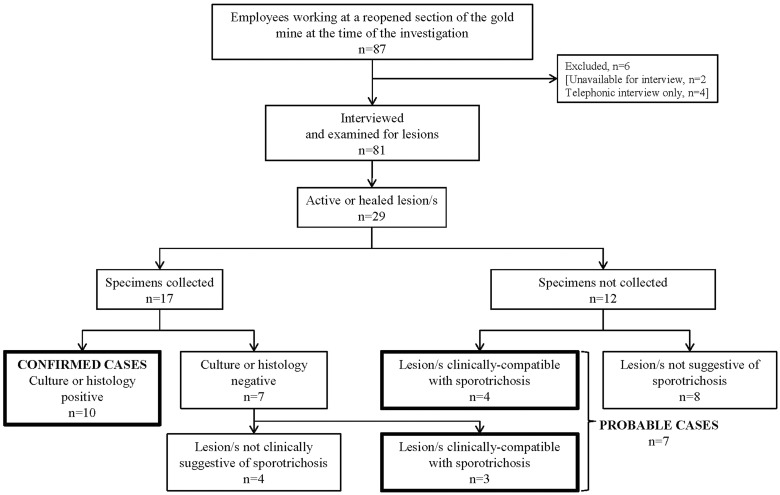
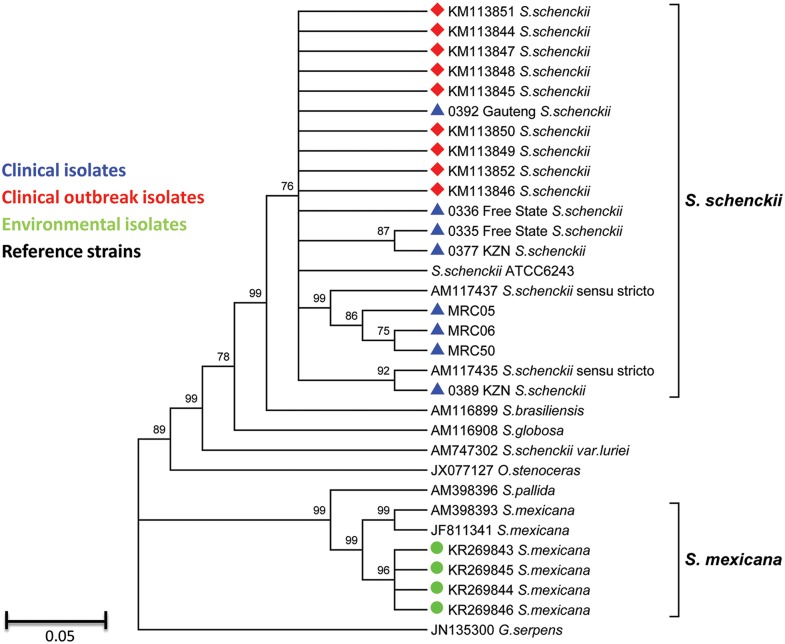
Principal findings: Of 87 male miners, 81 (93%) were interviewed and examined, of whom 29 (36%) had skin lesions; specimens were collected from 17 (59%). Sporotrichosis was laboratory-confirmed among 10 patients and seven had clinically-compatible lesions. Of 42 miners with known HIV status, 11 (26%) were HIV-infected. No cases of disseminated disease were detected. Participants with ≤ 3 years' mining experience had a four times greater odds of developing sporotrichosis than those who had been employed for >3 years (adjusted OR 4.0, 95% CI 1.2-13.1). Isolates from 8 patients were identified as Sporothrix schenckii sensu stricto by calmodulin gene sequencing while environmental isolates were identified as Sporothrix mexicana.
Conclusions/significance: S. schenckii sensu stricto was identified as the causative pathogen. Although genetically distinct species were isolated from clinical and environmental sources, it is likely that the source was contaminated soil and untreated wood underground. No cases occurred following recommendations to close sections of the mine, treat timber and encourage consistent use of personal protective equipment. Sporotrichosis is a potentially re-emerging disease where traditional, rather than heavily mechanised, mining techniques are used. Surveillance should be instituted at sentinel locations.
Conflict of interest statement
Outside the submitted work, NPG has received an investigator-initiated research grant and speaker honoraria from Pfizer, speaker honoraria and travel funding from MSD (Pty) Ltd, has provided educational materials for TerraNova and has acted as a temporary consultant for Fujifilm Pharmaceuticals. For the remaining authors, no competing interests were declared. This does not alter our adherence to all PLOS policies on sharing data and materials.
Figures
References
-
- Pijper AP, D B. An outbreak of sporotrichosis among South African native miners. Lancet. 1927. October:914–5.
-
- Lurie HI. Five unusual cases of sporotrichosis from South Africa showing lesions in muscles, bones, and viscera. British J Surg. 1963. May 1963;L(224):585–91. - PubMed
-
- Dangerfield LF, Gear J. Sporotrichosis among miners on the Witwatersrand gold mines. S Afr Med J 1941. April:128–31.
-
- Vismer H, Hull PR. Prevalence, epidemiology and geographical distribution of Sporothrix schenckii infections in Gauteng, South Africa. Mycopathologia. 1997;137:137–43. - PubMed
MeSH terms
Substances
LinkOut - more resources
Full Text Sources
Other Literature Sources