


Phase II study of ipilimumab monotherapy in Japanese patients with advanced melanoma
- PMID: 26410424
- PMCID: PMC4612321
- DOI: 10.1007/s00280-015-2873-x
Phase II study of ipilimumab monotherapy in Japanese patients with advanced melanoma
Abstract
Purpose: Ipilimumab is designed to block cytotoxic T-lymphocyte antigen-4 to augment antitumor T cell responses. In studies of predominantly Caucasian patients with advanced melanoma, ipilimumab was associated with durable response, long-term survival benefit, and a manageable safety profile. This phase II study assessed the safety of ipilimumab in Japanese patients with unresectable stage III or IV melanoma.
Methods: Patients received ipilimumab 3 mg/kg every 3 weeks for four doses. The database lock for the original analysis was in August 2014. Overall survival, progression-free survival, and data on deaths were based on an updated, follow-up analysis (database lock April 2015).
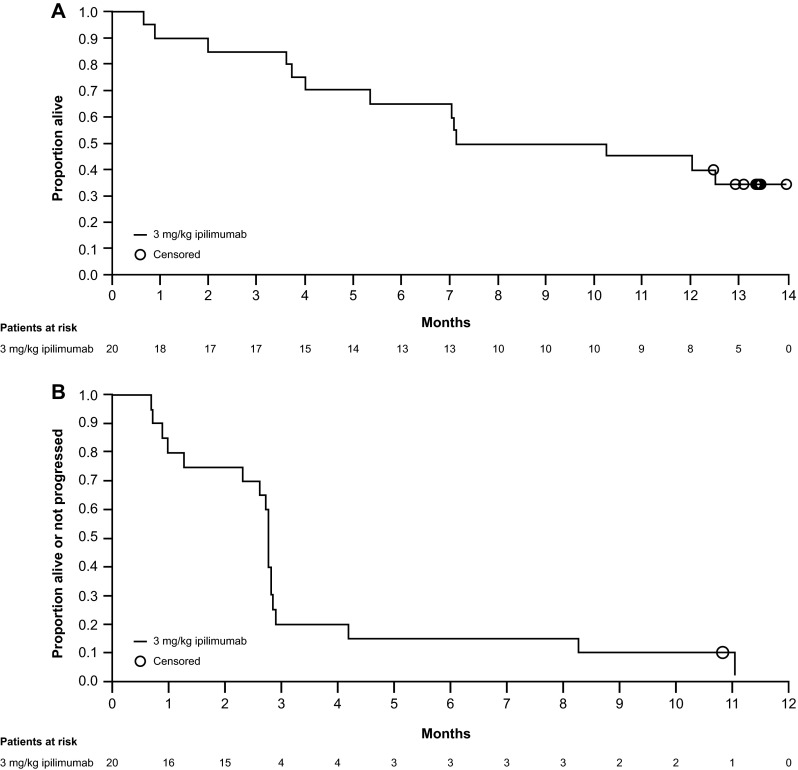
Results: Data are reported from 20 patients. Fifteen patients (75 %) received all four doses of ipilimumab during induction. Twelve patients (60 %) had at least one drug-related adverse event (AE), and no patients discontinued due to a drug-related AE. There were no deaths related to study drug. The most common drug-related AEs were rash (n = 7), pyrexia (n = 3), increased aspartate aminotransferase (AST; n = 3), and increased alanine aminotransferase (ALT; n = 3). Twelve patients (60 %) reported immune-related AEs (irAEs); most frequent were skin (n = 9) and liver (n = 3) disorders. Grade 3 irAEs were ALT and AST elevation (n = 2) and diabetes mellitus (n = 1). Two patients had a partial response and two had stable disease, yielding a 20 % disease control rate. Median overall survival and progression-free survival were 8.71 and 2.74 months, respectively.
Conclusion: Ipilimumab 3 mg/kg had a manageable AE profile in this Japanese patient population with clinical outcomes similar to that in Caucasian patients. CLINICALTRIALS.
Gov identifier: NCT01990859.
Keywords: Immune-checkpoint inhibitor; Ipilimumab; Japanese patients; Melanoma; Phase II study.
Figures

References
Publication types
MeSH terms
Substances
Associated data
LinkOut - more resources
Full Text Sources
Other Literature Sources
Medical
Miscellaneous
