


The Murray collection of pre-antibiotic era Enterobacteriacae: a unique research resource
- PMID: 26411565
- PMCID: PMC4584482
- DOI: 10.1186/s13073-015-0222-7
The Murray collection of pre-antibiotic era Enterobacteriacae: a unique research resource
Abstract
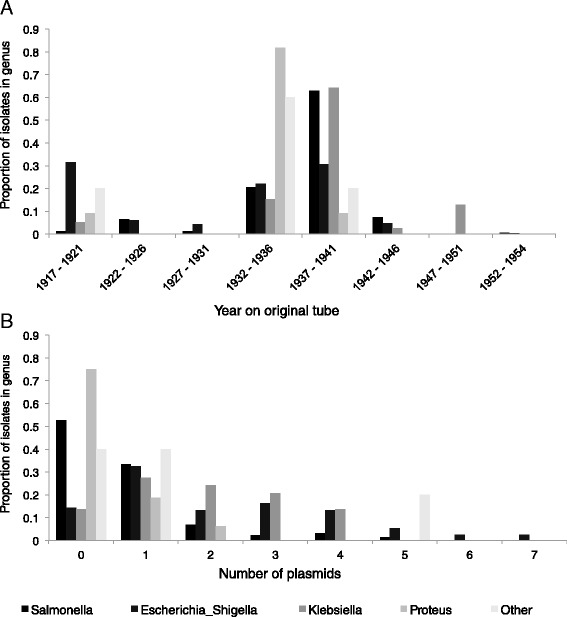
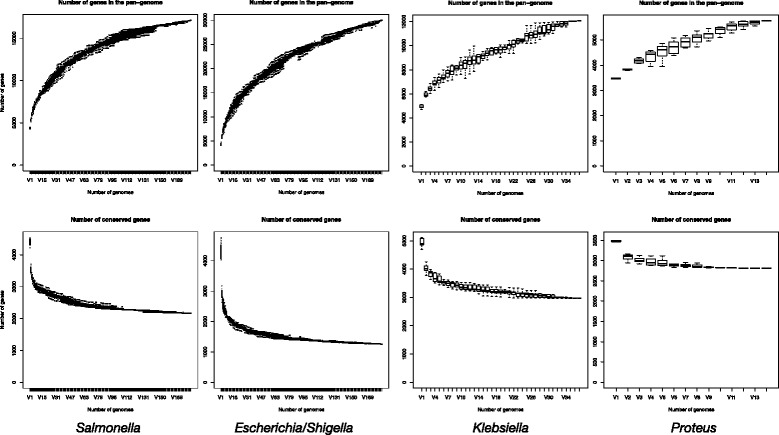
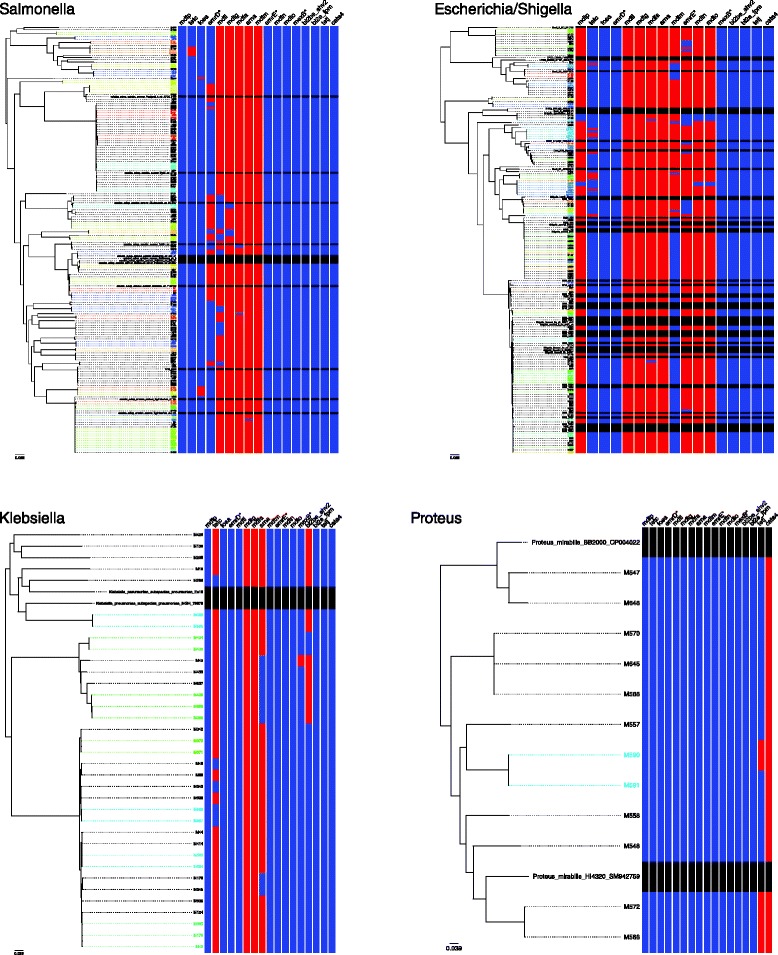
Studies of historical isolates inform on the evolution and emergence of important pathogens and phenotypes, including antimicrobial resistance. Crucial to studying antimicrobial resistance are isolates that predate the widespread clinical use of antimicrobials. The Murray collection of several hundred bacterial strains of pre-antibiotic era Enterobacteriaceae is an invaluable resource of historical strains from important pathogen groups. Studies performed on the Collection to date merely exemplify its potential, which will only be realised through the continued effort of many scientific groups. To enable that aim, we announce the public availability of the Murray collection through the National Collection of Type Cultures, and present associated metadata with whole genome sequence data for over half of the strains. Using this information we verify the metadata for the collection with regard to subgroup designations, equivalence groupings and plasmid content. We also present genomic analyses of population structure and determinants of mobilisable antimicrobial resistance to aid strain selection in future studies. This represents an invaluable public resource for the study of these important pathogen groups and the emergence and evolution of antimicrobial resistance.
Figures
References
-
- Organisation WH. WHO Global strategy for containment of antimicrobial resistance. Switzerland: World Health Organisation; 2001.
-
- CfDCa P. Antibiotic resistance threats in the United States, 2013. Atlanta, USA: US Department of Health and Human Services; 2013.
-
- Mortality GBD, Causes of Death C Global, regional, and national age-sex specific all-cause and cause-specific mortality for 240 causes of death, 1990–2013: a systematic analysis for the Global Burden of Disease Study 2013. Lancet. 2015;385:117–171. doi: 10.1016/S0140-6736(14)61682-2. - DOI - PMC - PubMed
Publication types
MeSH terms
Substances
Grants and funding
LinkOut - more resources
Full Text Sources
Other Literature Sources
