


Late Cardiotoxicity in Aging Adult Survivors of Childhood Cancer
- PMID: 26412958
- PMCID: PMC4580976
- DOI: 10.1016/j.ppedcard.2014.09.003
Late Cardiotoxicity in Aging Adult Survivors of Childhood Cancer
Abstract
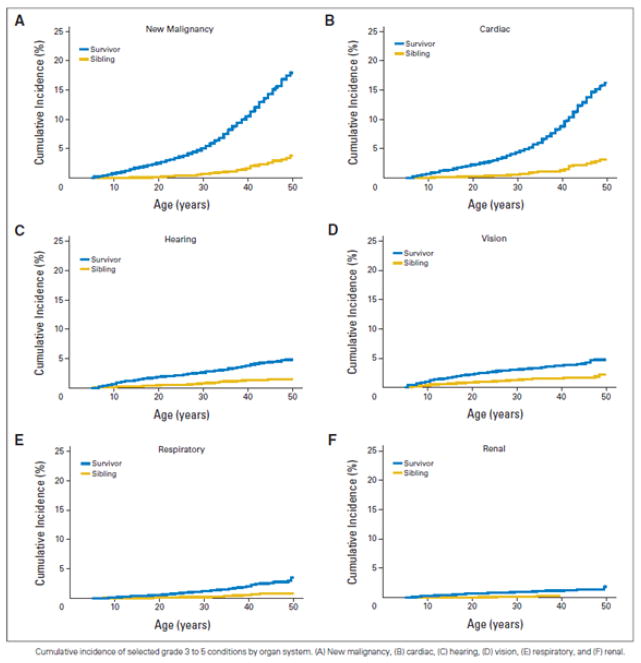
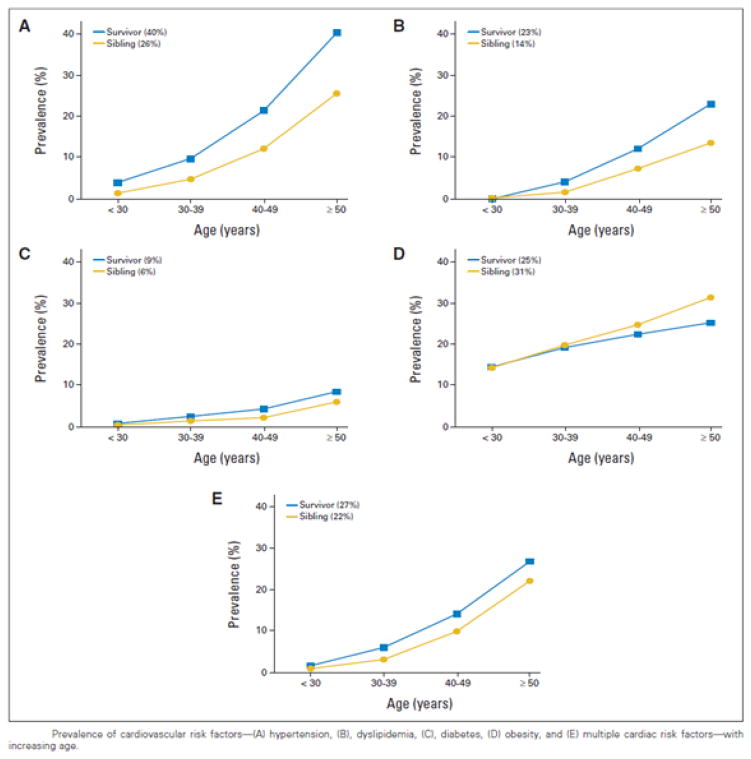
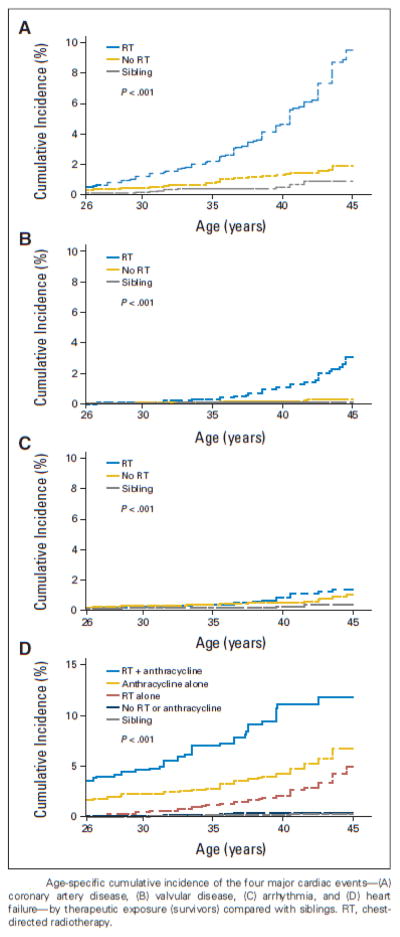
The survival rate for childhood cancer is steadily improving, and the current estimate for the prevalence of childhood cancer survivors in the United States is 420,000. With this encouraging trend and the aging of this population, there is an ever-increasing responsibility to identify adult survivors of childhood cancer with adverse health outcomes related to cancer treatment across the span of their lives. To accomplish this, large cohort studies have been developed to follow survivors longitudinally. Compared to siblings, survivors have a higher cumulative incidence of morbidity and mortality, and this gap in incidence only widens with age. One of the most significant late toxicities in survivors is late onset cardiotoxicity, largely due to anthracycline and chest-directed radiation exposure. Survivors also have an increased prevalence of traditional cardiovascular risk factors as they age, which potentiates the risk for major cardiac events. Prevention is essential. Minimizing anthracycline dose exposure in pediatric cancer patients is a primary method of cardioprotection. Dexrazoxane and enalapril have also been studied as primary (pre-exposure) and secondary (post-exposure) cardioprotecant agents, respectively. Additionally, the Children's Oncology Group has published exposure-driven, risk-based screening guidelines for long-term follow-up, which may be a cost-effective way to identify subclinical cardiac disease before progression to clinical presentation. Ongoing research is needed to determine the most effective diagnostic modality for screening (e.g. echocardiography), and the most effective intervention strategies to improve long-term outcomes.
Keywords: Anthracycline; cardiomyopathy; cardioprotection; intervention; screening.
Figures
References
-
- Howlader N, Noone AM, Krapcho M, et al., editors. SEER Cancer Statistics Review, 1975–2011. National Cancer Institute; Bethesda, MD: 2014. http://seer.cancer.gov/csr/1975_2011/
Grants and funding
LinkOut - more resources
Full Text Sources
Other Literature Sources
Miscellaneous