


Prevalence of antibiotic resistance in Helicobacter pylori: A recent literature review
- PMID: 26413490
- PMCID: PMC4572030
- DOI: 10.5662/wjm.v5.i3.164
Prevalence of antibiotic resistance in Helicobacter pylori: A recent literature review
Abstract
Aim: To review previous studies (the last 6 years) about the Helicobacter pylori (H. pylori) antibiotic resistance in order to evaluate the trend in antibiotic resistance.
Methods: In this study, the PubMed, MEDLINE, Science Direct, Google Scholar and Scielo manuscripts were reviewed from 2009 to 2014.
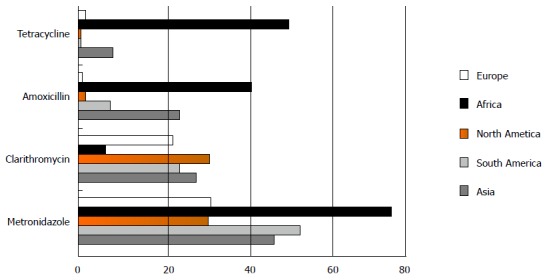
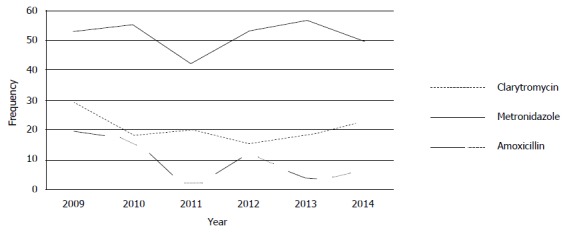
Results: On the whole rates of H. pylori antibiotic resistance were 47.22% (30.5%-75.02%) for metronidazole, 19.74% (5.46%-30.8%) for clarithromycin, 18.94% (14.19%-25.28%) for levofloxacin, and 14.67% (2%-40.87%) for amoxicillin, 11.70% (0%-50%) for tetracycline, 11.5% (0%-23%) for furazolidon and 6.75% (1%-12.45%) for rifabutin. The frequency of tetracycline, metronidazole and amoxicillin resistance was higher in Africa, while clarithromycin and levofloxacin resistance was higher in North America and Asian, respectively.
Conclusion: The most sensitive drug is rifabutin and the lowest sensitive drug is metronidazole in the world. The worldwide H. pylori antibiotic resistance to clarithromycin and levofloxacin has increased during the last 6 years. The present systematic review show alarming results and a novel plan is needed for eradication therapy of H. pylori infections.
Keywords: Antibiotic resistance; Helicobacter pylori; Worldwide.
Figures
References
-
- Rafeey M, Ghotaslou R, Nikvash S, Hafez AA. Primary resistance in Helicobacter pylori isolated in children from Iran. J Infect Chemother. 2007;13:291–295. - PubMed
-
- Ghotaslou R, Milani M, Akhi MT, Hejazi MS, Nahaei MR, Hasani A, Sharifi Y. Relationship between drug resistance and cagA Gene in Helicobacter pylori. Jundishapur J Microbiol. 2013;6:8480.
-
- Gasbarrini G, Racco S, Franceschi F, Miele L, Cammarota G, Grieco A, Gasbarrini A. [Helicobacter pylori infection: from gastric to systemic disease] Recenti Prog Med. 2010;101:27–33. - PubMed
Publication types
LinkOut - more resources
Full Text Sources
Other Literature Sources
